Radishes are one of the fastest vegetables you can grow and one of the most rewarding. If you’re wondering how to grow radishes from seed, the short answer is: plant seeds ½ inch deep in loose soil, keep the bed evenly moist, and you’ll usually be harvesting in about 3-4 weeks.
This post may contain affiliate links. If you use these links to buy something we may earn a commission. Thanks.
They’re the first thing we plant outside in our garden beds each year, and they’re usually the first harvest we get, too. We love dicing radishes into eggs and hash browns for that fresh crunch, but they’re also perfect for salads, sandwiches, and quick snacks.
Radish Growing Cheat Sheet (Quick Answer)
If you want a quick, simple checklist, here it is:
- Planting Timing: As soon as soil is workable in spring. Succession plant every 2 weeks.
- Time to germinate: usually 3-10 days
- Time from seed to harvest: usually 21-35 days
- Seed depth: ½ inch
- Seed spacing: 1 inch apart (thin if needed)
- Row spacing: 4-6 inches
- Sun: 6+ hours (tolerates part shade)
- Soil: loose, well-draining (no rocks), pH ~6.0-7.0
- Water: consistent moisture (don’t let them dry out)
Choosing Your Radish Seeds:
Radishes come in a bunch of shapes, sizes, and colours. So choosing the right variety depends on what you like to eat and how you plan to use them.
Some popular varieties include:
- Cherry Belle – classic round red radish
- French Breakfast – oblong, red with a white tip
- Easter Egg – a colourful mix of pink, purple, and white
The two varieties that we grow are French Breakfast and Crispy Crunch.
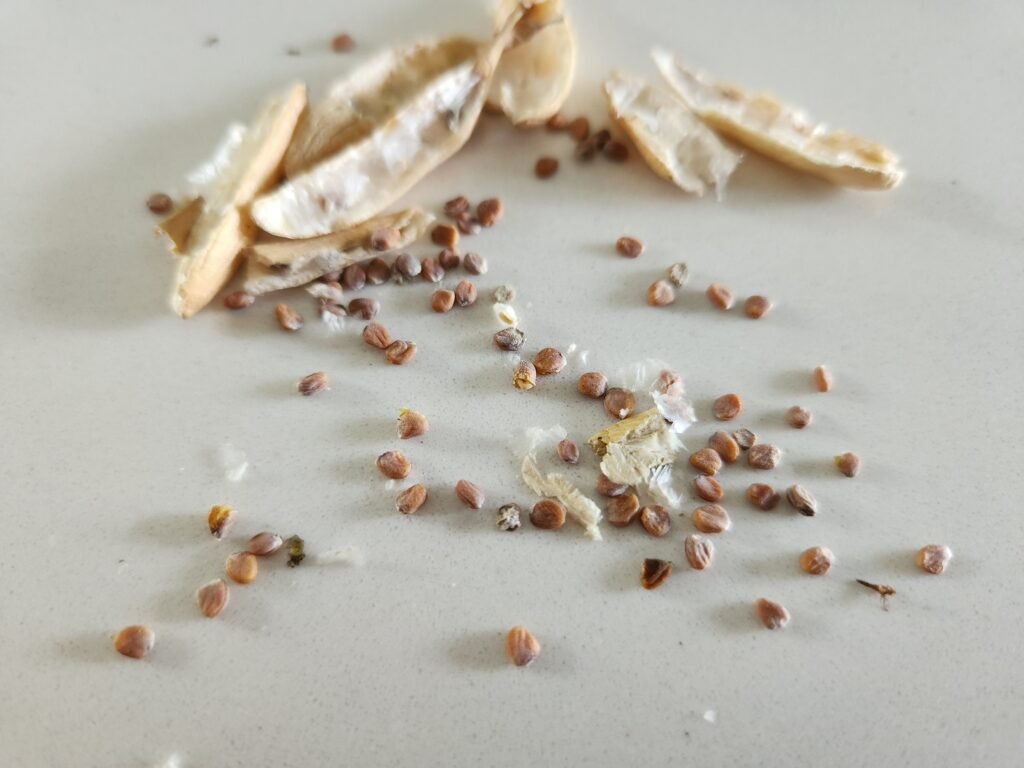
Bonus: Radish seeds are very easy to save, so once you find a variety you like you can save your own seeds to plant again next year.
If you want to go one step further, here’s our full Seed Saving hub and a beginner-friendly list of easy seeds to save so you can start building a self-sufficient garden.
Preparing The Soil:
Radishes will grow a deep taproot so they prefer loose, well-draining soil. A slightly acidic to neutral pH between 6.0 and 7.0 is ideal. We use this soil tester to check our pH and soil moisture.
Before planting, remove rocks (they cause forked radishes) and work in compost or organic matter to improve fertility. Make sure the soil is moist but not waterlogged before planting.
How To Grow Radishes From Seed (Step-by-Step)
1) Pick The Right Location (Sun Requirements)
Radishes prefer full sun, about 6 hours a day, but grow well in part shade too when the weather starts to get too hot.
2) Plant The Seeds (Depth + Spacing)
Plant radish seeds directly in the garden (they don’t love being transplanted).
- Make a shallow row about ½ inch deep
- Plant seeds 1 inch apart
- Space rows 4-6 inches apart
- Lightly cover with soil and gently water
If you plan to leave some radishes to flower and make seed pods, give them extra space from the start.
If you’re new to planting outdoors, our beginner guide on how to direct sow seeds makes the whole process simple (radishes are one of the best crops to practice with).
3) Timing (When To Plant Radishes):
In most places, radishes can be planted as soon as the soil can be worked in spring. They prefer cool temperatures, so they’re ideal for:
- Early spring
- Fall
- Even winter growing in warmer climates
If your summers get hot, spring and fall are usually your best-quality radish seasons.
If you garden in Zone 5 like we do, you’ll probably also like our guide on seeds to start in February (Zone 5) to get a jump on the season.
Caring For Radishes (So They Bulb Up Properly)
Radishes are easy, but they do have one big requirement: steady growth. Anything that slows them down (dry soil, heat stress, crowding) can lead to tough or spicy radishes.
Radishes are a great “quick win” crop, and if you want another fast grower, our guide on how to grow lettuce from seed to harvest is a good one to plant right alongside them.
How Much Water Do Radish Need?
Radishes need consistent moisture to stay tender.
- Try not to soak the leaves constantly (it can encourage disease)
- Water deeply about once a week
- Water more often during hot or dry weather
Do You Need To Fertilize Radishes?
Radishes don’t need heavy feeding. We usually add fertility before planting.
If your soil is poor:
- Avoid going heavy on nitrogen (too much nitrogen = big leafy tops and small roots)
- Use a balanced fertilizer lightly
Thin Them If They’re Crowded
If radishes are too close together, they won’t size up properly.
If you planted thick:
- Thin seedlings to about 1-2 inches apart
- You can even eat the thinnings (microgreens style)
Radish Growth Stages (What to Expect Week by Week)
If you’re watching your bed and wondering if your radishes are “on track,” these are the typical radish growth stages:
- Days 1–3: Seeds swell and begin to sprout underground.
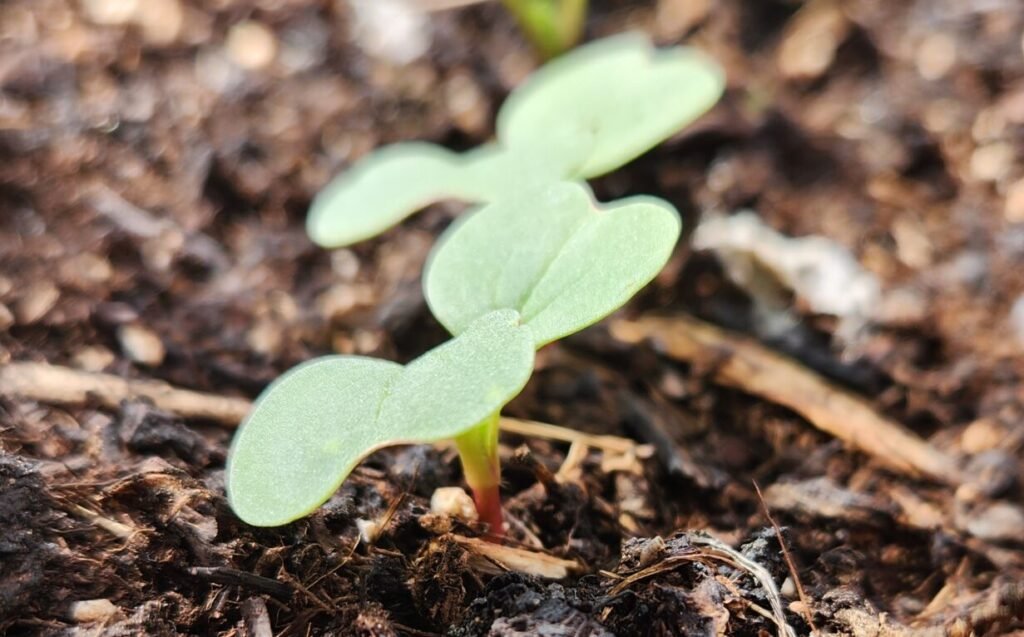
- Days 3–10: Germination happens (faster in cool, moist soil). You’ll see the first little leaves pop up.

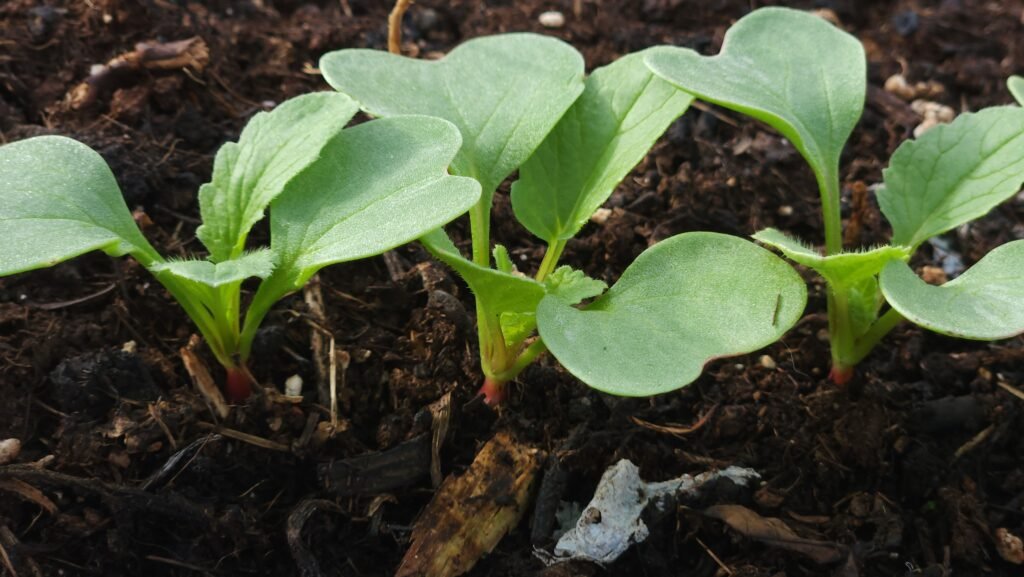
- Week 2: Leaves grow quickly and the root starts forming below the surface.
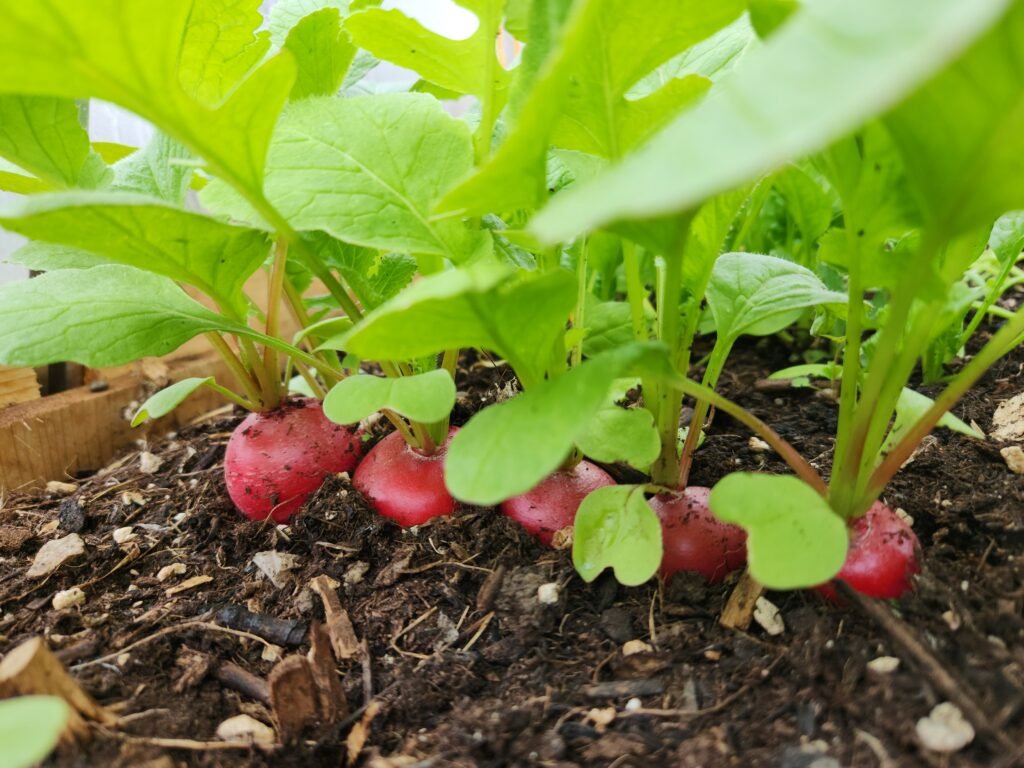
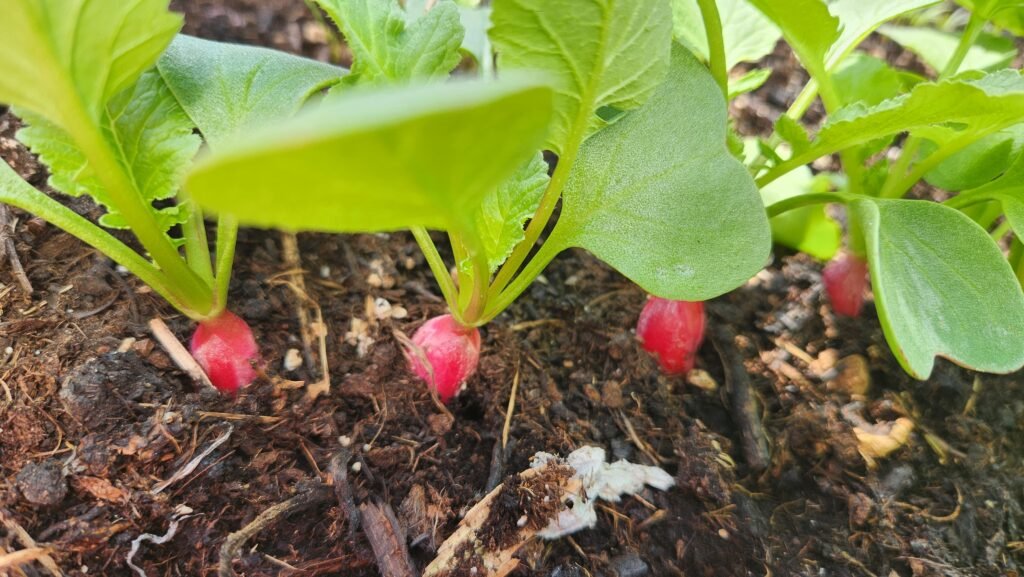
- Week 3: The top of the radish often starts pushing up above the soil, this is when you can begin taste-testing.
- Weeks 3–5: Harvest window for most varieties. Pick earlier for a sharper bite; pick later for a larger radish (but don’t let them sit too long or they can go woody).
Quick tip: If leaves are growing fast but bulbs aren’t forming, it’s usually heat stress, crowding, or too much nitrogen.
When To Harvest Radishes?
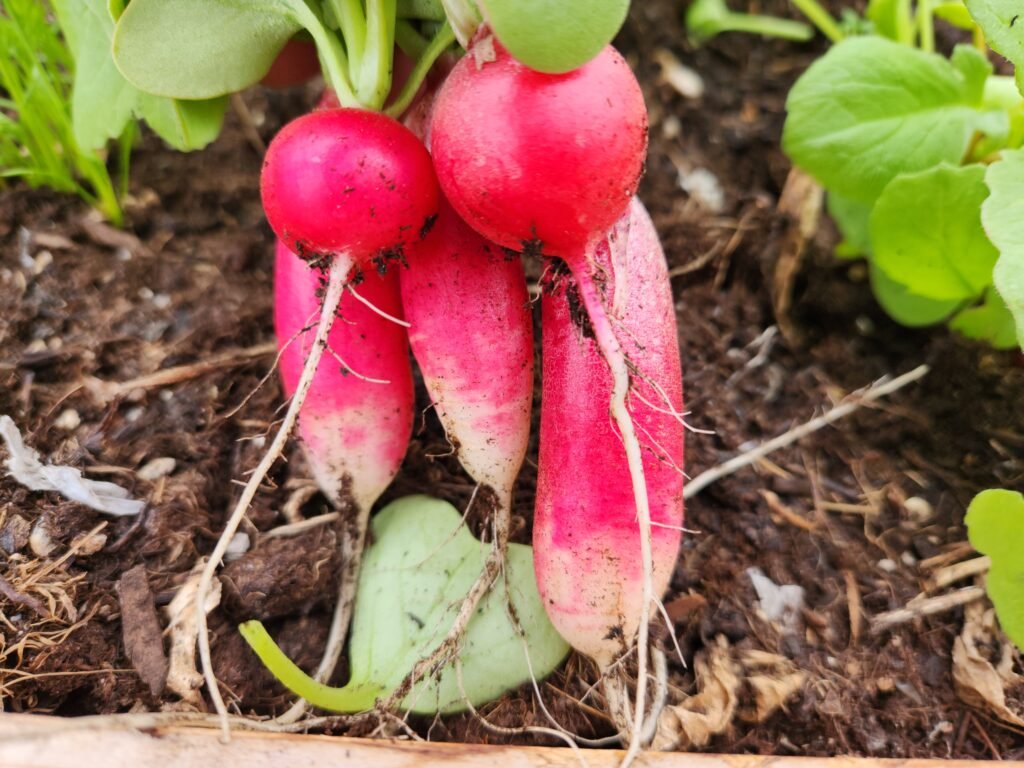
Most radishes are ready in 3-4 weeks, depending on variety and conditions. And the nice part is you can harvest at almost any stage.
How do you know when radishes are ready to harvest?
For most varieties, a good harvest size is about 1-1.5 inches wide, but it’s personal preference. Taste-testing is the easiest way to decide.
- You’ll usually see the top of the radish pushing above the soil
- When they look about the size you like, harvest a couple and taste-test
Tip: Smaller radishes often have a stronger bite. Bigger radishes can get milder at first… then woody if left too long.
How To Harvest Radishes (Without Damaging Them)
To harvest, gently pull the radish out of the soil by the leaves. If the radish is difficult to pull out, use a garden fork to loosen the soil around it.
Radishes are best eaten fresh, but can also be stored in the refrigerator for up to a week. Make sure to harvest your Radishes regularly because the longer they stay in the garden, the bigger they will get. If they are left too long they will bolt, and go to seed, and they will develop a woody flavour.
Common Radish Problems (Quick Fixes)
If your radishes aren’t turning out the way you want, this section usually explains why.
- All leaves, no bulb: too much nitrogen, too much shade, or overcrowding
- Woody/pithy radishes: left in the ground too long or growth slowed by heat/dry soil
- Very spicy radishes: heat stress or inconsistent watering
- Cracked radishes: uneven watering (dry → heavy watering can split them)
- Forked/ugly roots: rocky soil or heavy clumps in the bed
For another root crop that really depends on loose, rock-free soil, check out our guide on how to grow carrots (it’s the same “prep matters” lesson).
FAQ: Growing Radishes From Seed
Radish seeds usually germinate in 3-10 days, depending on soil temperature and moisture. Consistent moisture speeds things up.
Radishes grow best in cool weather. For the best results, aim for roughly 10-21°C (50-70°F). Hot weather can make them bolt or turn spicy.
Yes, radishes grow great in containers. Use a pot that’s at least 6-8 inches deep, with loose soil and consistent watering. Round varieties often do especially well.
Not really. Radishes prefer to be direct-seeded because disturbing the root early can affect bulb formation. Learn more about direct sowing in our How to Direct Sow Seeds for Beginners article.
That’s normal. Many radish varieties naturally push the top of the root up as they size up, which makes harvest timing easier.
Yes. Radish greens are edible and great sautéed, tossed into soups, or blended into pesto. Younger leaves are usually the most tender.
For a continuous harvest, sow a small row every 7-14 days during cool weather. This is one of the easiest “succession planting” crops.
You can regrow leaves from a radish top in water, but it won’t reliably form a new radish bulb. For full radishes, growing from seed is the best method.
To save radish seeds, let a few healthy plants stay in the garden until they flower and form seed pods. Once pods turn dry and brown, harvest them, dry fully, then crack them open to collect the seeds. Full article on How To Save Radish Seeds here.
Conclusion:
Growing radishes is a simple and rewarding experience. With just a few easy steps, you can enjoy fresh, tasty radishes in no time. So why not give it a try and add some colour and flavor to your next salad or snack?
We hope you enjoyed this growing guide. If you did make sure you check out the other growing guides, seed saving guides and our recipes. We are growing our website with more articles all the time, and we invite you to grow with us. If you have any questions about radishes or would like to share some of your knowledge with us please leave a comment below.