Growing raspberries in Zone 5 is one of the most rewarding things you can do in a home garden. Once established, raspberry plants can provide bowls of fresh berries every summer for years with surprisingly little maintenance. They’re hardy, productive, easy to propagate, and one of the best fruits for cold-climate gardeners.
We grow several types of raspberries on our own homestead, including red raspberries, black raspberries, and wild black raspberries. Over the years we’ve learned that raspberries are far easier to grow when you understand one key thing:
Raspberry canes all grow differently.
That single detail affects:
- pruning
- harvesting
- spreading
- disease prevention
- yields
- long-term maintenance
In this complete guide, we’ll walk you through everything you need to know about how to grow raspberries in Zone 5 (these skills can also work in other growing zones), including planting, pruning, watering, trellising, harvesting, and how to avoid common mistakes.
Quick Answer: How Do You Grow Raspberries in Zone 5?
Raspberries grow extremely well in Zone 5 when planted in full sun with well-draining soil and good airflow. Most raspberry varieties need regular watering, yearly pruning, and support from a trellis system for the best harvests. In Zone 5, summer-bearing raspberries typically fruit in July, while fall-bearing varieties produce from late summer until frost. Proper pruning, mulching, and spacing are the biggest keys to healthy plants and large berry harvests.
Quick Raspberry Growing Tips
- Plant raspberries in full sun (6-8+ hours daily)
- Use slightly acidic, well-draining soil
- Mulch heavily to retain moisture
- Prune yearly based on raspberry type
- Trellis canes for airflow and support
- Water consistently during fruit production
- Space plants properly to reduce disease
Why Raspberries Grow So Well in Zone 5
Raspberries thrive in cooler climates. In fact, many varieties actually struggle more in excessive heat than they do in cold winters.
Zone 5 gives raspberries:
- proper winter dormancy
- cooler spring temperatures
- strong cane development
- reliable fruit production
Most raspberry varieties grow extremely well in Zone 5 when given:
- full sun
- decent airflow
- consistent moisture
- proper pruning
Once established, raspberry patches can remain productive for 10 to 15 years or longer.
Types of Raspberries
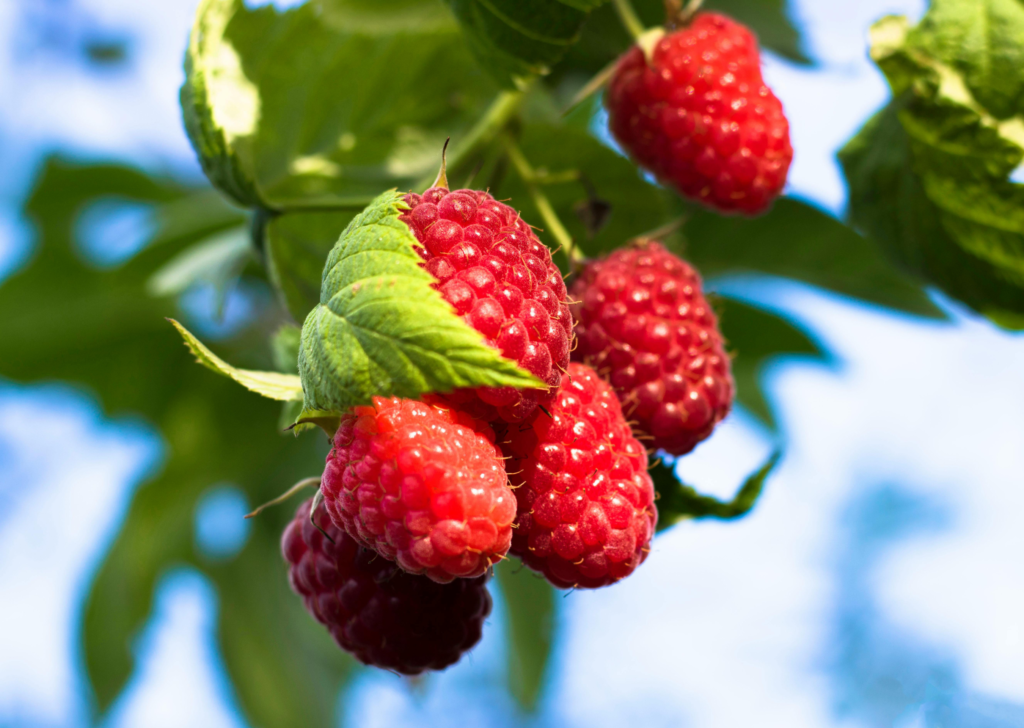
There are several different raspberry types gardeners commonly grow.
Red Raspberries
Red raspberries are the most common and beginner-friendly variety. They spread aggressively through underground runners and are very productive.
There are two main types:
- summer-bearing raspberries
- fall-bearing (everbearing) raspberries
You can learn more in our detailed guide:
Black Raspberries
Black raspberries grow differently than red raspberries. Their canes arch outward and require summer tip-pruning for the best harvests.
They also tend to have:
- richer flavor
- smaller berries
- stronger aroma
- more disease sensitivity
Read our full guide:
Wild Black Raspberries
Wild black raspberries are one of our favorite berries to grow on the property. They’re vigorous, resilient, and incredibly flavorful.
Unlike cultivated nursery varieties, wild black raspberries:
- tolerate poor soils better
- survive drought more easily
- spread aggressively
- require less maintenance overall
Learn more here:
Understanding Raspberry Canes
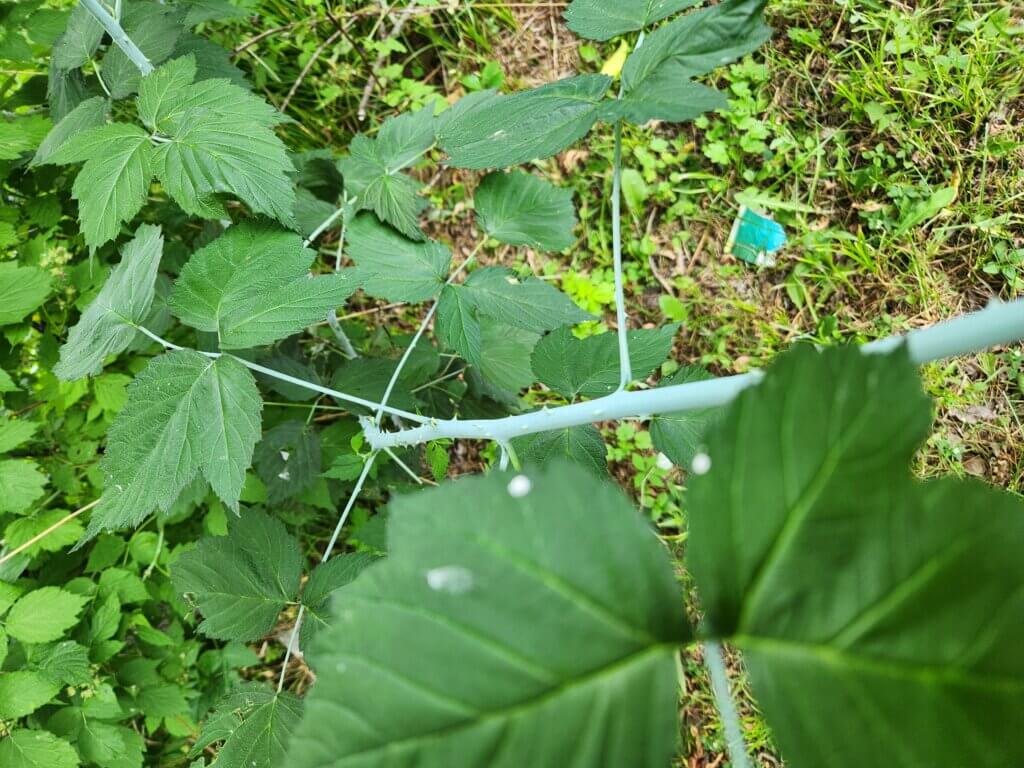
Understanding raspberry canes is the foundation of growing raspberries successfully.
There are two types of canes:
Primocanes
Primocanes are first-year canes.
They are:
- green
- flexible
- actively growing
Fall-bearing raspberries produce fruit on primocanes during their first year.
Floricanes
Floricanes are second-year canes.
They are:
- darker
- woodier
- thicker
Summer-bearing raspberries fruit on floricanes before those canes die back.
Understanding this difference is critical because pruning the wrong canes can accidentally remove your future harvest.
For a detailed breakdown, read:
Best Place to Plant Raspberries
Raspberries grow best in:
- full sun (6-8+ hours daily)
- well-draining soil
- areas with good airflow
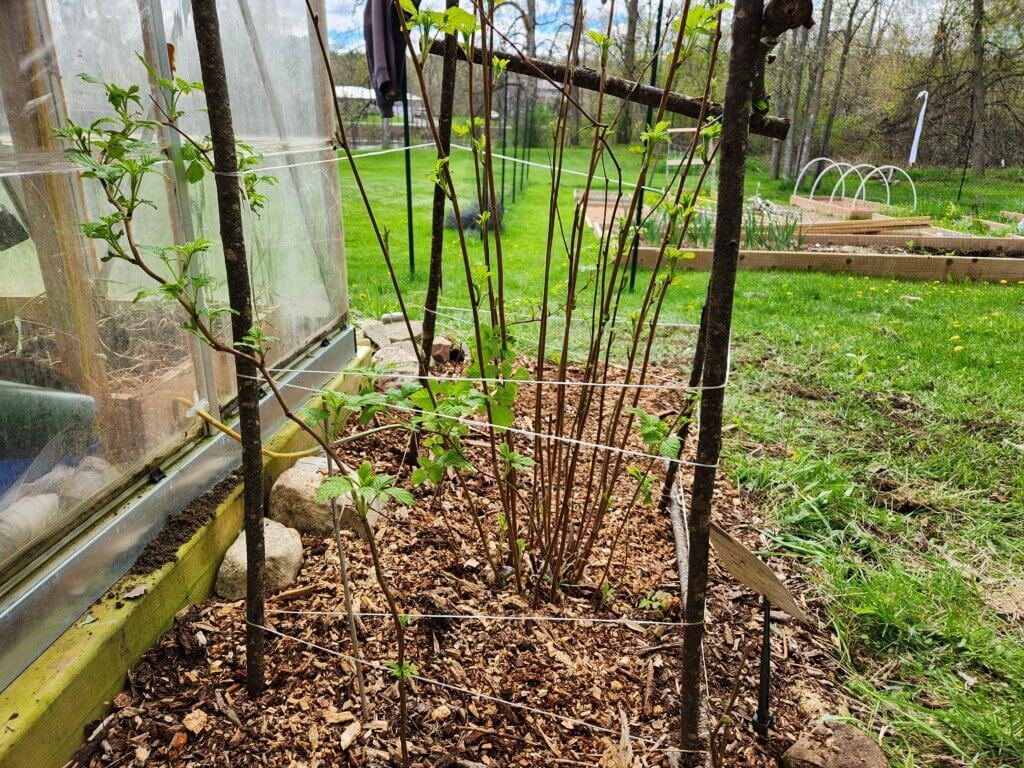
Good airflow is extremely important in Zone 5 because damp spring weather can increase fungal disease risk.
Avoid:
- soggy soil
- low wet areas
- crowded garden beds
- heavy shade
If possible, avoid planting red raspberries close to wild black raspberries or blackberries because diseases can spread between them.
Soil Requirements for Raspberries
Raspberries prefer:
- slightly acidic soil
- rich organic matter
- loose soil structure
Ideal pH: 5.5 to 6.5
That said, raspberries are often more forgiving than people think. We grow ours successfully in mixed clay soil with compost added yearly.
Before planting:
- work compost or aged manure into soil
- loosen compacted areas
- remove perennial weeds
How to Plant Raspberries
Spacing
Proper spacing improves:
- airflow
- sunlight penetration
- disease prevention
- harvesting access
General spacing:
- 18-24 inches between plants
- 6-10 feet between rows
Black raspberries usually need more room because of their arching growth habit.
Planting Depth
Plant raspberries at the same depth they were growing previously.
Water deeply after planting and mulch immediately to help retain moisture.
Trellising Raspberry Plants
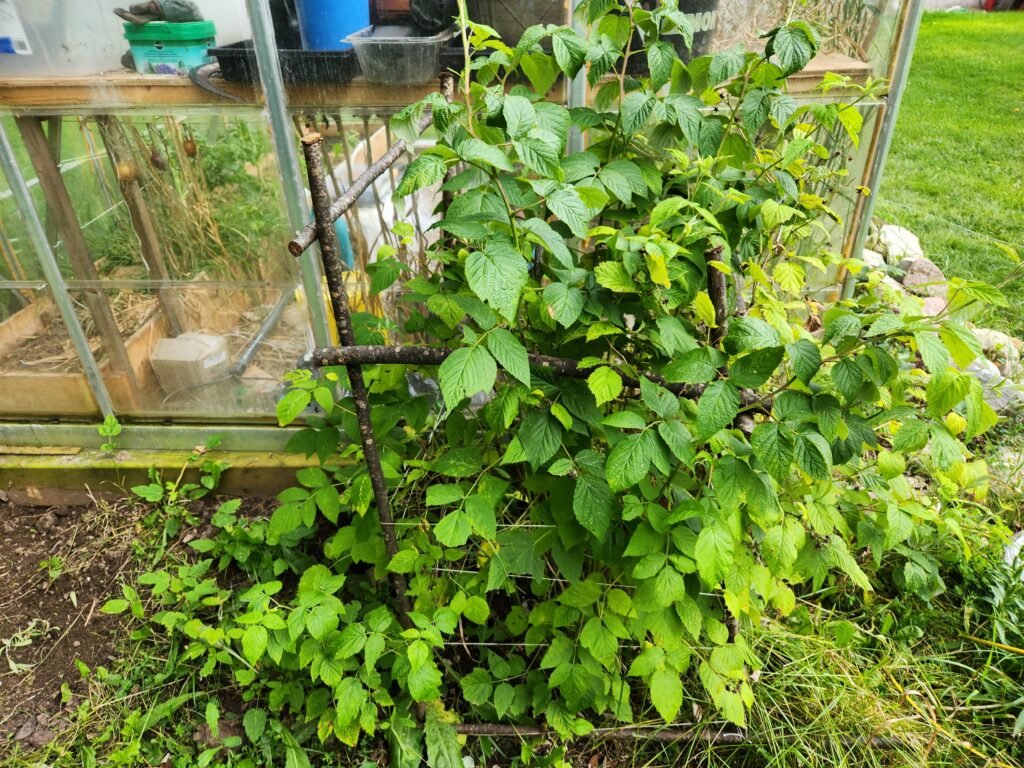
Trellising raspberries helps:
- support heavy canes
- improve airflow
- reduce disease
- simplify harvesting
Common trellis systems include:
- T-post and wire systems
- cattle panels
- simple stakes
- raised bed supports
Black raspberries especially benefit from trellising because their canes naturally arch outward.
Watering and Fertilizing
Raspberries need consistent moisture during:
- flowering
- berry formation
- hot summer weather
Deep watering once or twice weekly is usually enough.
Shallow watering encourages weak root systems.
Fertilizing
A balanced fertilizer in early spring works well.
We commonly use:
- compost
- aged manure
- balanced 20-20-20 fertilizer
Avoid excessive nitrogen because it encourages leafy growth instead of fruit production.
Mulching Raspberry Plants
Mulching is one of the best things you can do for raspberries.
Benefits include:
- moisture retention
- weed suppression
- root protection
- soil temperature stabilization
Raspberries have shallow roots and benefit greatly from 2-3 inches of mulch.
Good mulch choices:
- straw
- shredded leaves
- untreated wood chips
- grass clippings (thin layers)
Read more on how general mulching best practices here:
How to Prune Raspberries
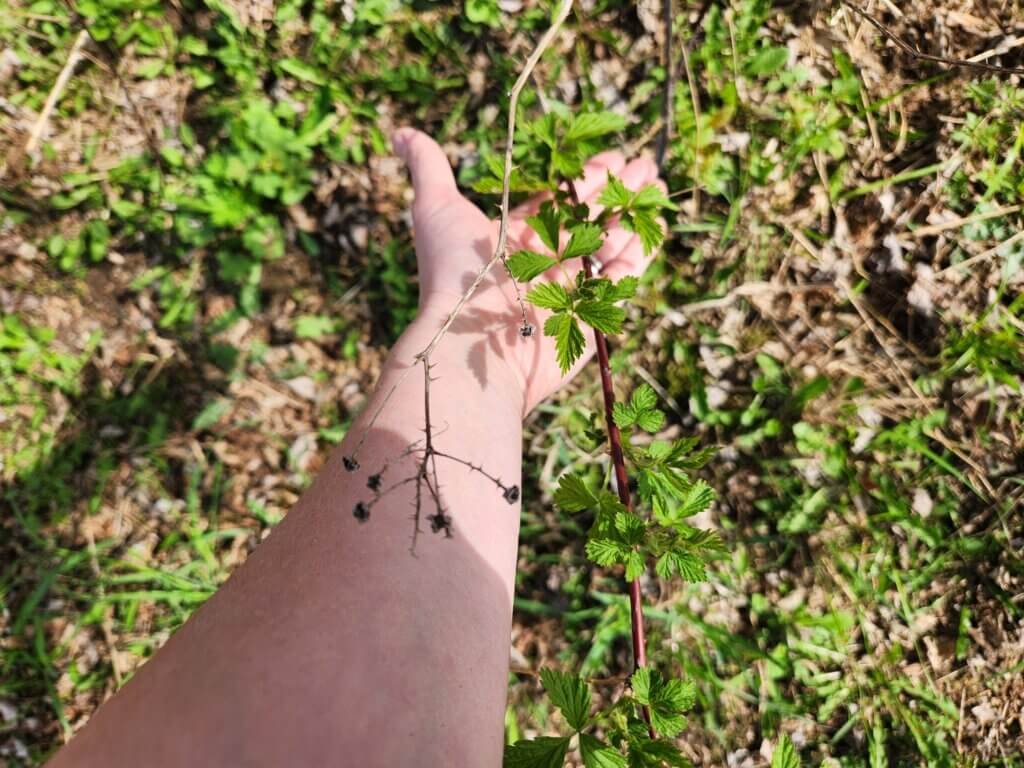
Pruning is where many gardeners get confused.
Different raspberry types require different pruning methods.
Summer-Bearing Raspberries
Summer-bearing raspberries fruit on second-year floricanes.
After harvest:
- remove old fruiting canes
- leave healthy new primocanes for next year
Fall-Bearing Raspberries
Fall-bearing raspberries can be pruned two ways.
Easy Method
Cut everything to the ground yearly for one large fall crop.
Two-Crop Method
Leave lower cane sections for a second smaller crop the following year.
Black Raspberry Pruning
Black raspberries require summer tip-pruning.
When primocanes reach:
24-36 inches tall
Cut the top inch off.
This encourages lateral branching and dramatically improves berry production.
Learn the full process here:
Growing Red Raspberries
Red raspberries are the easiest type for beginners.
They:
- spread quickly
- tolerate cold winters
- produce heavily
- recover well from mistakes
Summer-bearing varieties provide one large harvest in early summer.
Fall-bearing varieties provide a longer harvest season into autumn.
Read the full guide:
Growing Black Raspberries
Black raspberries require:
- better airflow
- more careful pruning
- disease awareness
- trellising support
But their flavor is incredible.
Their berries are:
- darker
- richer
- more wine-like
- intensely aromatic
Read more:
Growing Wild Black Raspberries
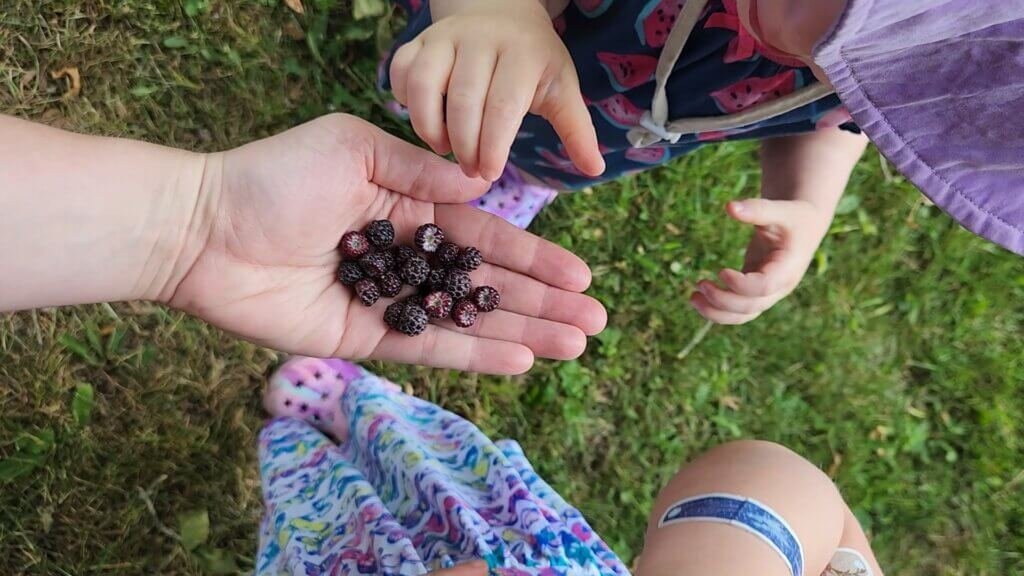
Wild black raspberries are naturally aggressive and hardy.
We often find them:
- along forest edges
- near ditches
- on sloped areas
- growing with almost no care
Despite their toughness, pruning and airflow still improve harvests dramatically.
Read our full guide:
Are Raspberries Invasive?
Short answer: A little.
Raspberries spread through underground runners called suckers.
Over time, one plant can become a large patch.
Personally, we don’t mind this because more raspberry plants usually means more food. But if you want a tidy garden, you’ll need to manage spreading.
Ways to control raspberries:
- raised beds
- mowing edges
- removing suckers
- root barriers
- regular pruning
Read more:
Common Raspberry Problems
Small or Dry Berries
Usually caused by:
- inconsistent watering
- drought stress
- overcrowding
- lack of pruning
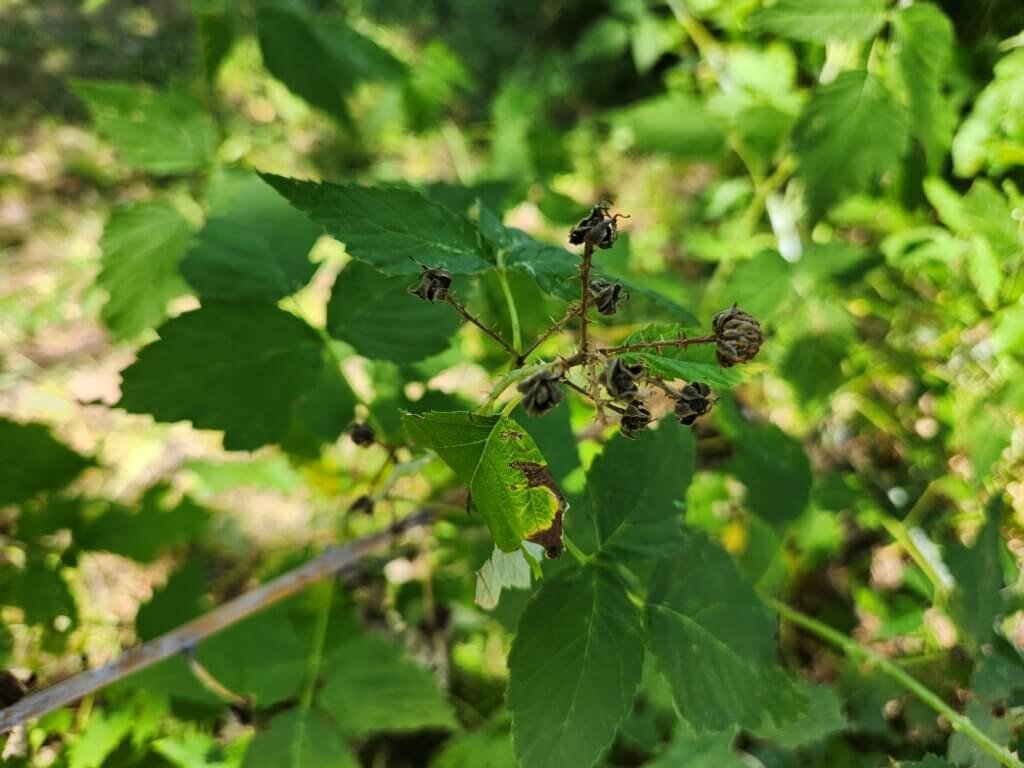
Fungal Diseases
Common issues include:
- anthracnose
- cane blight
- spur blight
Prevent problems with:
- airflow
- pruning
- mulching
- avoiding overhead watering
Birds Eating Berries
Birds LOVE raspberries. Some solutions for this include:
- bird netting
- daily harvesting
- reflective tape
Harvesting Raspberries
Raspberries are ripe when:
- they pull off easily
- color fully develops
- berries soften slightly
In Zone 5:
- summer-bearing harvests usually happen in July
- fall-bearing harvests continue until frost
Harvest daily during peak season.
Fresh raspberries spoil quickly, so:
- refrigerate immediately
- freeze on trays first before bagging
Raspberry Uses and Benefits
Raspberries are one of the healthiest fruits you can grow.
They contain:
- antioxidants
- fiber
- vitamin C
- polyphenols
Raspberry leaves are also commonly used for herbal tea.
Read more:
You can use raspberries for:
- fresh eating
- jam
- syrup
- pies
- smoothies
- dehydrating
- freezing
FAQ
Do raspberries come back every year?
Yes. Raspberry plants are perennial, but individual canes are biennial.
How long do raspberry plants live?
A healthy raspberry patch can produce for 10-15 years or longer.
Can I grow raspberries in containers?
Yes, especially smaller varieties. Use large containers with:
- drainage holes
- rich soil
- consistent watering
- trellising support
Do raspberries need full sun?
Yes. Full sun produces the best yields and healthiest plants.
Should I prune raspberries every year?
Yes. Proper pruning improves:
- airflow
- berry size
- disease prevention
- long-term production

More Raspberry Articles
Want to learn more about raspberries? Here’s all our related content:
- Raspberries vs Strawberries: Which Is Better for Your Garden?
- Are Raspberries Invasive? The Answer Might Surprise You
- Pruning Raspberries: Step-by-Step for Each Variety
- Raspberry Leaf Tea Benefits: A Complete Herbal Guide
- How to Grow Red Raspberries (Summer-Bearing and Fall-Bearing)
- How to Grow Black Raspberries (Complete Care & Pruning Guide)
- Wild Black Raspberry Plant: How to Grow, Cultivate, and Prune Them Successfully
- What is the Difference Between Black Raspberries and Wild Black Raspberries?
Final Thoughts
Raspberries are one of the best long-term fruits you can grow in Zone 5. Once established, they provide years of harvests with relatively little work. The key is understanding how the canes grow, pruning properly, and giving plants enough airflow and moisture throughout the season.
Whether you’re growing classic red raspberries, cultivated black raspberries, or hardy wild black raspberries, a well-managed raspberry patch can become one of the most productive parts of your garden for years to come.