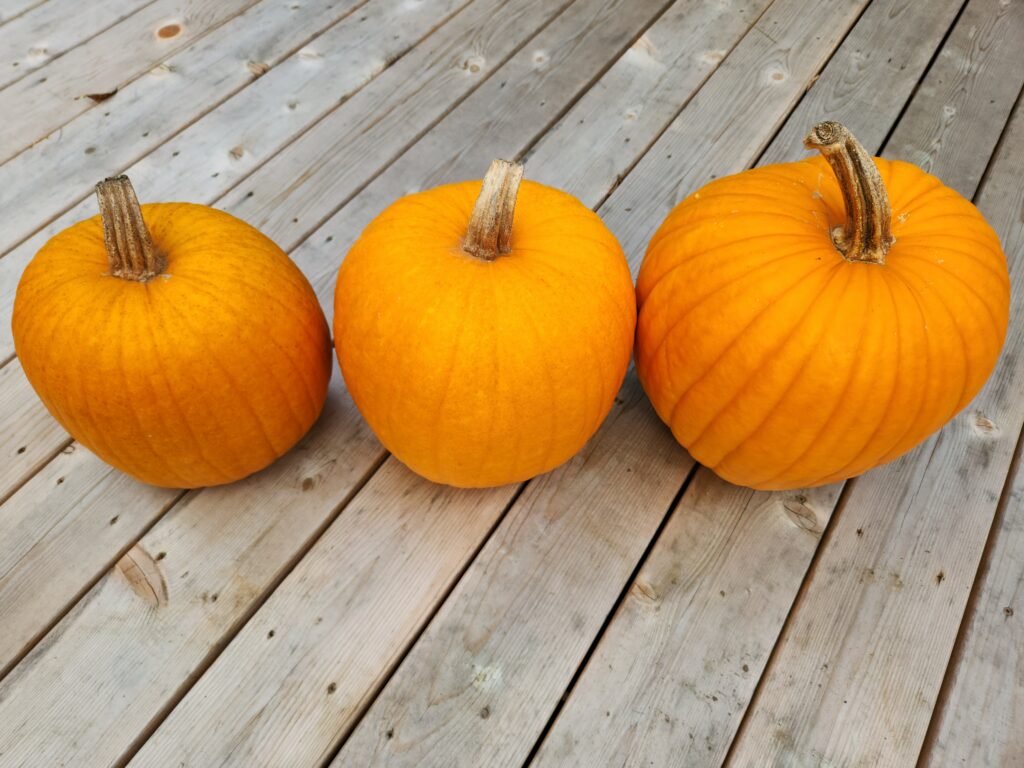
Pumpkins are one of our favourite things to grow, but harvesting them is only the first step if you want them to last through the fall. Learning how to cure pumpkins after harvesting helps harden the rind and prepare them for storage, whether you’re saving them for Halloween or planning to use them in the kitchen later.
This post contains affiliate links. If you use these links to buy something we may earn a commission. Thanks.
We often have pumpkins ready to harvest by the end of August, long before we’re ready to carve or use them. Instead of leaving them in the garden, we harvest and cure them so they’ll keep until we need them.
To cure pumpkins, keep them in a warm, dry, well-ventilated area for about 1-2 weeks before moving them into cooler storage. Below I’ll show you how we harvest, cure and store ours.
The same basic curing process can be used for many types of winter squash, although curing and storage requirements vary by variety.
When Should You Harvest Pumpkins?
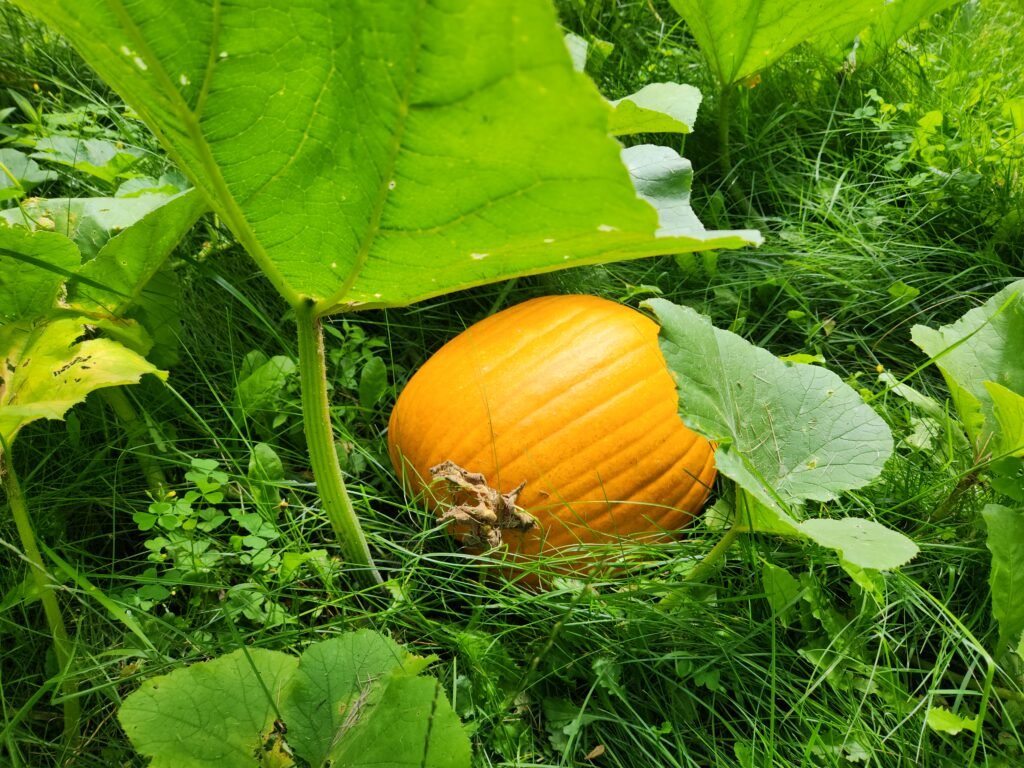
Pumpkins are generally ready to harvest once they’ve reached their mature colour and the rind has hardened. Try pressing your fingernail gently against the skin. A mature pumpkin should resist puncturing. The stem will also begin to harden and dry as the pumpkin reaches maturity.
We prefer to harvest mature pumpkins before a hard frost rather than leaving them outside unnecessarily once they’re ready.
How to Harvest Pumpkins for Curing
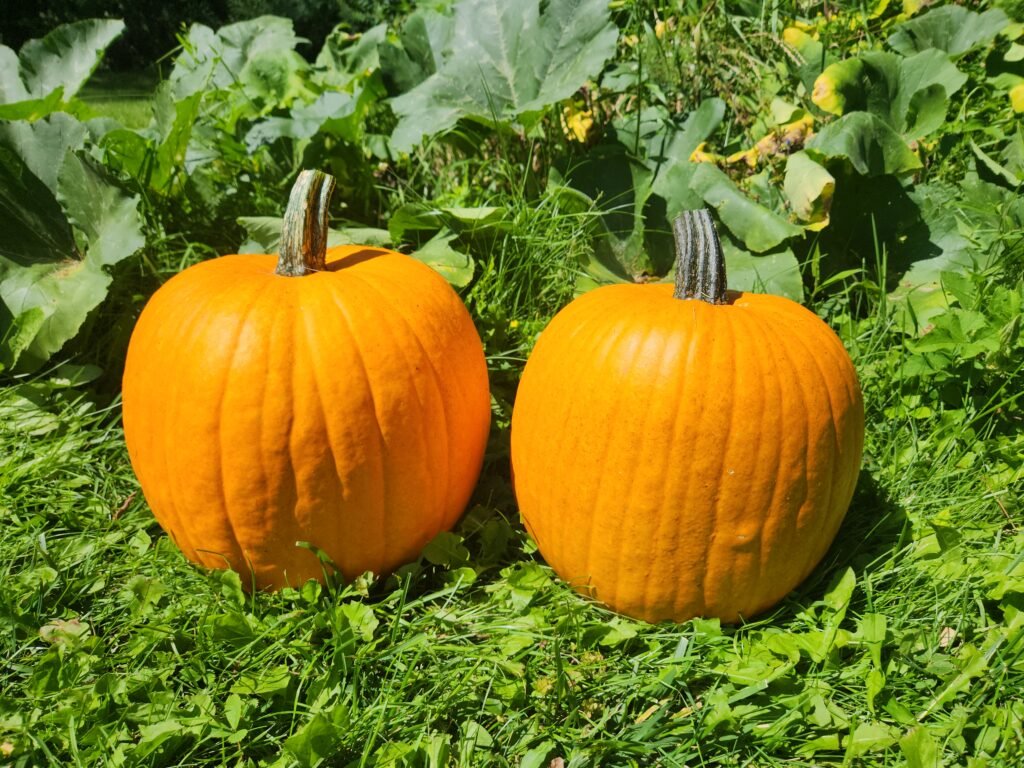
Use clean garden pruners to cut the pumpkin from the vine, leaving several inches of stem attached to the pumpkin. Don’t carry the pumpkin by its stem, since damaging or breaking the stem can shorten its storage life.
How to Cure Pumpkins After Harvesting
After harvesting, inspect your pumpkins and set aside any with significant damage or soft spots to use first. Gently brush away any loose dirt and make sure the stem is intact.
1. Choose a warm, dry location
Place the pumpkins somewhere warm with good airflow. We often cure ours outside on our back deck when late-summer weather cooperates, but they can also be cured indoors.
2. Keep the pumpkins dry
Don’t leave freshly harvested pumpkins sitting in wet grass or somewhere they’ll stay damp. Good airflow around the pumpkin is important during curing.
3. Rotate the pumpkins
Turn the pumpkins every day or two while they’re curing. This helps expose all sides to good airflow and prevents one side from sitting against the same surface throughout the curing period.
4. Cure for about 1-2 weeks
After curing, the rind should be firm and ready for cooler long-term storage.
5. Protect them from bad weather
Cover or bring them indoors if freezing temperatures, heavy rain, or frost are expected.
Why Do You Need to Cure Pumpkins?
Curing helps prolong the storage life of pumpkins by allowing the outer rind to harden after harvest. The warm, dry conditions used during curing help prepare the pumpkin for long-term storage and can also help minor surface cuts heal.
This is especially useful when pumpkins are ready to harvest in August or September but you want to keep them for decorating, carving or cooking later in the fall.
Can You Cure Pumpkins Indoors?
Pumpkins can also be cured indoors if the weather isn’t cooperating. Choose a warm, dry area with good ventilation and plenty of airflow around the pumpkins. Allow them to cure for about 1–2 weeks before moving them into cooler storage.
How to Store Pumpkins After Curing
Once cured, pumpkins can be moved to a cool, dry place for longer-term storage. We keep ours off the floor and away from excess heat and moisture. Good airflow is important, so avoid piling the pumpkins on top of one another.
Check your stored pumpkins occasionally and use any that begin developing soft spots or other signs of deterioration first.
How Long Do Pumpkins Last After Curing?
Properly cured pumpkins can last for several months when they’re stored under good conditions, although the exact storage life depends on the variety, how mature the pumpkin was when harvested and the conditions where it’s being stored.
We usually harvest some of our pumpkins well before Halloween, so curing them gives us a much better chance of keeping them in good condition until we’re ready to decorate, carve or cook with them.
Do Pumpkins Have to Be Cured?
No, pumpkins don’t have to be cured, especially if you’re planning to use them shortly after harvesting. However, if you want to keep your pumpkins for several weeks or months, curing them first can help improve their storage life.
Since our pumpkins are sometimes ready by the end of August and we want them to last into October, we prefer to cure the pumpkins we’re planning to store.
Final Thoughts
Curing pumpkins only takes a little extra time after harvest, but it can make a big difference in how well they store. For us, it’s especially useful when pumpkins are ready in late August or September and we want to keep them for decorating and carving later in the fall.
If you’re growing pumpkins at home, you may also want to read our guide on how to plant a pumpkin patch and, once you’re ready to carve them, how to roast pumpkin seeds.