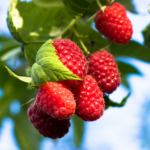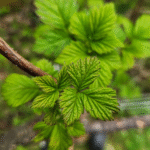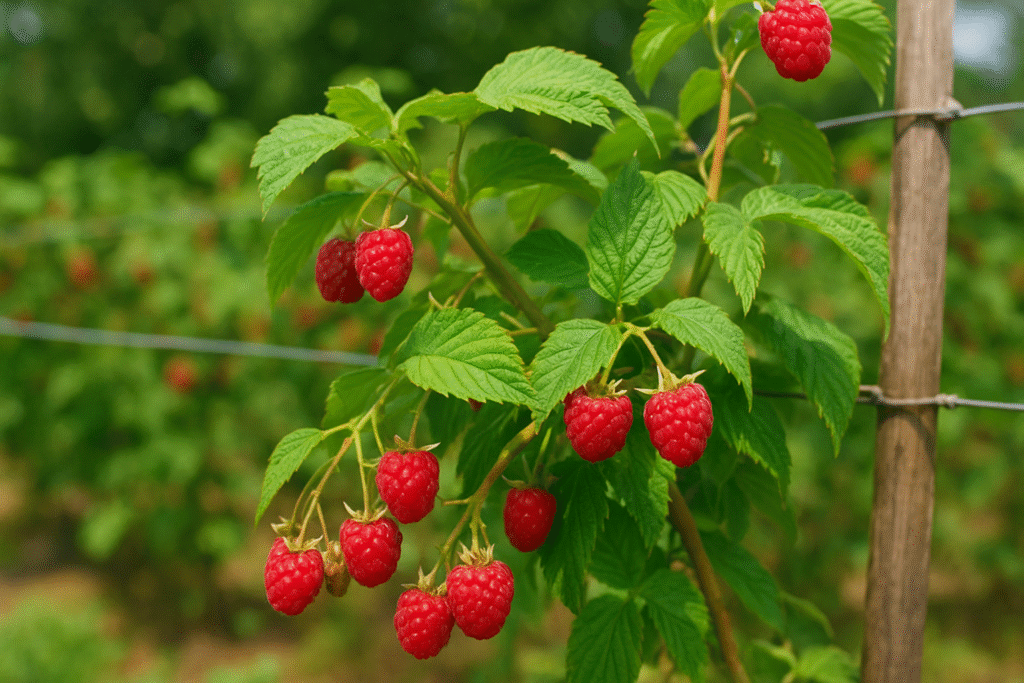
Growing raspberries are one of the most rewarding fruits you can grow at home. They’re hardy, reliable, and surprisingly easy once you understand how their canes work (which will help prevent your raspberries from becoming invasive). They are loaded with medicinal benefits (see Red Raspberry Leaf Tea article). Whether you’re planting raspberries for the first time or improving an established patch, this guide will walk you through everything you need to know about growing raspberries successfully.
Before you start, it helps to understand that there are two main types of red raspberry bushes: summer-bearing and fall-bearing. Their cane growth patterns determine how you prune your raspberries, when you harvest, and how much fruit you get.
This post may contain affiliate links. If you use these links to buy something we may earn a commission. Thanks.
Understanding Raspberry Cane Types
Every gardener needs a quick, clear explanation of how raspberry canes grow, there are two main types: primocane and floricane.
What Is a Primocane?
- It’s a first-year cane that grows and fruits in the same year (ie. grows up in spring and dies in fall).
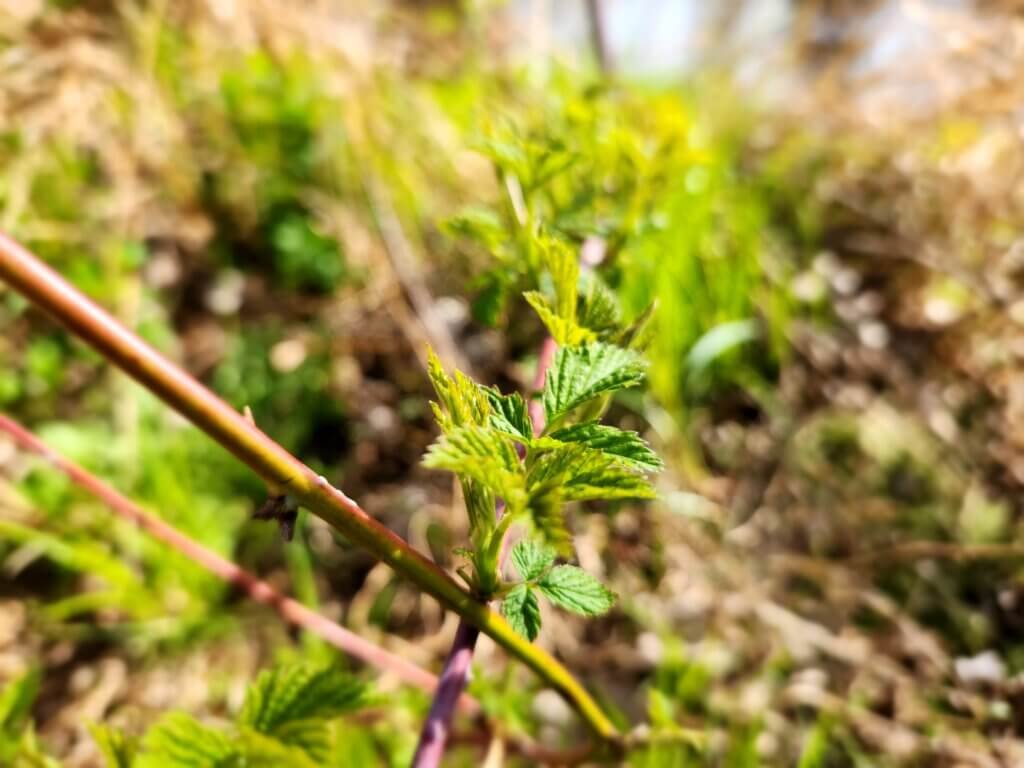
- The cane is green, vigorous and softer/flimsier.
- The primocane produces berries in late summer to fall on fall-bearing varieties (and sometimes spring if pruned properly)
What Is a Floricane?
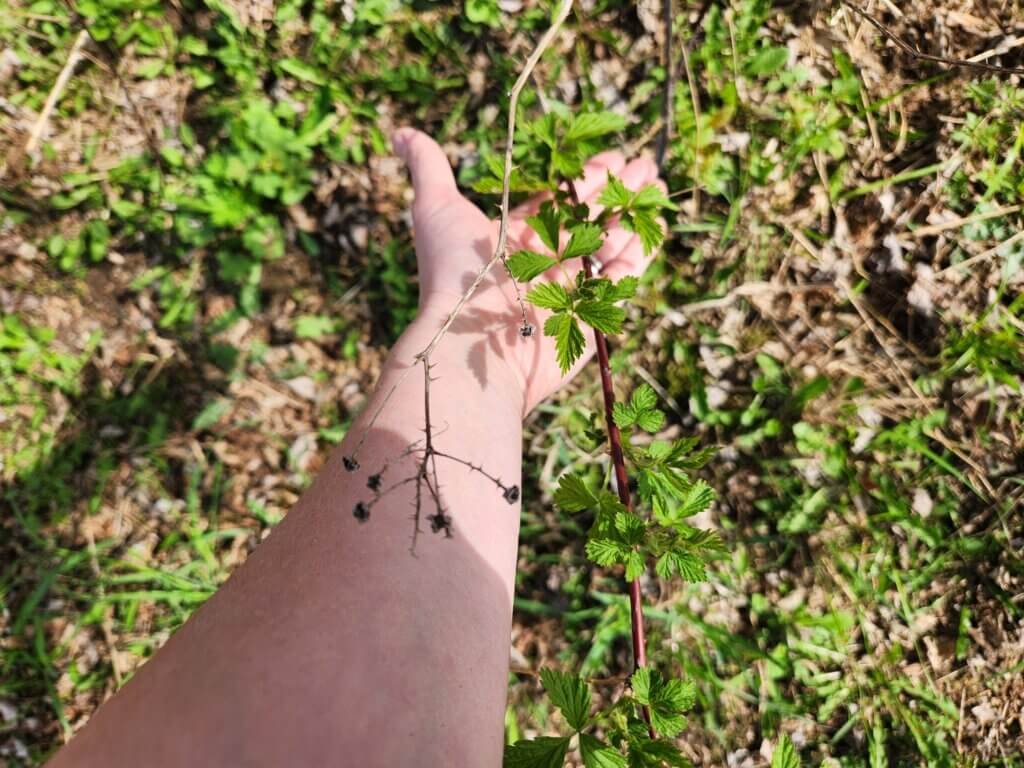
- It’s a second-year cane that grows in year one, then fruits in year two.
- This can is woodier, darker, often thornier
- The floricane bears fruit in early to mid-summer
- It dies back after producing fruit in year two.
Why This Matters
Pruning and harvest timing depend entirely on whether your variety fruits on primocanes or floricanes. Understanding raspberry canes is the foundation of all good raspberry plant care. I have a very detailed article on how to prune raspberries for each variety type below:
How to Plant Red Raspberries
These key steps apply to both summer-bearing and fall-bearing varieties.
Find The Best Location
Red Raspberries love full sun, find a spot in your yard that offers full sun (6-8 hours) for maximum yields. The soil needs to have good drainage to prevent root rot. Red raspberries like well draining soil, but they still do well in mixed soil with clay (that’s my natural soil and they thrive).
Airflow is also critical for raspberries to thrive. Ensure there’s no other big bushy growth close to their location that might prevent good airflow.
Soil Preparation
The best soil has lots of compost and/or aged manure to offer the plant lots of nutrients. Raspberries prefer slightly acidic soil around pH 5.5 to 6.5 – if you’re not able to have acidic soil that’s fine too.
It’s best to mulch right after planting to keep the soil cool and moist, the more moisture available to them during fruiting season will influence your yield.
Spacing
It’s best to space rows of plants 6 to 10 feet apart and plants approximately 18 to 24 inches apart. Proper spacing improves airflow, reduces possible disease and makes harvesting easier for you.
Trellising Options
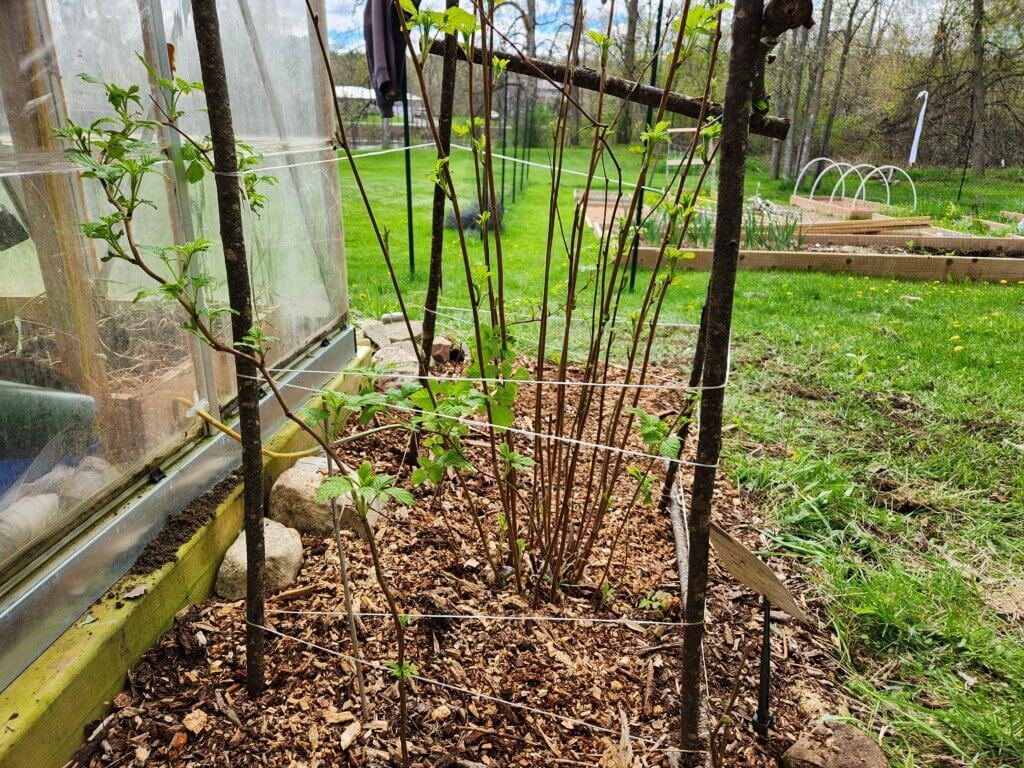
At the end of the day, it doesn’t matter how you trellis and support the plant, just as long as you do. A good trellis keeps canes upright, cleaner, and easier to harvest. Some common techniques include:
- T-post and wire system
- Cattle panels
- Simple stakes for small patches
Caring for Red Raspberries Throughout the Season
Healthy red raspberry bushes need consistent, simple care. This is where most of the ongoing work of growing raspberries happens.
Watering
Like all plants, watering is vital to it’s successful fruiting. Water deeply once or twice a week depending on your weather patterns that season. Mulching is always a good idea, it helps retain moisture and prevents root stress.
Fertilizing
It’s best to feed plants in early spring with a 20 20 20 fertilizer, be sure to avoid overfeeding. Adding too much fertilizer too often encourages excessive leafy growth which you do not want, unless you plan on using the plant to harvest red raspberry leaves for medicinal tea.
Mulching & Weed Control
It’s ideal to keep 2 to 3 inches of mulch around plants. Be weary that raspberries have shallow roots therefore they are sensitive to disturbances, this is where mulching also comes in handy to protect. Mulching also helps suppress weeds and stabilize soil moisture to prevent plants from drying out.
Seasonal Tasks Checklist
- Spring: clean up debris (if not done in fall), fertilize, thin canes (if you want), repair trellis
- Summer: water regularly, harvest, remove diseased canes
- Fall: clean up debris, prune fall-bearing varieties
- Winter: add compost and mulch for insulation
Growing Raspberries – Summer-Bearing: Specific Care and Pruning
How Summer-Bearers Grow
- Fruit only on floricanes (second year canes)
- Harvest occurs in early to mid-summer
- After fruiting, those floricanes die back
How to Prune Summer-Bearing Raspberries
- Remove the old floricanes after they finish fruiting (fall or early spring if you’re unsure if the plants canes are dead).
My opinion on thinning canes: I don’t think it’s necessary or needed to thin out canes in the spring. Some people do it to focus on the ‘strong’ canes only. I wouldn’t do this. Let nature run it’s course. If the plant can produce fruit on 10 canes then let it. Some people argue that by doing this, you’re getting more berries from the stronger branches. I don’t agree with that because I’ve seen the opposite happen personally. It’s all perference.
- In early spring, thin primocanes to keep about 5 to 7 per linear foot
- Choose the strongest, straightest canes to keep
Managing Spreading
- Expect suckers from the floricanes (which isn’t a bad thing!), if you don’t mind a huge messy patch then let them grow (that’s what I do). Also the reason why people think raspberries are invasive.
- Remove unwanted shoots to keep a tidy row
- A narrow strip is easier to harvest and maintain
Expected Yield
- Heavy single harvest each year in mid summer (July in Zone 5)
- Best fruit production begins in year two and increases as the patch matures
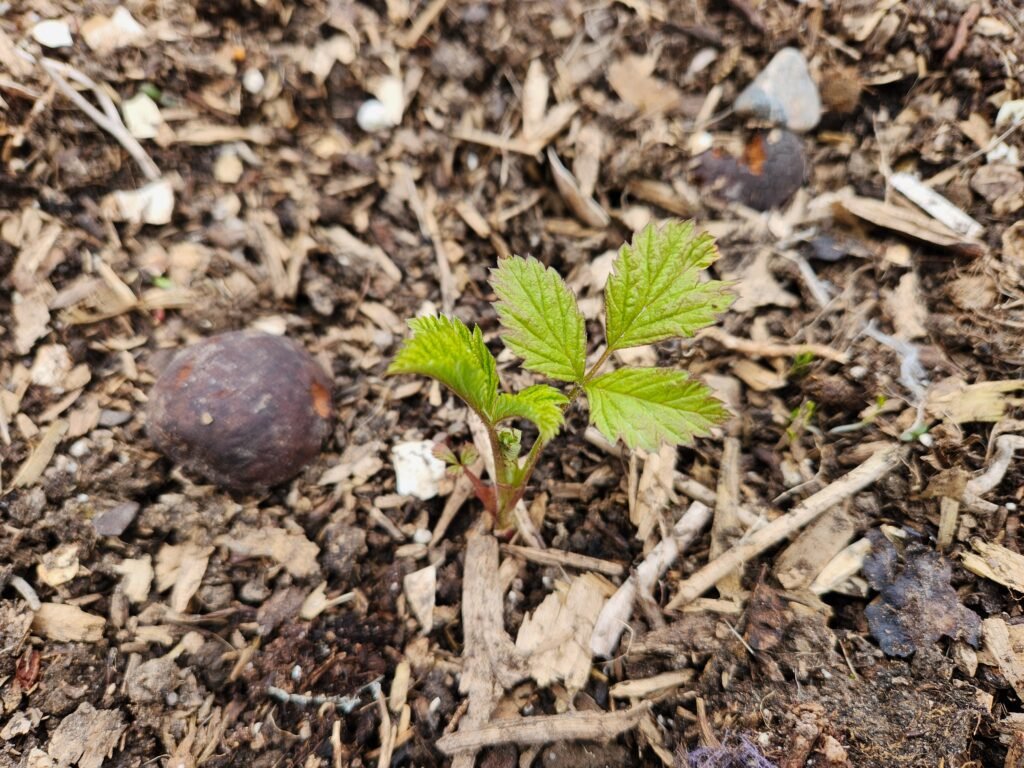
Fall-Bearing (Everbearing) Red Raspberries: Specific Care
How Fall-Bearers Grow
- Produce fruit on primocanes in late summer through fall
- May produce a second small spring crop if pruned a certain way
- Excellent choice for extended harvests
How to Maximize the Fall Harvest
The easiest way to maximize the fall harvest is to water consistently in the summer, have slightly acidic soil, keep mulched, keep canes trellised. Some recommend removing weak canes or small shoot early – but that’s up to you.
Expected Yields for Fall-Bearing Varieties
- Long harvest window from late August through frost
- Very productive for small gardens
Two Pruning Methods For Fall-Bearing Red Raspberries
Method 1: Mow-the-Row
- Cut all canes to the ground in late winter or early spring. Plants grow new primocanes and produce one big fall crop.
- Easiest system for beginners and high yields.
Method 2: Two-Harvest System
- Cut the top portion of each cane after the fall harvest.
- Leave the lower portion to fruit again the next spring
- Produces two crops each year but requires more management
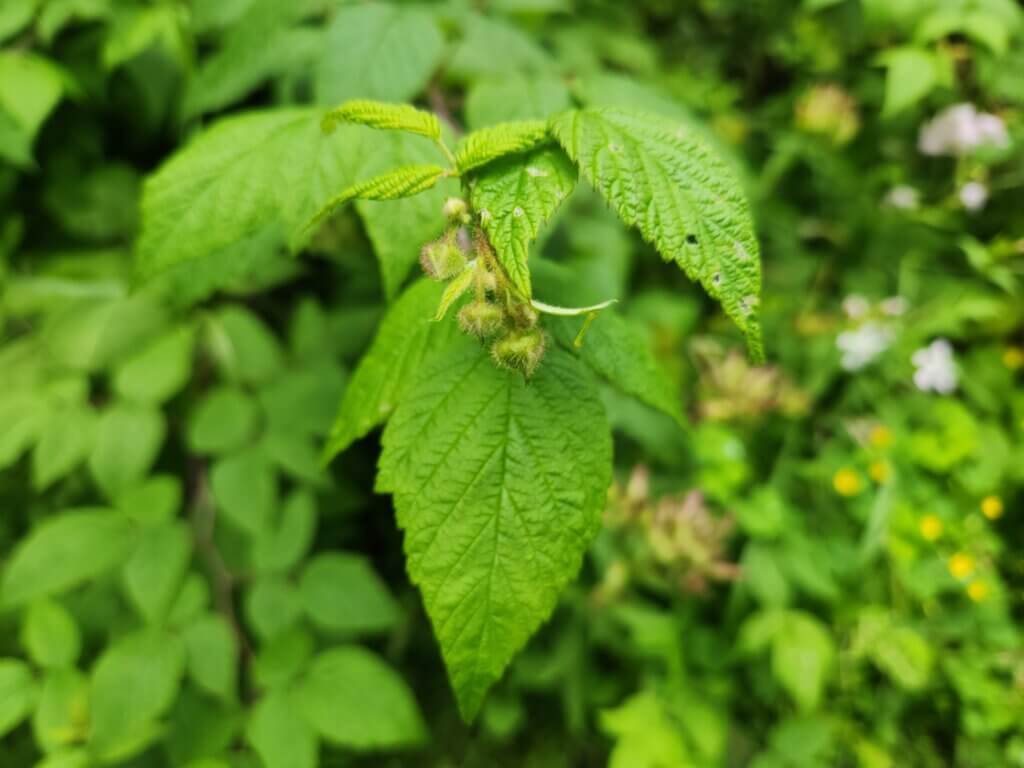
Harvesting Red Raspberries
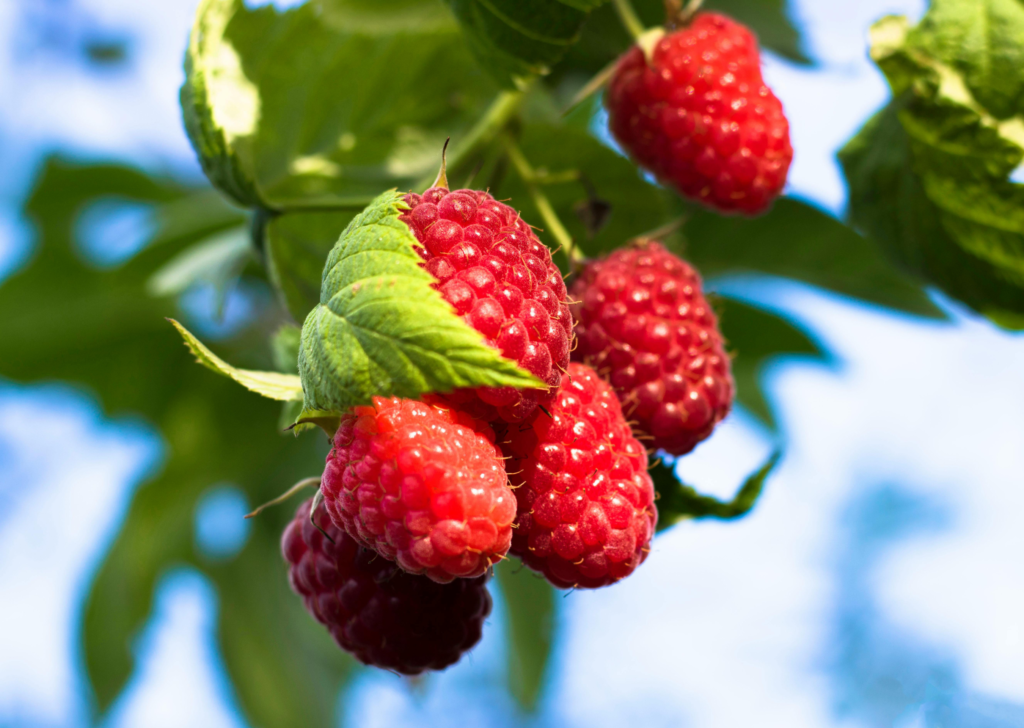
Red raspberries are ripe when they release easily from the stem.
Summer-Bearing
- Harvest early to mid-summer
- Pick daily to prevent birds from grabbing them before you do.
Fall-Bearing
- Harvest late summer until frost
- Pick daily to prevent birds from grabbing them before you do (especially as frost approaches and food become more scarce).
Storage
- Raspberries keep only a few days in the fridge – fresh food spoils much faster
- Freeze immediately for long-term storage. Spread berries on a tray in freezer to avoid clumping
FAQ on Growing Raspberries
Yes – the perennial plant usually live up to 10-15 years. Possibly more, many factors some into play for this.
No you don’t. If left completely alone, the raspberry plants will still provide fruit. Doing some managing and pruning will just help to maximize yields.
Yes, it is doable – but ideally it would be in the ground to grow and trellis over the years instead. Follow the same principles as you would for regular container growing. Deep pot, lots of water, and trellising options.
Raspberry Articles
Want to learn more about raspberries? Here’s all our related content:
- How to Grow Black Raspberries (Complete Care & Pruning Guide)
- Wild Black Raspberry Plant: How to Grow, Cultivate, and Prune Them Successfully
- What’s the Difference Between Wild Black and Black Raspberries?
- Pruning Raspberries: Step-by-Step for Each Variety
- Are Raspberries Invasive? The Answer Might Surprise You
- Raspberries or Strawberries – Which Is the Better Fruit to Grow?
- Raspberry Leaf Tea Benefits: A Complete Herbal Guide
Final Thoughts on Growing Raspberries
Red raspberries are one of the best fruits for home gardeners who want reliable harvests, simple care, and a long picking season. Once you understand how raspberry canes grow, pruning becomes straightforward and your plants will reward you with bowls of fruit every year.
If you’re growing berries at home, you can explore all of our hands-on advice in our Berry Growing Guides, based on what actually works here on our homestead.
We are growing our website with more articles all the time, and we invite you to grow with us. If you have any questions about raspberries or would like to share some of your knowledge with us please leave a comment below. Happy Gardening!