I wish someone told me how important it is to grow flowers at the start of my gardening journey. Instead we focused so hard on learning the practical aspects of growing food. Yes, that’s important, but flowers are also surprising vital to a bountiful garden.
I always saw flowers as ornamental, it wasn’t until my 5th gardening season did I really see the benefits and values of flowers. If this sounds like you, please read on.
A vegetable garden is often seen as a purely functional space, dedicated to producing food. However, integrating flowers into your vegetable garden can provide numerous benefits beyond just adding beauty. From attracting beneficial insects to improving soil health, flowers can play a crucial role in enhancing the productivity and sustainability of your garden. Below, we explore the many advantages of growing flowers alongside your vegetables.
This post contains affiliate links. If you use these links to buy something we may earn a commission. Thanks.

1. Flowers Attract Pollinators
Vegetables depend on pollinators for successful fruiting, but many veggie plants don’t flower early enough to draw them in when you actually need them.
By planting flowers among your vegetables, you create an early-season “welcome sign” for bees, butterflies, and beneficial insects. When your cucumbers, squash, tomatoes, and peppers begin to bloom, the pollinators are already there – leading to stronger yields and better-quality fruit.
Good options include:
- Zinnias
- Marigolds
- Cosmos
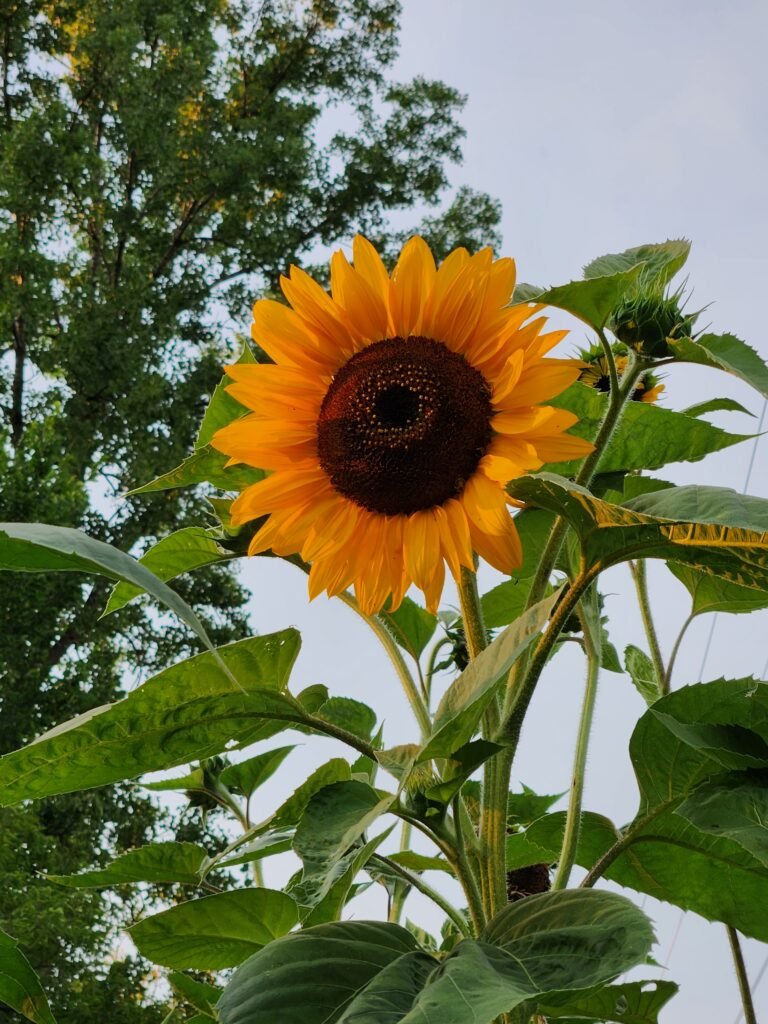
- Sunflowers
- Calendula
Scatter them through your beds or tuck them into the corners for constant movement and color.
2. Flowers Help Repels Pests
Some flowers naturally discourage pests, while others invite beneficial insects that feed on the pests you don’t want. If you want to learn about some early season pests, check out this article about that here.
- Marigolds help deter nematodes and beetles.
- Nasturtiums can lure aphids away from your vegetables.
- Sweet alyssum draws in hoverflies whose larvae eat aphids.
- Borage helps deter leaf-eating pests while supporting pollinators.
Instead of relying solely on sprays or hand-picking, you’re building a small ecosystem that manages itself. Similar to companion planting with herbs and other vegetables. These strategically thought of plants are another element of gardening that most don’t think about.
3. Flowers Improve Soil Health
Many flowers, including sunflowers, borage, dandelions and calendula, loosen soil with their deep or fibrous roots. When their roots break down, or the plant drops leaves, petals, etc, it all adds organic matter to the soil which improves structure, moisture retention, and microbial activity.
Healthy soil grows healthier vegetables. A more diverse root system also supports a wider range of soil organisms, which strengthens your garden year after year.
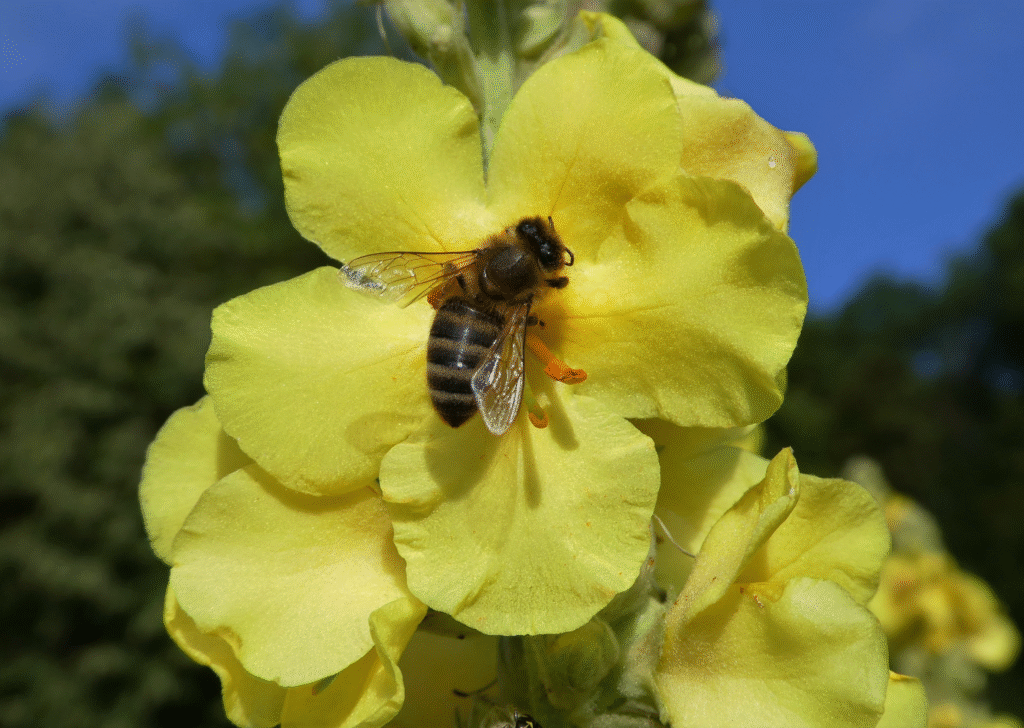
4. Flowers Invite Beneficial Insects
A healthy garden isn’t just pollinators – it’s predators, too! These hardworking insects feed on aphids, caterpillars, spider mites, and other common pests.
Encourage them by planting:
These small, nectar-rich blooms are irresistible to lacewings, ladybugs, parasitic wasps, and other beneficial predators.
5. Flowers Boost Biodiversity
A diverse garden is a resilient garden. Planting a variety of flowers alongside your vegetables will:
- Create a more complex ecosystem
- Reduce the chances of a single pest or disease wiping out an entire crop.
- Support different types of wildlife, including birds, bees, and predatory insects, which all contribute to the overall health of the garden.
- Create a bio diverse garden is less susceptible to sudden infestations and can recover more quickly from environmental stressors.
We’ve been incorporating marigolds along our blueberry plants and it’s provided a pest deterrent to allow our young bushes to thrive and even produce some berries.
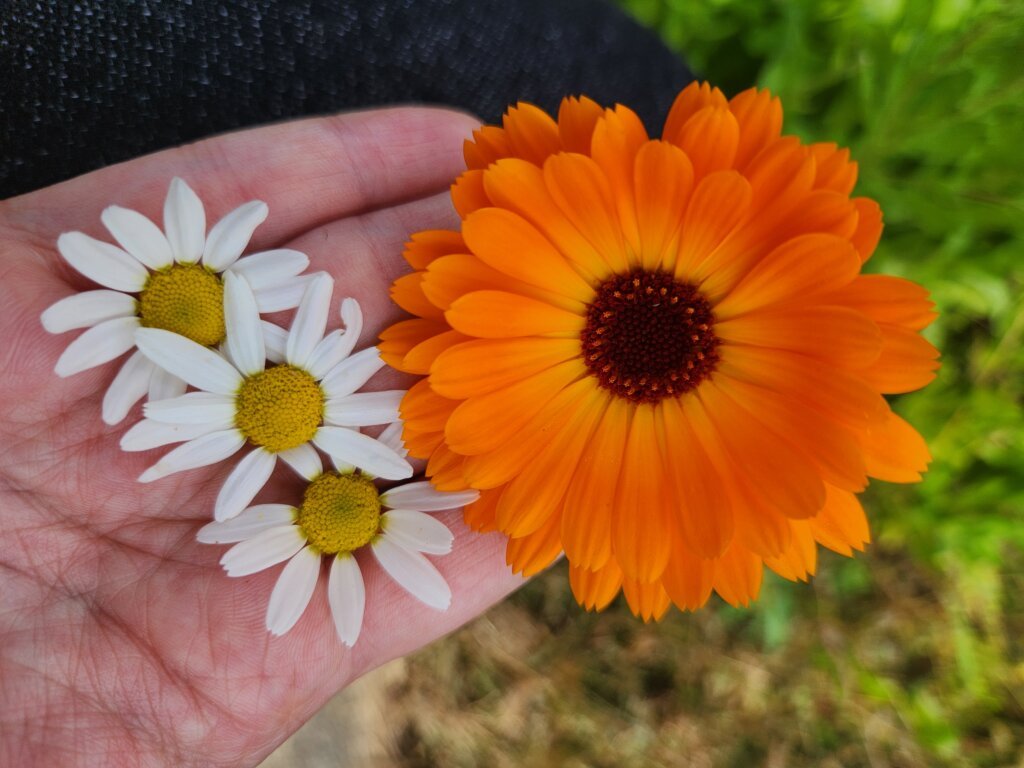
6. Flowers Bring Beauty Into a Functional Space
A vegetable garden filled with flowers:
- Encourages you to slow down and enjoy your space
- Makes daily walk-throughs feel meaningful rather than like chores
- Adds color, texture, and fragrance
- Welcomes children and guests to linger
Beauty isn’t decoration – it’s motivation. When your garden feels inviting, you spend more time in it, notice problems sooner, and care for your plants with more attention.
7. Flowers Provide Edible Blooms
Many flowers are edible and delicious, offering both beauty and flavor for the kitchen. Try adding these edible blooms to salads, ice cubes, syrups, garnishes, or even desserts:
- Nasturtiums
- Calendula
- Borage
- Chive blossoms
- Pansies
- Hollyhocks
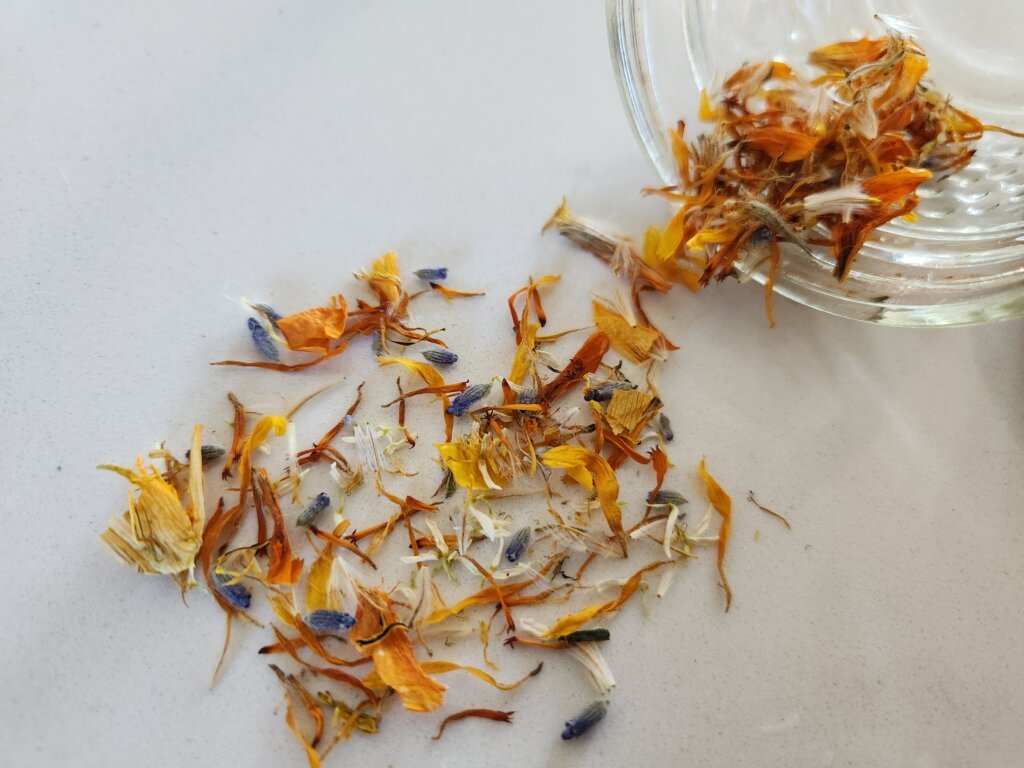
Planting them in your vegetable beds means they’re always within reach when cooking or preserving. To learn more about edible flower uses such as flower sprinkles, check out the link below:
8. Flowers Extend the Garden Harvest Season
Flowers bloom earlier and later than many vegetables, giving your garden life before your tomatoes and peppers set buds and long after your zucchini slows down.
This steady supply of nectar and pollen:
- Supports pollinators throughout the season
- Keeps beneficial insects active
- Reduces pest pressure
- Makes your garden vibrant from early spring to frost
Instead of having one short “peak” season, your garden becomes lively for months.
How to Grow Flowers Successfully
Choose Flowers That Match your Growing Conditions
Flowers thrive best when matched to your local growing conditions. They can be a little temperamental, so look for varieties that fit:
- Your climate and frost dates (aka Hardiness Zone – You can view the United States map here, and the Canadian map here to ensure the flowers you choose can tolerate your climate.)
- Your sunlight levels
- Your soil (heavy, light, sandy, clay)
- Your watering schedule
If you live in a cooler climate, try calendula, sweet peas, borage, and alyssum. Hotter climates do well with zinnias, cosmos, sunflowers, and marigolds.
Prepare the Soil Well
Flowers appreciate the same soil conditions as vegetables:
- Well-draining soil, they don’t want to sit in wet dirt
- Good drainage
- Plenty of compost, manure, organic matter to improve soil
- Most flowers prefer slightly acidic to neutral soil (pH between 6.0 and 7.0). Use a soil tester and adjust with lime (to raise pH) or sulfur (to lower pH) if needed.
- Low disturbance once planted
If your soil is compacted, lightly loosen it and amend with compost or aged manure.
Space Flowers Properly
Use seed packet spacing as your baseline. Proper spacing prevents:
- Overcrowding
- Fungal issues
- Too much shade on your vegetables
Guidelines:
- Tall flowers (sunflowers, hollyhocks) go at the back of beds.
- Bushy flowers (zinnias, calendula) fit in the middle or corners.
- Low-growing flowers (alyssum, violas) work beautifully along edges.
Water & Mulch Consistently
It’s a best practice to water plants in the morning and low to the ground to allow the sun to dry any wet foliage to prevent any fungal growth. Watering should also be deep and consistent, waiting a few long moments so moisture reaches the roots. Alongside your vegetables, flowers need:
- About 1 inch of water per week
- Even moisture during heat spells
- A layer of mulch to regulate temperature and conserve water
Mulch supports soil life and reduces weeds, helping your flowers and veggies thrive together.
Deadhead and Prune for Continuous Blooming
To keep flowers blooming strong:
- Snip off spent blooms (When deadheading and pruning be sure to use cleaned garden pruners!)
- Harvest edible varieties frequently
- Trim back overgrown plants to keep airflow open
Regular deadheading signals the plant to keep producing new flowers, giving you color all season long.
Select Flowers That Grow & Bloom at Different Times
For continuous color, plant a mix of early, mid, and late-season bloomers:
- Early Bloomers – Crocus, daffodils, and pansies.
- Mid-Season Bloomers – Roses, lilies, and daisies.
- Late Bloomers – Sunflowers, asters, and chrysanthemums.
A perfect season example: Pair tulips (spring), echinacea (summer), and chrysanthemums (fall) for season-long color.
Bonus Tips to Successfully Grow Flowers
- Group flowers with similar water and sunlight needs together.
- Rotate planting areas each year to prevent soil depletion and disease buildup.
- Consider native flowers – they’re easier to maintain and attract local pollinators! Grow native as much as possible!
- Monitor soil moisture regularly, especially during hot weather. Use mulch as needed.
Conclusion on How to Grow Flowers
Growing flowers among your vegetables is one of the easiest ways to create a more productive, resilient, and beautiful garden.
You support pollinators, invite beneficial insects, improve your soil, and surround yourself with color and life.
It’s a simple change that leads to a healthier garden – and it brings joy every time you step outside.
If you have any questions about weaving flowers into your vegetable beds, feel free to leave a comment. I’m always happy to help you choose the right varieties for your space.
Want to know more about medicinal herbs? Explore our Medicinal Herbs Hub for growing guides and natural remedies you can make at home. Don’t forget to join our newsletter for seasonal reminders and garden tips straight to your inbox!
We also have plenty of growing guides, seed saving guides and recipes. We are growing our website with more articles all the time, and we invite you to grow with us. If you have any questions about chamomile or would like to share some of your knowledge with us please leave a comment below. Happy Gardening!