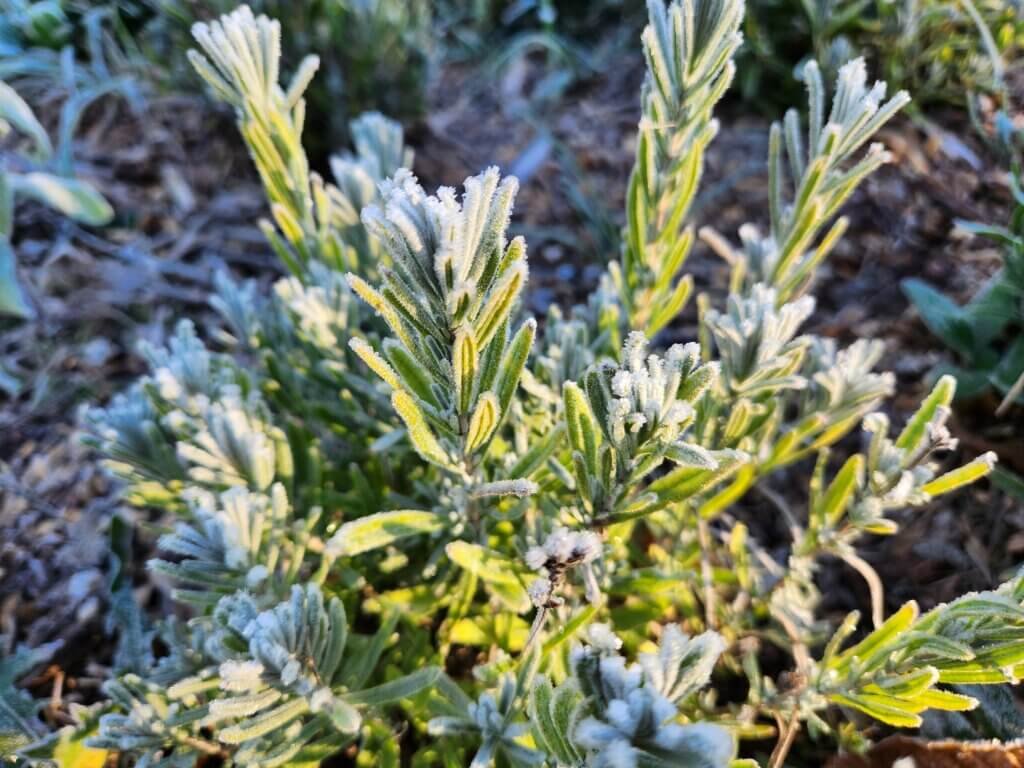
One of the best things about growing perennial herbs is not having to start over every spring. Our thyme, oregano, sage, mint and many more come back year after year, even after a Zone 5 winter.
But not every herb is that tough. Rosemary is a completely different story, and even our hardier perennial herbs benefit from a little preparation before freezing temperatures arrive.
The good news is that winterizing perennial herbs doesn’t require much work. A little mulch, knowing when to cover your plants and understanding which herbs actually need protection can go a long way toward helping them return in spring.
Quick Answer: How Do you Protect Perennial Herbs from Frost?
To protect perennial herbs from frost, cover the soil with 2–4 inches of mulch, straw, or evergreen branches to insulate roots. Use row covers or frost cloths on freezing nights to protect foliage. Water the soil before frost hits, since moist soil holds warmth better than dry. For container herbs, move them indoors or into a sheltered spot.
What Herbs Are Most Affected by Frost?
Not all perennial herbs are equally frost-tolerant. Some shrug off the cold, while others need extra care.
- Hardy herbs like thyme, oregano, chives, sage and mint usually survive winter with little protection once they’re established.
- Tender perennial herbs such as rosemary and lemon verbena struggle in colder climates and often need mulching, covering, or overwintering indoors.
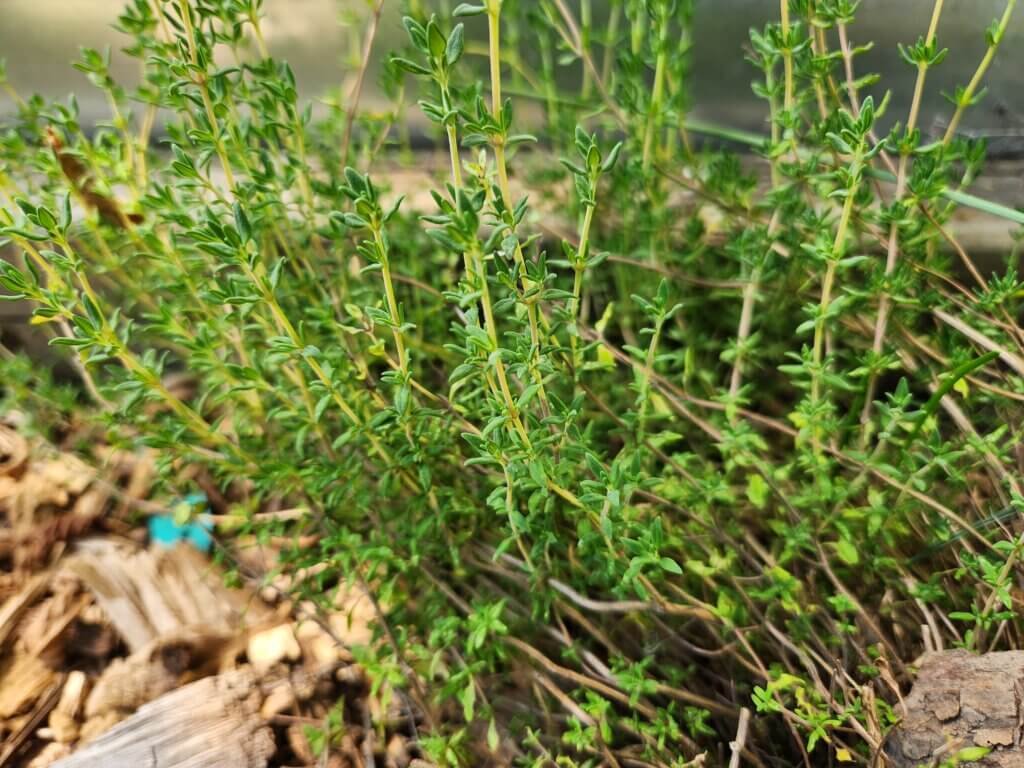
Thyme is one of the hardiest perennial herbs we grow. Once established, ours comes back after our Zone 5 winters without much intervention. If you’re thinking about adding it to your herb garden, our guide to growing thyme goes through how we grow it from planting through harvest.
Mint is another herb that usually has no problem coming back. In fact, keeping it contained can be more of a challenge than getting it through winter. If you’re considering growing it, read our guide on whether mint is invasive.
How Cold Is Too Cold for Perennial Herbs?
Here’s how we approach some of the herbs we grow:
| Herb | Winter Hardiness | What We Do Before Winter |
|---|---|---|
| Thyme | Very hardy | Light harvest, leave most growth, mulch if needed |
| Oregano | Very hardy | Final harvest if wanted, avoid heavy fall pruning |
| Chives | Very hardy | Usually needs little protection |
| Mint | Very hardy | Usually returns even after dying back |
| Sage | Hardy | Avoid heavy fall pruning; protect roots |
| Rosemary | Tender in Zone 5 | Harvest before hard freeze or bring container indoors |
| Lemon verbena | Tender | Bring indoors before frost |
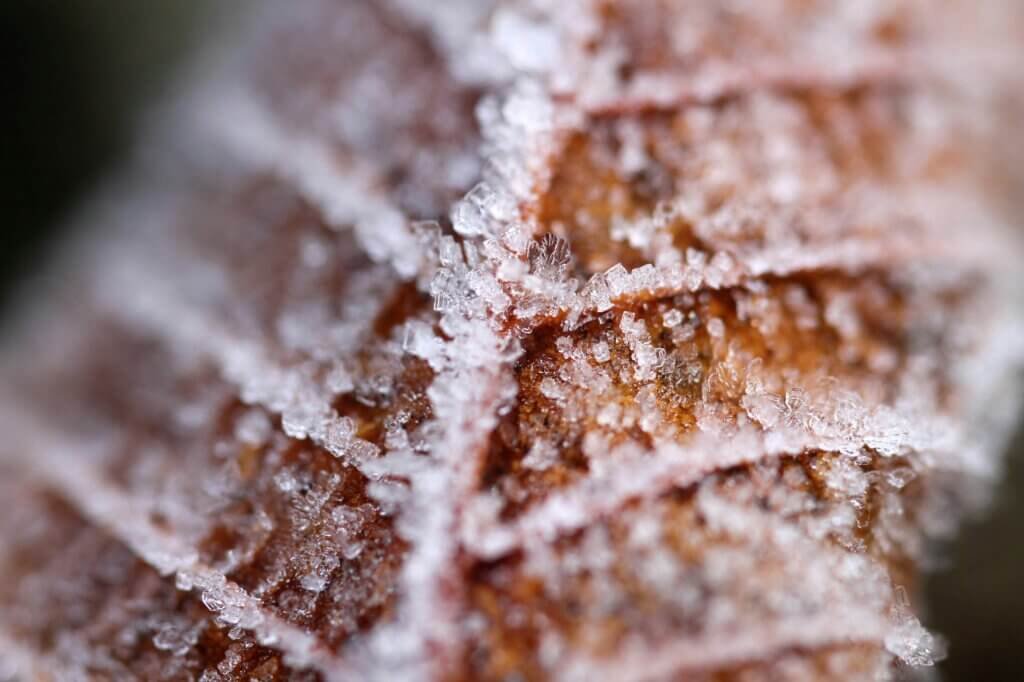
What’s the Best Way to Protect Perennial Herbs in the Ground?
Herbs growing directly in the ground have an advantage over containers because the surrounding soil helps insulate their roots. F
or hardy perennial herbs, our main goal isn’t to keep the entire plant warm all winter. It’s to protect the root system and reduce damage from harsh winter conditions.
It’s also important not to pile on winter mulch too early. We wait until the weather has cooled and the plants are heading into dormancy rather than heavily insulating warm soil early in fall where bugs can find a place to lay eggs and rest over the winter.
This is our basic steps for how to protect perennial herbs:
- Mulching: Add 2–4 inches of straw, shredded leaves, or compost around the base of plants. Keep the mulch slightly away from the crown and stems rather than piling it directly against the plant. Read more about how we mulch our garden.
- Covers: Use frost blankets, burlap, or row covers on freezing nights.
- Watering: If the soil is very dry and frost is approaching, water earlier in the day, moist soil absorbs and releases heat overnight.
How Do You Protect Potted Herbs from Frost?
Container herbs are more vulnerable because roots are above ground and it’s tricky to keep the container at a constant temperature. The best things to do to keep it alive for next year:
- Move pots indoors to a sunny windowsill, unheated garage, or greenhouse.
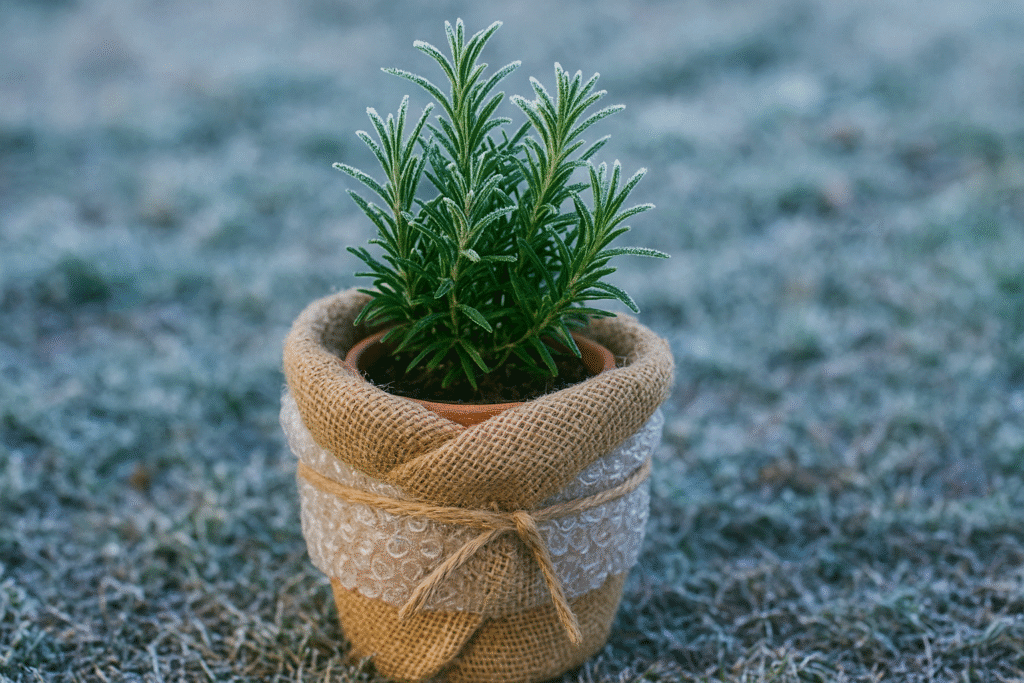
- Wrap containers in burlap, bubble wrap, or even an old blanket to insulate roots.
- Group pots together against a house wall for shared warmth.
When Should You Start Protecting Herbs from Frost?
Start protection as soon as you’re within a week of your first expected frost date. Signs it’s time:
- Night temperatures dip below 40°F (4°C).
- Local forecasts warn of “frost advisories.”
- Leaves show early frost damage (wilting, darkened patches).
If you’re in Zone 5, that’s early October, approximately October 7-10th!
Should You Trim or Harvest Herbs Before Frost?
You don’t necessarily need to harvest every perennial herb before the first frost. What we do depends on the herb.
Rosemary: In our Zone 5 garden, rosemary isn’t reliably winter hardy, so we make our final harvest before a hard freeze. If you have a large plant, this is a good opportunity to preserve as much as possible rather than lose it to winter. See our guides on how to harvest rosemary and how to dry rosemary.
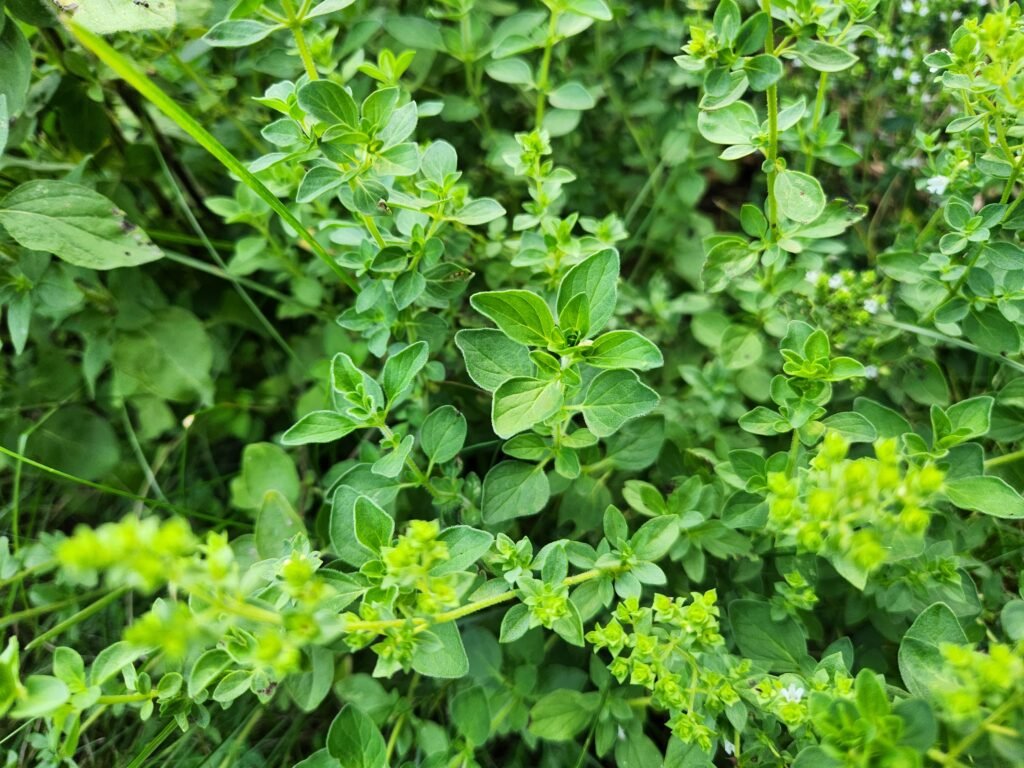
Oregano: Established oregano is much more cold tolerant and usually doesn’t need to be completely harvested before frost. You can take a final harvest in fall, but avoid cutting the plant all the way back.
If you want to preserve that last harvest, see how to harvest oregano and how to dry oregano.
Thyme: Thyme is another hardy perennial that we don’t completely cut back in fall. You can continue harvesting it, but leave plenty of growth on the plant going into winter.
Our thyme growing guide covers how we grow it throughout the season, and you can also read our guides on harvesting thyme and drying thyme.
Mint: Mint is extremely hardy and generally doesn’t need a final harvest for winter survival – I guarentee you – it will come back. You can harvest what you want before frost, but don’t worry if the foliage eventually dies back. The roots usually remain alive underground and send up fresh growth in spring.
Sage: Sage is fairly cold hardy once established, so we don’t cut ours heavily back in fall. You can take a final harvest, but leave plenty of growth on the plant and save major pruning and cleanup for spring.
What About Annual Herbs?
Annual herbs are different. Herbs like basil and dill aren’t going to survive our winter outdoors, so instead of trying to winterize them, we focus on harvesting and preserving them before frost.
If you’re still looking to clean up your annual herbs, this is how we harvest dill and dry dill to last us the entire winter.
Basil is a little different than most herbs, we preserve our abundant summer harvests by freezing basil or making a quick 5 ingredient pesto.
For our hardy perennial herbs, we prefer to do any major cleanup in spring rather than cutting everything back before winter.
FAQ on Protecting Herbs from Frost
Yes, many herbs regrow in spring even if their foliage dies back. Roots are the key to survival.
Yes, especially for tender herbs like rosemary and basil. Remove covers during the day so plants get sunlight and airflow.
Not directly, plastic traps condensation and can damage leaves. Instead, use fabric or burlap.
2-4 inches around the base, keeping it slightly away from the stem.
No – covering after the first frost can prevent further damage and help roots recover.
It’s good to because moist soil retains heat better than dry soil to help shield roots. However, if you don’t it’s not the end of the world – especially because the snow will work to do that too.
Keep Your Herbs Thriving Year After Year
Perennial herbs are resilient, but a little frost protection makes the difference between weak spring growth and thriving plants. By mulching, covering, and moving pots inside, you’ll enjoy lush herbs season after season.
If you’re on a gardening preserving journey at home, you can explore all of our hands-on advice in our Harvesting & Preserving, based on what actually works here on our homestead.
We are growing our website with more articles all the time, and we invite you to grow with us. If you have any questions about how to protect perennial herbs from frost or would like to share some of your knowledge with us please leave a comment below. Happy Gardening!