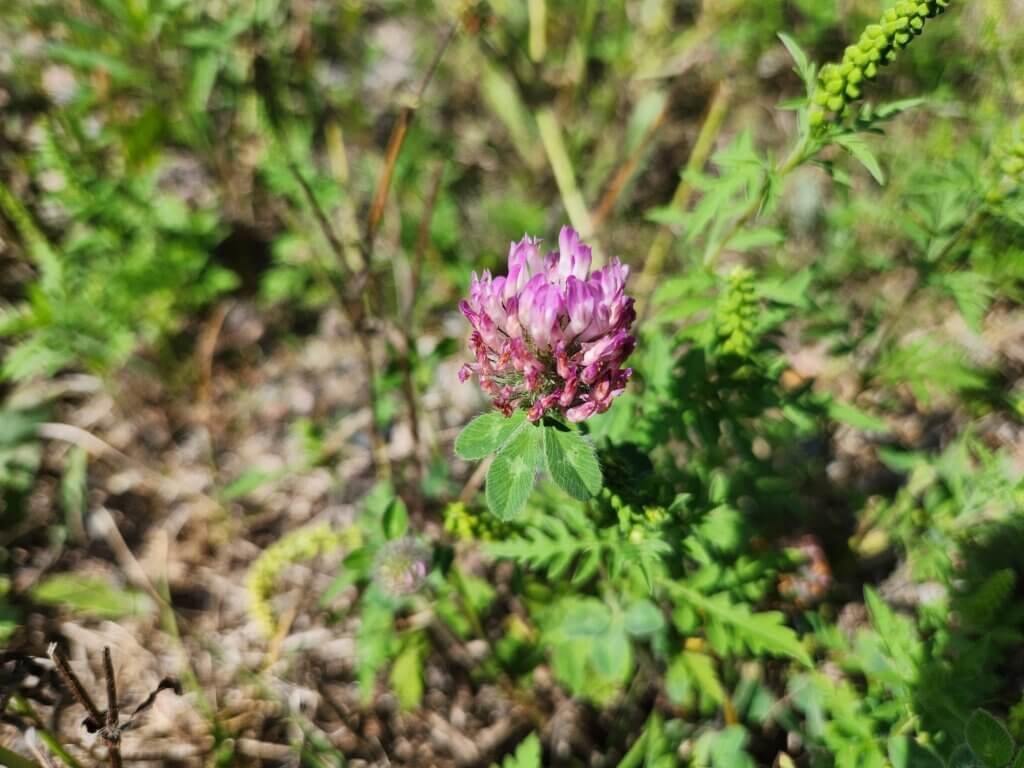
I like to think of red clover as the more sophisticated relative to traditional white clover. Red clover needs more time to bloom so you won’t find it amongst the white ground level cloves, you may have it growing in your yard, but the grass isn’t long enough for you to see it bloom.
I’ve been going on a medicinal herbal journey the last few years and I’ve learned about red clover and how beneficial it is, particularly for women’s health. As a woman, I wanted to learn more and share what I know of red clover and how I use it.
What Is Red Clover?
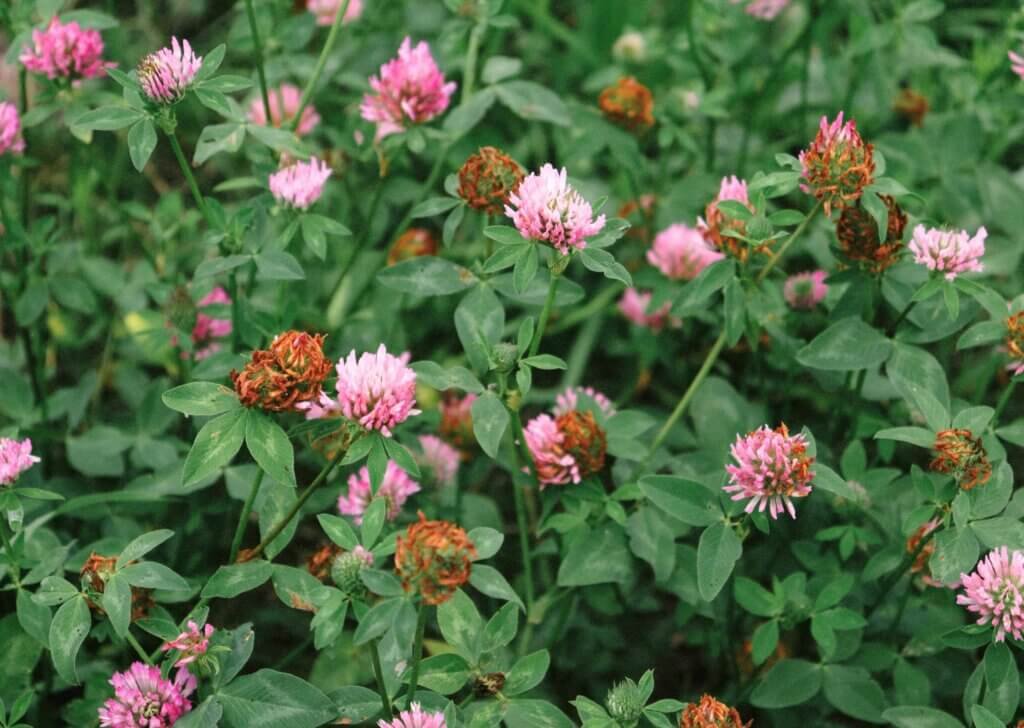
Red clover (Trifolium pratense) is a perennial legume known for its rounded pink to reddish-purple flower heads and its familiar three-leaf pattern.
It’s part of the pea family, which is important because that’s what gives it one of its biggest benefits — the ability to fix nitrogen in the soil. If you want to learn how to grow peas, check out our growing guide.
Originally native to Europe, Western Asia, and parts of Africa, red clover has spread widely across North America. It grows well in cooler climates and is often found in fields, pastures, and even along roadsides.
If you’ve ever seen taller clover flowers rising just above the grass in late spring or early summer, there’s a good chance it was red clover.
Is Red Clover a Weed or Invasive?
This really depends on how you define a “weed.” A weed is simply a plant that is growing in an unwanted spot.
Red clover will self-seed and spread, which is why some people don’t want it in their lawns. But that doesn’t make it invasive.
Unlike true invasive plants, red clover doesn’t aggressively take over ecosystems or crowd out native species in a damaging way. In many cases, it’s actually planted intentionally for its benefits.
If you’re interested in reading about other plants labeled as weeds or invasive, check out my collection of those:
- Dandelions – The Miracle Weed You Should Be Thanking
- Tomatoes: A Weed or Invasive Species?
- Is Mint Invasive or a Powerful Medicinal and Culinary Herb?
- Are Raspberries Invasive? The Answer Might Surprise You
Why Gardeners and Homesteaders Grow Red Clover
Even if you’re not using it medicinally, red clover deserves it’s space for a number of reasons:
- It naturally adds nitrogen to your soil
- It attracts bees, butterflies, and other pollinators
- It helps prevent soil erosion
- It can be used as forage for animals (chickens)
- It improves overall soil structure over time
Like many plants, red clover is quiet and works behind-the-scenes while you’re busy tending to the rest of your garden.
How Red Clover Is Used Medicinally
This is where red clover starts to get more interesting.
Traditionally, the blossoms have been used in simple herbal preparations like teas, tinctures, and salves. It’s often associated with supporting women’s health, along with being used for things like skin health and respiratory support.
I’ve given dried red clover leaves to women I know going through menopause. I’ve also made red clover tinctures to benefit my health and my husbands given it’s hormonal benefits.
I have an entire article dedicated to talking about Red Clover Tea Benefits and How to Make It.
How to Harvest and Use Red Clover Flowers
If you have red clover growing nearby, you can harvest it yourself – which is exactly what I’ve been doing.
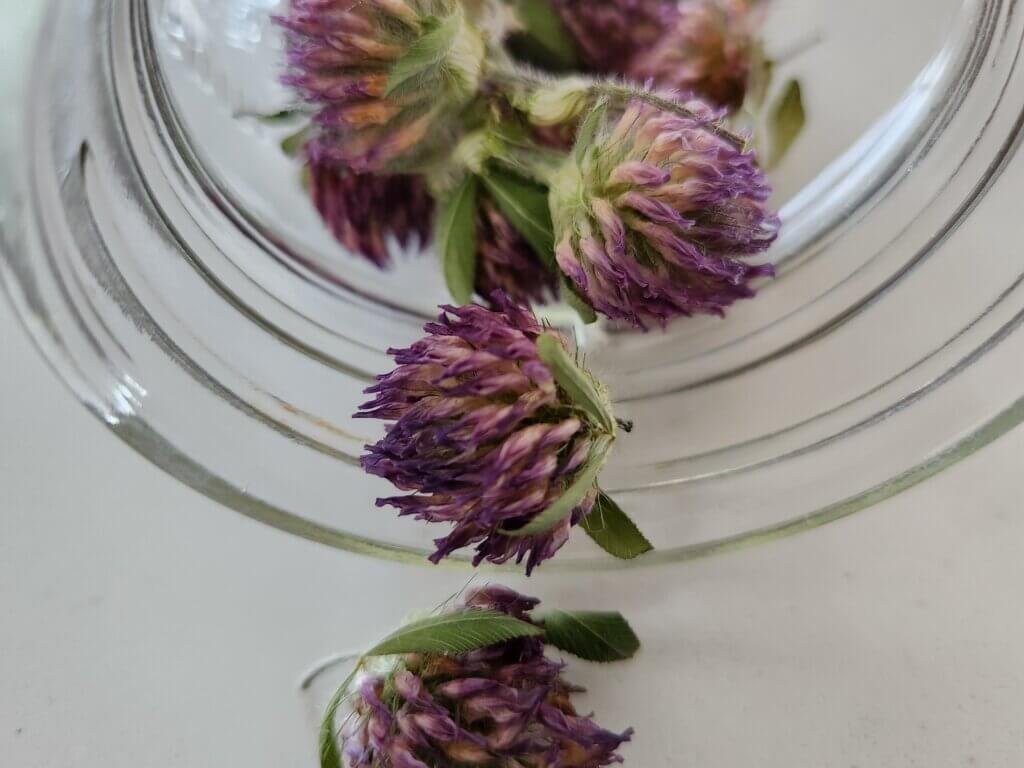
The flowers are typically picked when they’re fully open and vibrant, then dried for later use in teas or other preparations.
The process itself is simple, but timing and drying conditions matter more than you’d expect. Harvest when the flowers are dry and vibrant – ideally early-mid morning.
Drying can be tricky. The entire flower needs to be dried to prevent molding. The process is longer than other plants and herbs I’ve dried in the past. In a dehydrator it took 5-6 days instead of the usual 48 hours.
How to Grow Red Clover
Red clover is a low-maintenance plant once it’s established.
It grows well in:
- full sun to partial shade
- well-drained soil
- cooler climates (like Zone 5)
It can be planted in early spring or late summer and doesn’t require much ongoing care beyond occasional mowing or trimming if you want to control its spread.
Some people grow it intentionally as a cover crop, while others let it grow naturally and work with it instead of against it.
Is Red Clover Worth Growing or Using?
For me, red clover is one of those plants that you come to admire the more you learn about it.
It supports your soil, pollinators, and it gives you something useful you can harvest and use yourself.
You don’t have to go all in on herbal remedies to appreciate it. Even just understanding what it is (and choosing not to pull it out) can change how you see your garden.
Related Articles
If you want to go deeper into specific areas, start here:
- How to Harvest Red Clover Flower (and Dry It Properly at Home)
- Red Clover Tea Benefits (What It’s Used For and How It May Help)
- Raspberry Leaf Tea Benefits: A Complete Herbal Guide
- How To Make Homemade Tea Bags with Garden Herbs
- Medicinal Herb Hub: Growing, Harvesting and Using Natural Remedies
So, What Is Red Clover?
It’s a perennial legume that benefits the soil, pollinators and of course, humans. When used medicinally it supports women’s health, (and men’s!), while also benefiting our skin and respiratory organs.
Red clover is an essential plant to add to your plant knowledge and home remedies cabinet.
If you’re growing your medicinal herbs cabinet at home, you can explore all of our hands-on advice in our Medicinal Herbs Hub, based on what actually works here on our homestead.
We are growing our website with more articles all the time, and we invite you to grow with us. If you have any questions about red clover or would like to share some of your knowledge with us please leave a comment below. Happy Gardening!