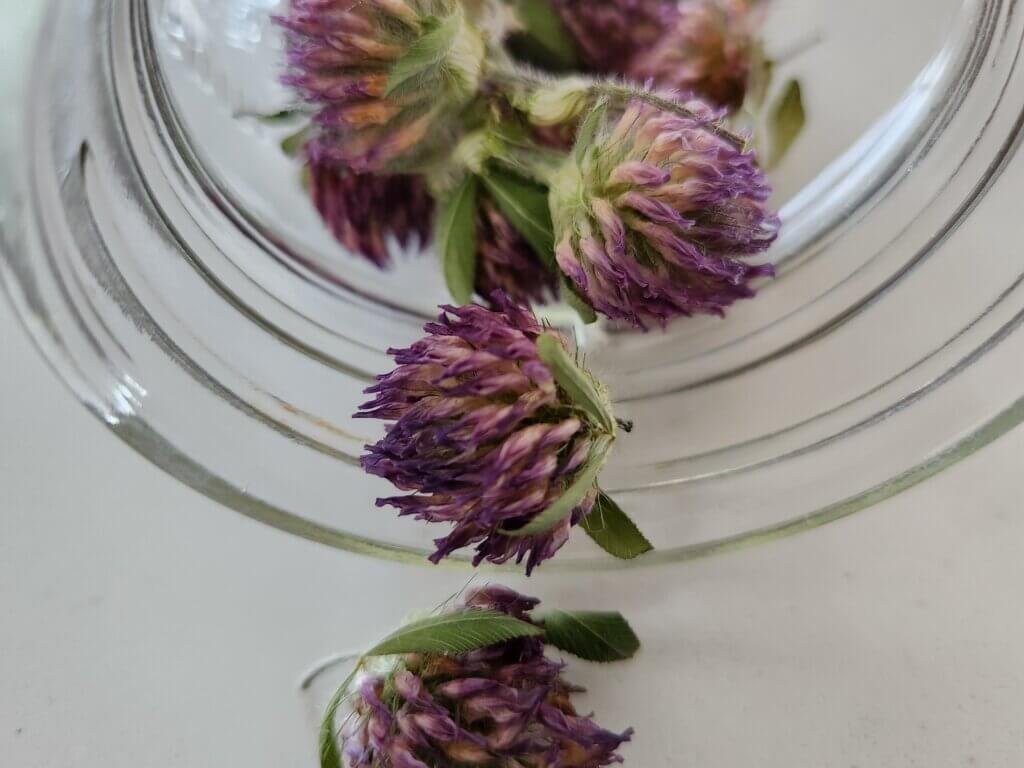
If you’ve got red clover growing nearby, you’re sitting on something useful! Not just for your soil or pollinators – but something you can actually harvest and use yourself naturally.
I began paying attention to red clover once I got more into herbal remedies (see my collection of medicinal herb guides here). Red clover one of those plants that’s easy to overlook until you realize how simple it is to collect and dry and use.
If you’re new to red clover altogether, I put together a full guide covering what it is, its benefits, medicinal uses, and how it grows naturally: Red Clover: Benefits, Uses, and How to Grow It.
The process itself isn’t complicated. But when you harvest and how you dry it makes all the difference.
This post may contain affiliate links. If you use these links to buy something we may earn a commission. Thanks.
Quick Answer: How to Harvest Red Clover Flower
Harvest red clover flowers when they are fully open and vibrant, usually in late spring to early summer. Pick on a dry, sunny day after the dew has evaporated. Snip the flower heads just below the base, avoiding wilted or browning blooms. Dry them in a warm, well-ventilated space until completely crisp before storing.
When Is the Best Time to Harvest Red Clover?
Timing is everything here.
You want the flowers when they are:
- fully open
- bright pink to reddish-purple
- soft but not fading
If the flower is starting to brown or dry out on the plant, it’s past its peak.
Best time of day:
- Late morning or late afternoon (mid-day is not ideal because plants droop during the heat of the day)
- After the dew has completely dried
If you harvest when the plant is damp, you increase your chances of mold during drying.
Where to Find Red Clover (and What to Avoid)
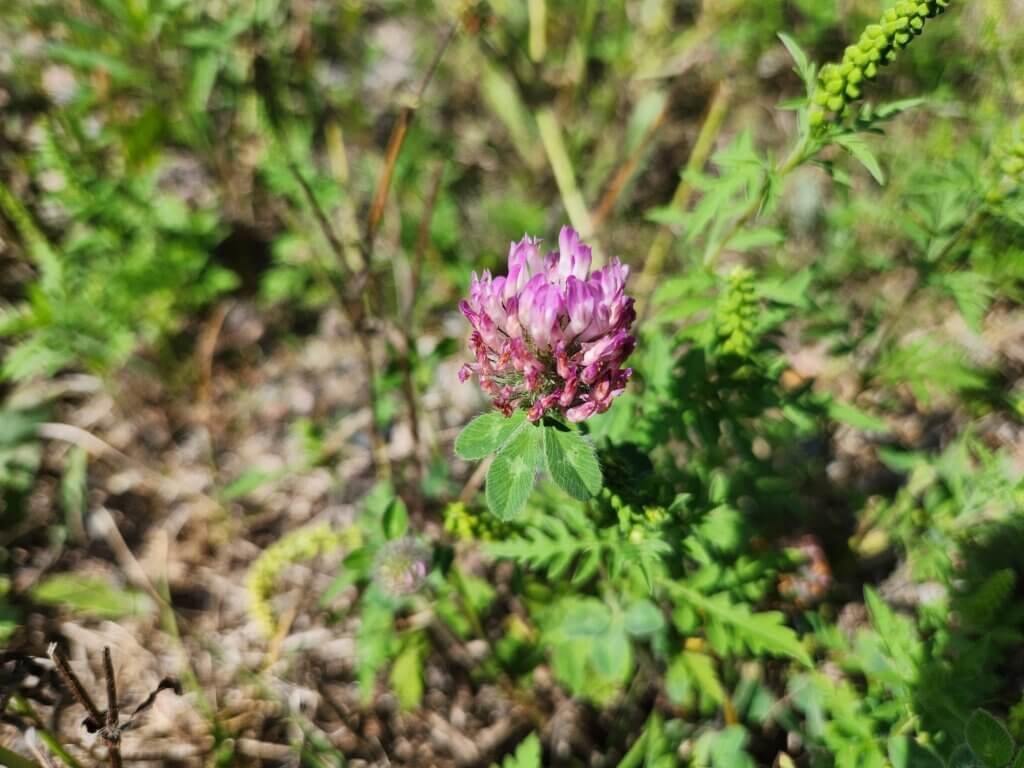
Red clover is easy to find once you know what you’re looking for.
Look for:
- taller clover plants rising above grass
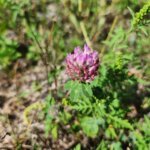
- round pink-purple flower heads
- three-leaf clusters with a pale “V” marking (see image above for the leaves)
Avoid harvesting from:
- roadsides (vehicle runoff)
- sprayed lawns or fields
- areas with heavy foot traffic or animals
If you wouldn’t eat from the area, don’t harvest from it.
Ideally, you will harvest from your own yard or property. I know people who use hiking trails through the woods and harvest from there as it’s not sprayed.
How to Harvest Red Clover Flower
This part is simple, but doing it right keeps your harvest clean and usable.
What you’ll need:
- your hands or small scissors
- a basket or breathable bag (not plastic)
Steps:
- Find flowers that are fully open and healthy
- Hold the stem just below the flower head
- Snip or pinch the flower off
- Drop it gently into your basket
Try not to crush or pack them tightly. Airflow is important, even before drying.
How Much Should You Harvest?
Only take what you’ll realistically use. A good rule of thumb:
- Never harvest more than 1/3 of a patch
This keeps the plant healthy and allows it to keep feeding pollinators and reseeding. Especially on your own property. This allows for more growth and bigger harvests.
How to Dry Red Clover Flowers
Drying is where most people go wrong. If the flowers don’t dry properly, they can mold or lose quality.
Method 1: Air Drying (Best Option)
- Spread flowers in a single layer
- Use a screen, tray, or cloth
- Keep them in a warm, dry, well-ventilated, sunny spot. Outside or by a window.
Turn them once a day if needed.
Method 2: Dehydrator (Faster Option)
- Set to low heat (around 95–105°F / 35–40°C)
- Dry until fully crisp (this took me 4-5 days to fully dry)
It’s best to err on the side of caution when it comes to drying herbs. If they feel even the slightest bit soft and not brittle, keep drying them.
A dehydrator works well if your home is humid. Even if it’s not, it’s my preferred method of drying herbs. This is the dehydrator we use.
How Do You Know When Red Clover Is Fully Dry?
This is so important. The flowers should:
- feel dry and papery
- break apart easily
- have no softness or moisture left
If there’s any moisture left, they won’t store well. Keep drying them.
How to Store Dried Red Clover
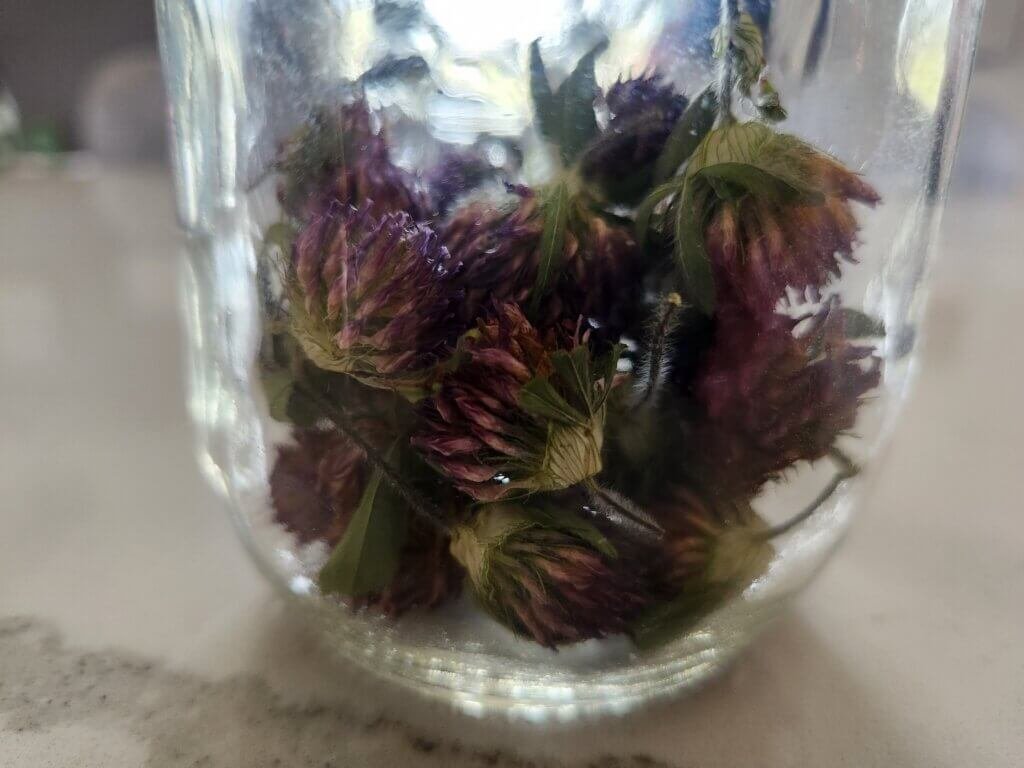
Properly dried red clover can last up to a year, but it’s best used within a few months for quality. Once fully dry:
- Store in a glass jar or airtight container (you can always use a silica gel to ensure no moisture gets in)
- Keep in a cool, dark place
- Label with the date and what it is. (This is always a best practice, JUST in case you forget!)
What Can You Do With Dried Red Clover?
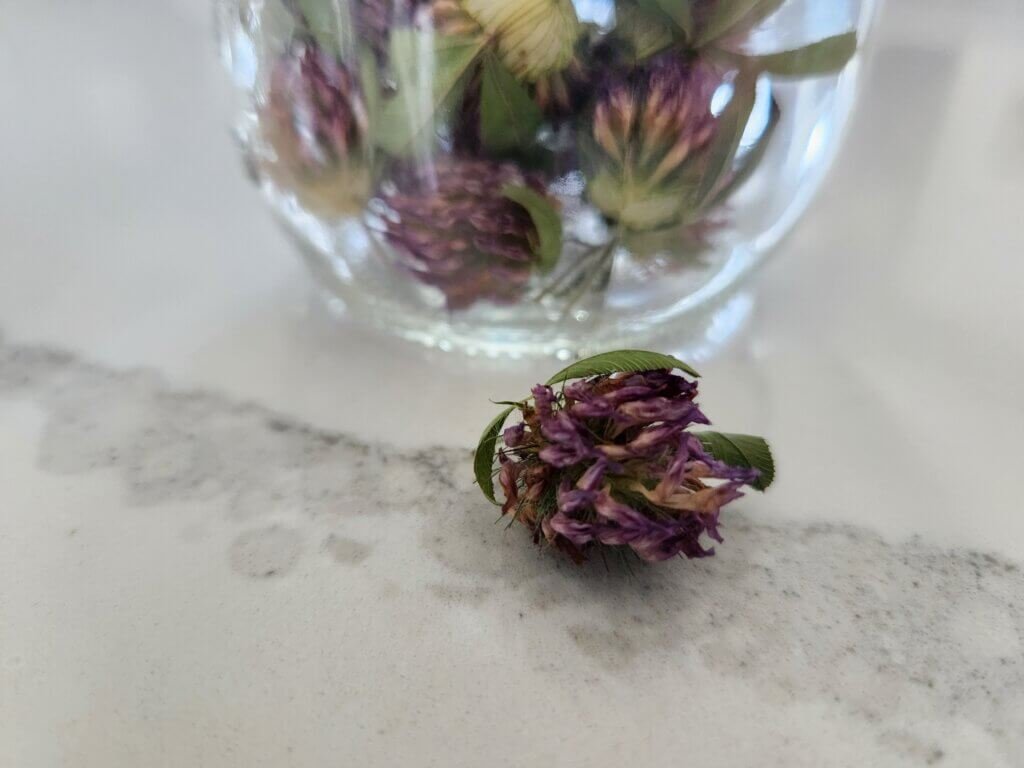
Once dried, it’s ready to use. Common uses include:
- herbal teas
- infused oils
- tinctures
- simple herbal blends
For a tea, it’s as simple as infusing the dried flowers into hot water for 7-10 minutes to steep.
I wrote an entire article dedicated to Red Clover Tea Benefits and how to make it.
Once a tincture is made, simply add a full dropper into tea, directly on your tongue or in a beverage to gain it’s benefits.
Common Mistakes to Avoid
A few small mistakes can ruin your harvest.
- harvesting wet flowers
- picking old or browning blooms
- overcrowding while drying
- storing before fully dry
If something smells off or looks moldy, don’t use it.
FAQ on Harvesting Red Clover
No. For best results, harvest when the flowers are fully open and vibrant.
Yes, but drying helps preserve it for longer-term use.
Usually 5–10 days air drying, depending on humidity.
No. Moisture increases the risk of mold. Only harvest clean flowers from safe areas.
Related Articles
- What Is Red Clover and How Can You Grow and Use It?
- Red Clover Tea Benefits (What It’s Used For and How It May Help)
- Goldenrod Benefits, Uses & How to Make Goldenrod Tea
- What Is Mullein – The Tall Fuzzy Green Plant
- Dandelions – The Miracle Weed You Should Be Thanking
Final Thoughts on Harvesting Red Clover Flowers
Harvesting red clover is one of the easiest ways to start using plants you already have around you.
It doesn’t require much. Just a bit of timing, a little care while drying, and you’ve got something you can actually use later on.
The beautiful thing about gaining knowledge on native plant is that each plant becomes something you notice everywhere you go from now on.
If you’re growing your medicinal herbs cabinet at home, you can explore all of our hands-on advice in our Medicinal Herbs Hub, based on what actually works here on our homestead.
We are growing our website with more articles all the time, and we invite you to grow with us. If you have any questions about red clover or would like to share some of your knowledge with us please leave a comment below. Happy Gardening!