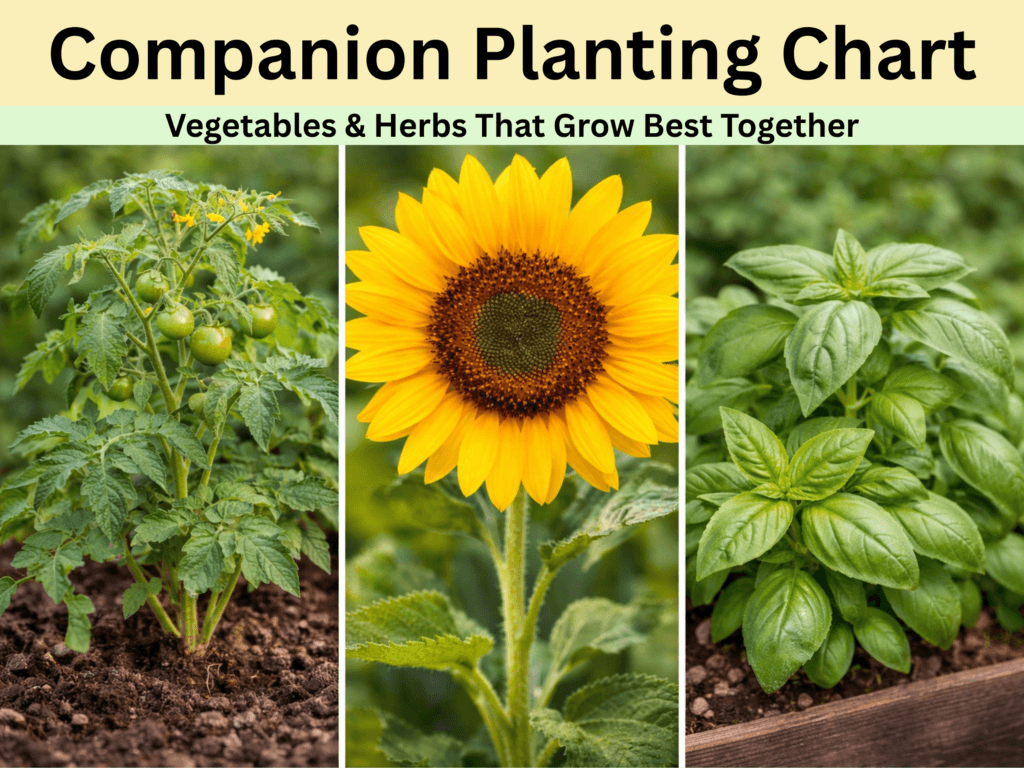
Companion planting is the practice of growing certain plants near each other so they benefit one another. Some plants help repel pests, others attract pollinators, and some improve the soil by adding nutrients like nitrogen. Gardeners often use a companion planting chart as a quick reference when planning garden beds.
This post may contain affiliate links. If you use these links to buy something we may earn a commission. Thanks.
Gardeners have used companion planting for generations to grow healthier vegetables with fewer pest problems and stronger harvests.
How To Use This Companion Planting Chart
Use this chart as a quick reference when planning your garden. If you are new to this method, our guide on companion planting for beginners explains the basic principles and shows a few easy plant pairings to start with. Look up the plant you want to grow, then check which plants grow well beside it and which ones should be avoided.
Good companions can help improve plant growth, attract beneficial insects, and reduce pest problems. Avoid planting crops that compete for nutrients or share similar diseases.
This simple guide can help you plan garden beds that work better together.
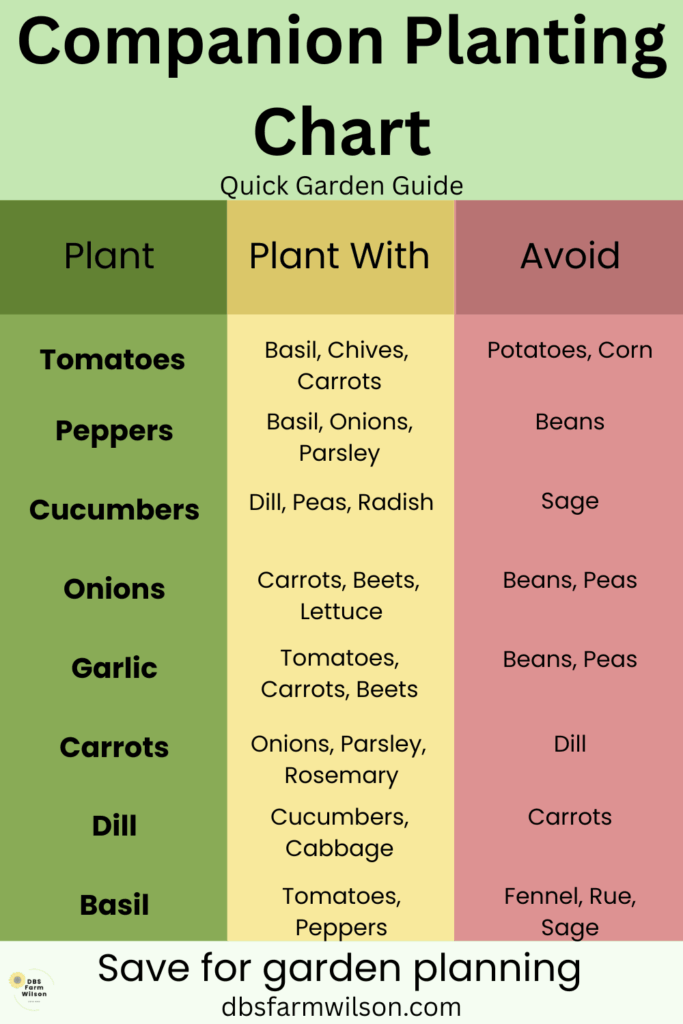
What Is Companion Planting?
Companion planting is the practice of growing different plants near each other so they benefit one another. Some plants improve soil nutrients, others attract pollinators, and some help deter pests.
For example, basil is often planted near tomatoes because it may repel insects and attract beneficial pollinators. Beans and peas add nitrogen to the soil, which helps nearby plants grow stronger.
When used thoughtfully, companion planting can help create a more balanced and productive vegetable garden.
Why Companion Planting Works
Companion planting works because different plants interact with the garden environment in different ways. When the right plants grow together, they can support each other and help create a healthier garden.
Pest Deterrence
Some plants naturally repel insects. Herbs like basil, thyme, and rosemary produce strong scents that can confuse or deter pests that normally target vegetables.
Beneficial Insects
Certain flowers and herbs attract helpful insects such as ladybugs, lacewings, and parasitic wasps. These insects help control pests naturally.
Nitrogen Fixing Plants
Legumes like beans and peas add nitrogen to the soil. This nutrient helps nearby plants grow stronger and produce better harvests.
Shade And Soil Protection
Large plants like squash can shade the soil and help keep moisture in the ground, which benefits nearby crops.
Companion Planting Chart For Vegetables
| Plant | Good Companions | Avoid Planting Near | Why It Helps |
|---|---|---|---|
| Asparagus | Parsley, basil, tomatoes | Onions, garlic | Herbs attract beneficial insects and deter pests |
| Artichoke | Peas, beans, herbs | Potatoes | Legumes improve soil nitrogen |
| Arugula | Lettuce, spinach, radish | None major | Similar growing needs |
| Beans | Corn, cucumbers, radish | Onions, garlic | Beans fix nitrogen in soil |
| Beets | Onions, lettuce, cabbage | Beans | Onions may deter pests |
| Broccoli Rabe | Dill, chamomile | Strawberries | Herbs attract beneficial insects |
| Broccoli | Dill, chamomile, onions | Tomatoes | Herbs help deter cabbage pests |
| Brussels Sprouts | Dill, rosemary | Tomatoes | Aromatic herbs deter insects |
| Cabbage | Dill, thyme, chamomile | Tomatoes, strawberries | Herbs repel cabbage worms |
| Cantaloupe | Corn, radish | Potatoes | Radishes deter beetles |
| Carrots | Onions, peas, rosemary | Dill | Onions help repel carrot flies |
| Cauliflower | Dill, chamomile | Tomatoes | Herbs attract beneficial insects |
| Corn | Beans, pumpkin, squash | Tomatoes | Beans provide nitrogen |
| Cucumbers | Dill, peas, radish | Sage | Dill attracts beneficial insects |
| Cucamelon | Radish, dill, beans | Potatoes | Radishes help repel beetles |
| Garlic | Tomatoes, carrots, beets | Beans, peas | Repels aphids and other pests |
| Kale | Dill, onions, chamomile | Strawberries | Herbs deter cabbage pests |
| Lettuce | Carrots, radish, strawberries | None major | Shares space well with other crops |
| Onions | Carrots, beets, lettuce | Beans, peas | Repel many insects |
| Peas | Carrots, lettuce, radish | Onions, garlic | Improve soil nitrogen |
| Peppers | Basil, onions, parsley | Beans | Herbs repel pests |
| Potato | Beans, cabbage | Tomatoes, cucumbers | Avoid shared diseases |
| Pumpkin | Corn, beans | Potatoes | Traditional Three Sisters support system |
| Radish | Cucumbers, carrots, lettuce | Hyssop | Helps deter cucumber beetles |
| Spinach | Peas, strawberries | Potatoes | Works well as an early crop |
| Squash | Corn, beans | Potatoes | Large leaves shade soil |
| Tomatoes | Basil, chives, carrots, parsley | Corn, potatoes | Herbs deter pests and attract pollinators |
| Watermelon | Corn, radish | Potatoes | Radish helps deter beetles |
Printable Companion Planting Chart
Want a copy you can use in the garden?
Download the printable version of this chart to keep with your garden planner or seed notes.
You can print it and bring it outside while planning your garden beds or planting your vegetables.
Herb Companion Planting Chart
| Herb | Good Companions | Avoid | Why It Helps |
|---|---|---|---|
| Basil | Tomatoes, peppers | Rue | Repels insects and may improve flavor |
| Chives | Carrots, tomatoes | Beans | Repels aphids |
| Cumin | Peas, herbs | None major | Attracts beneficial insects |
| Dill | Cucumbers, cabbage | Carrots (when mature) | Attracts pollinators |
| Lavender | Brassicas, herbs | None major | Repels moths and attracts pollinators |
| Oregano | Most vegetables | None major | Ground cover and pest deterrent |
| Parsley | Tomatoes, asparagus | Lettuce | Attracts beneficial insects |
| Rosemary | Cabbage, beans | None major | Repels cabbage pests |
| Sage | Brassicas | Cucumbers | Strong scent deters pests |
| Savory | Beans, onions | None major | Improves bean growth |
| Thyme | Cabbage, strawberries | None major | Repels worms |
| Chamomile | Cabbage, onions | None major | Improves plant health |
Printable Herb Companion Planting Chart
Want a copy you can use in the garden?
Download the printable version of this chart to keep with your garden planner or seed notes.
You can print it and bring it outside while planning your garden beds or planting your vegetables.
Common Companion Planting Mistakes
Companion planting can be helpful, but it does not replace good gardening practices. Keep these common mistakes in mind when planning your garden.
Planting Everything Too Close Together
Even good companion plants still need enough space to grow properly. Overcrowding plants can increase disease and reduce airflow.
Ignoring Sunlight Needs
Plants that grow well together may still need different amounts of sunlight. Always make sure both plants will receive the light they need.
Expecting Companion Planting To Solve Every Problem
Companion planting can reduce pests and improve growth, but it works best when combined with healthy soil, crop rotation, and proper watering.
Tips For Planning A Companion Garden
When planning your garden beds, start by grouping plants that grow well together.
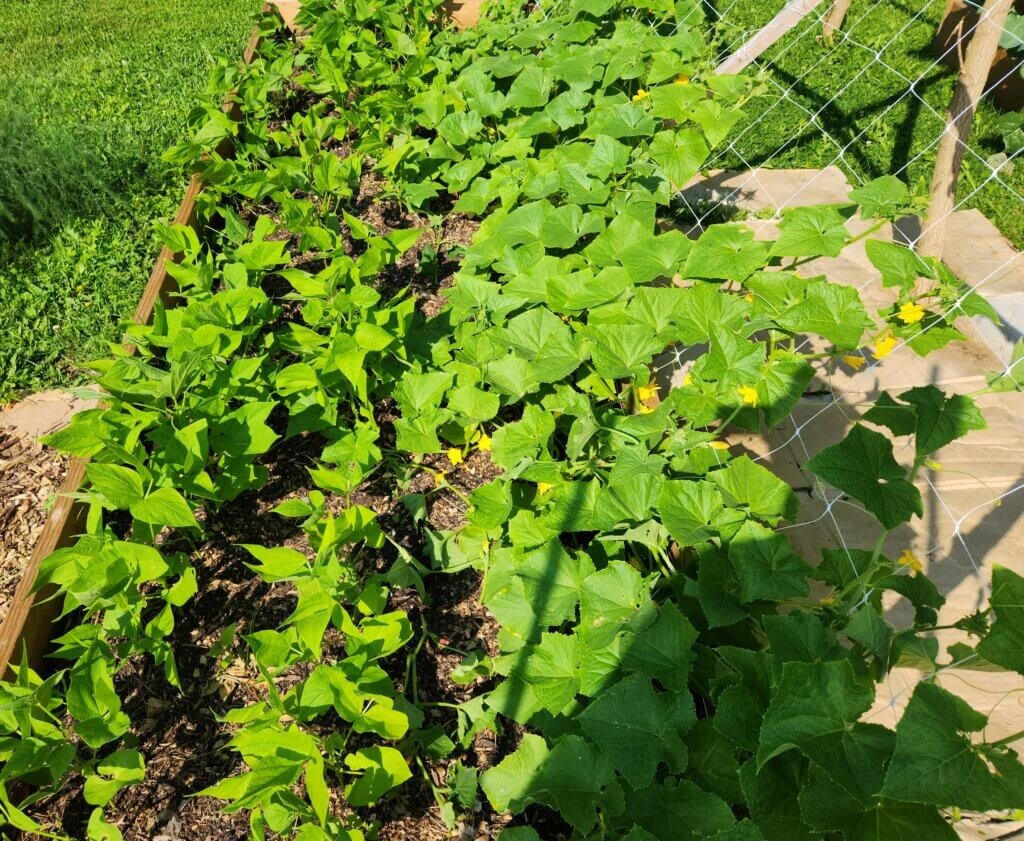
The companion planting chart above can help you decide which vegetables and herbs to place near each other when laying out your garden.
For example:
- Tomatoes grow well with basil, carrots, and chives. If you want to learn more about this pairing, see our guide on the best companion plants for tomatoes and why they help improve growth.
- Cucumbers benefit from dill and radishes nearby.
- Corn is often planted with beans and squash in the traditional “Three Sisters” planting method.
Using companion planting when designing your garden can help you make better use of space while supporting healthier plants.
FAQ Section
Examples: tomatoes and potatoes, beans and onions.
Basil is one of the most common companion plants for tomatoes because it may repel pests and attract pollinators. You can also see our full guide to the best companion plants for tomatoes for more pairings that work well together.
Some benefits are scientifically proven (nitrogen fixing plants), while others are based on traditional gardening experience.
Final Thoughts
Companion planting is a simple way to create a more balanced and productive garden. By pairing plants that support each other, you can help reduce pest problems, attract pollinators, and improve soil health.
Use this companion planting chart as a quick reference when planning your vegetable beds or adding new plants to the garden.
Over time, you may find certain plant combinations work especially well in your own garden.
We hope this companion planting chart helps you plan a healthier and more productive garden. If you found this guide helpful, explore our other growing guides, seed saving articles, and garden recipes. And if you have a favorite companion planting combination, feel free to share it in the comments.