
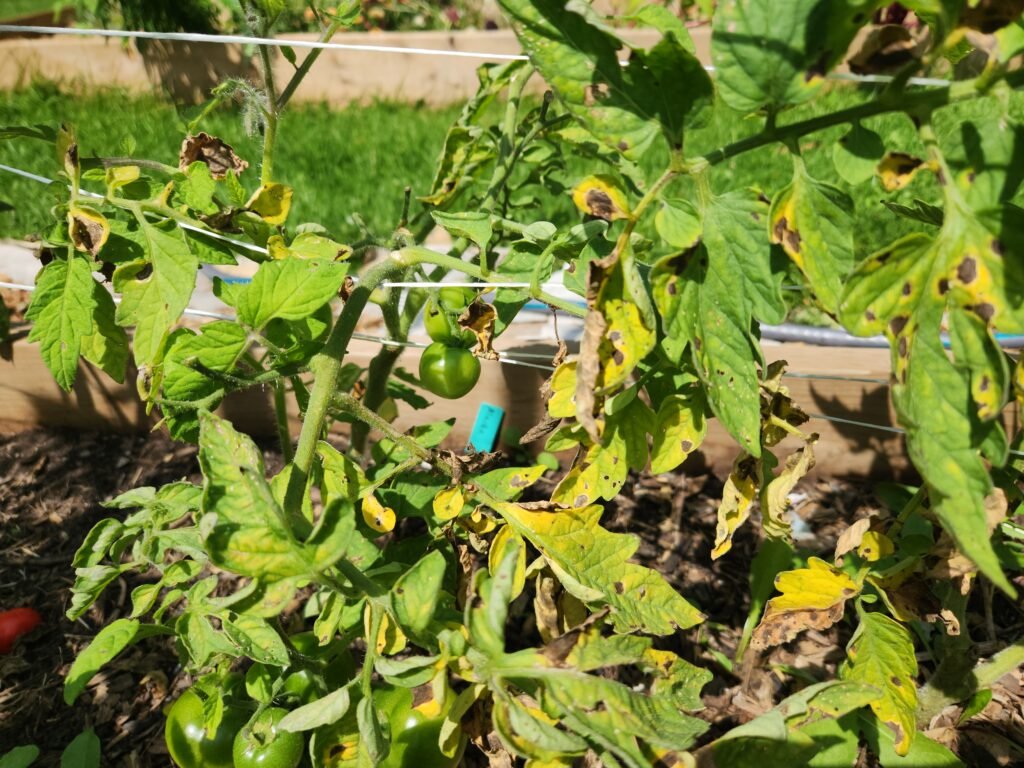
Tomatoes are one of the most popular crops to grow, but they’re also one of the most vulnerable to disease.
This post contains affiliate links. If you use these links to buy something we may earn a commission. Thanks.
If you’re seeing spreading spots, rotting fruit, or damage that doesn’t improve with simple fixes, you’re likely dealing with a disease rather than a basic growing issue.
If you’re not sure what’s wrong yet, start with a general tomato problem guide to identify the symptom first. This article focuses specifically on diseases and how to manage them.
The Most Common Tomato Diseases You’ll See In Your Garden
These are the most common issues we see year after year in our own garden.
Why Are My Tomatoes Splitting?
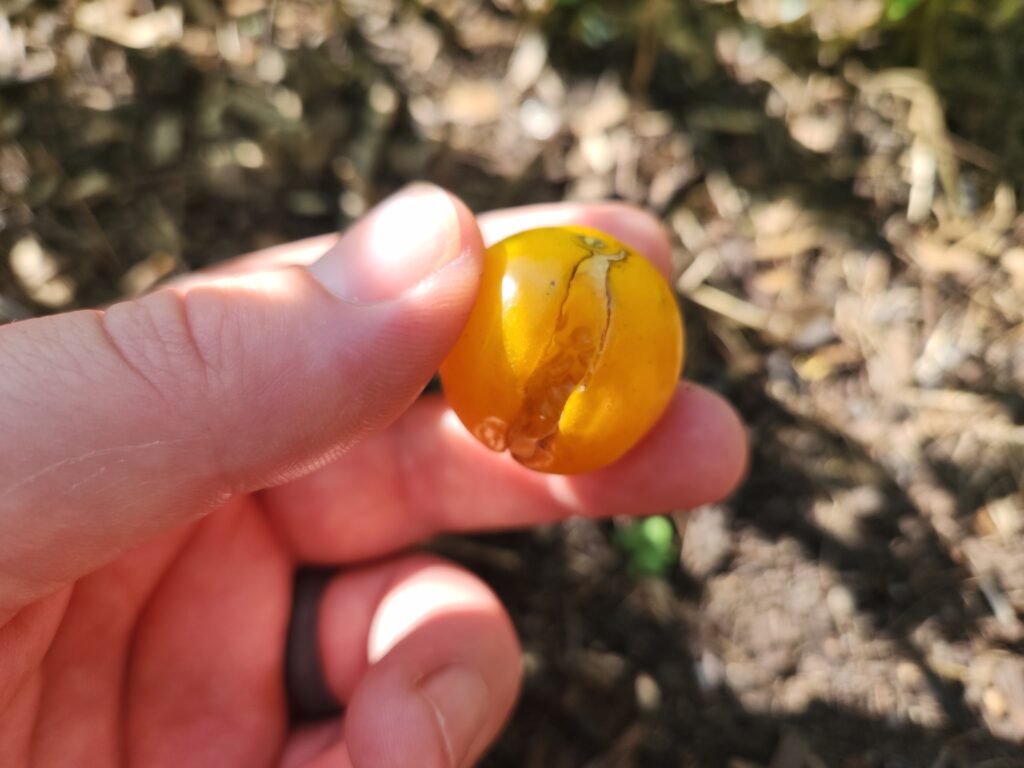
Having a tomato split apart while it’s still on the vine can be heartbreaking. You watch the tomato grow from a flower to it’s full size. Then it looks like it is ripening and when it’s almost done, BAM! It splits open.
We’ve had issues with splitting tomatoes every year. There are ways to minimize it happening, which I’ll get into shortly. But it always seems to happen at least a few times.
What Causes Tomato Splitting?
The main cause of tomato splitting is when they receive a lot of water after a dry spell. After the tomato receives the abundance of water it tries to grow to fast for the outer skin which causes the split.
How To Prevent Tomato Splitting?
One way to help prevent tomatoes from splitting is to water them evenly and consistently. This will help your tomatoes because they won’t go from dry conditions to a sudden surge of water.
Another way to prevent tomato splitting is to harvest your tomatoes as soon as they start to blush and ripen. A tomato is more susceptible to splitting when it is ripening and finished growing. The outer skin gets softer and therefore splits easier.
What Is Tomato Blight?
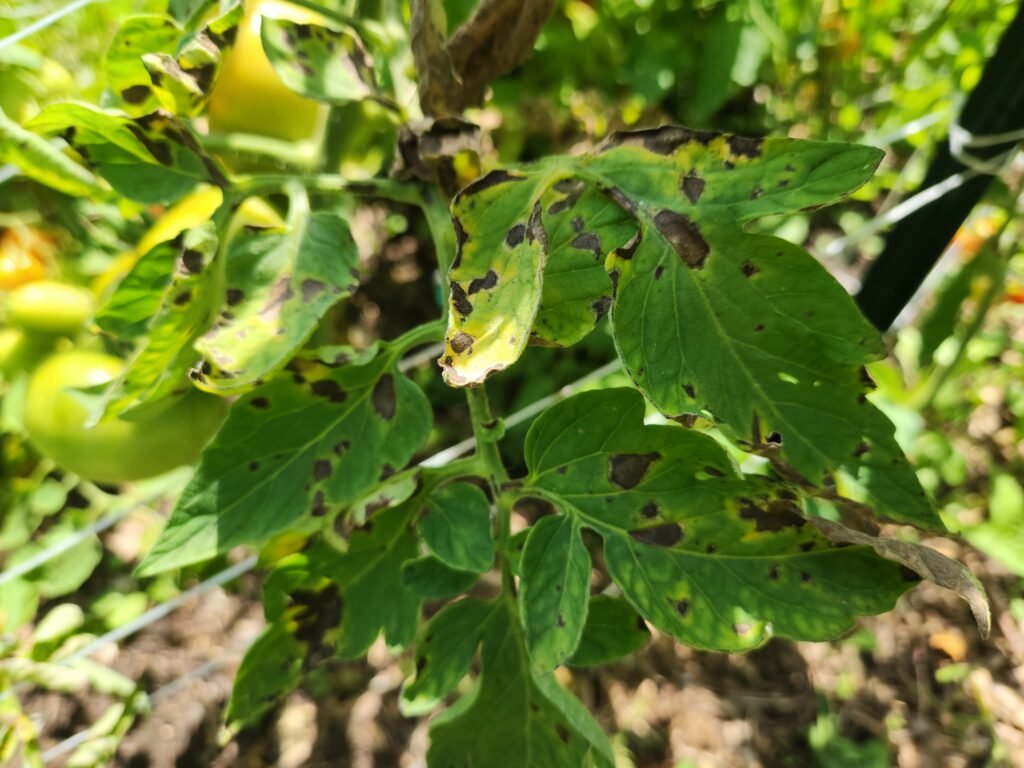
Blight is another very common tomato issue gardeners face. It is a disease that attacks both the leaves and the fruit of tomatoes. It also affects potatoes.
Blight is most common when the weather is wet and warm. We’ve seen it on our tomatoes starting at the end of July. Especially if we are seeing a lot of rainfall.
How To Minimize Tomato Blight?
There are several ways we can try to reduce the amount of blight we see in our gardens.
Crop Rotation
This is the first line of defense when you see blight in your garden. Rotating your crops to a different part of the garden could help prevent blight that might overwinter in your garden beds.
Plant Spacing
Spacing your tomatoes far enough away from each other to increase airflow can help reduce the likelihood of developing blight in the first place.
Catching Blight Early
Inspect your tomato plants regularly and if you see any sign of blight remove the affected leaves or fruit immediately.
Prune Your Tomatoes
This goes hand in hand with the plant spacing and catching blight early. Blight tends to start at the bottom of the plants closest to the soil. Removing low hanging leaves with clean garden pruners will increase airflow and lower the chance of blight. Always remove any leaves that show signs of blight.
What Is Blossom End Rot?
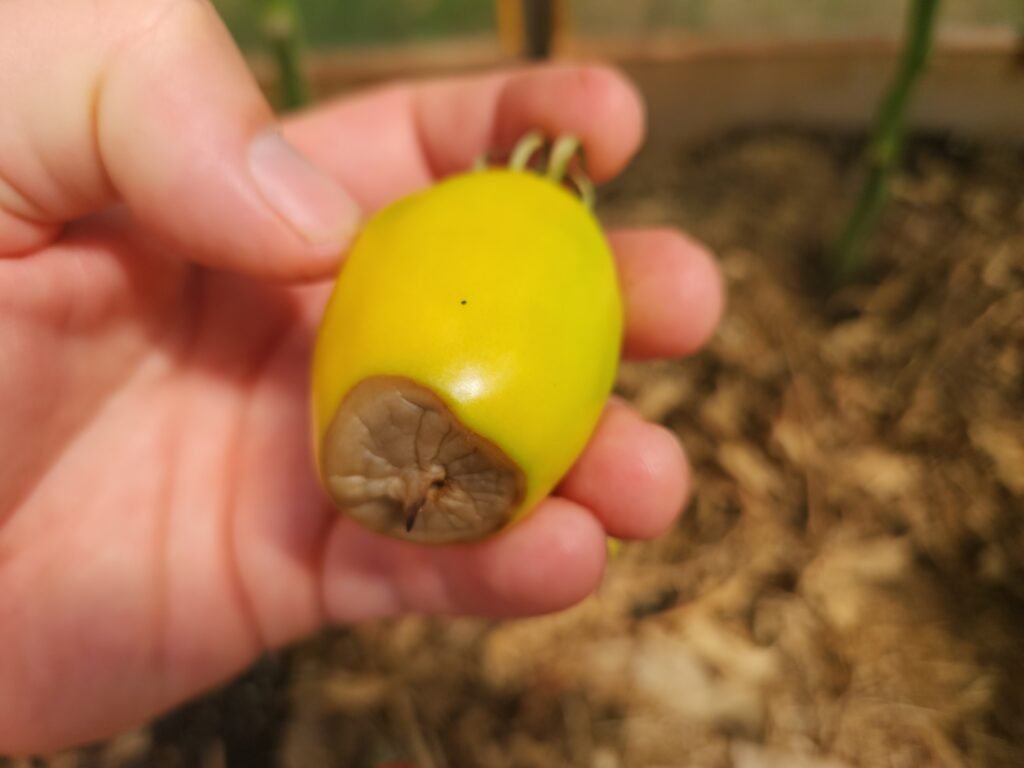
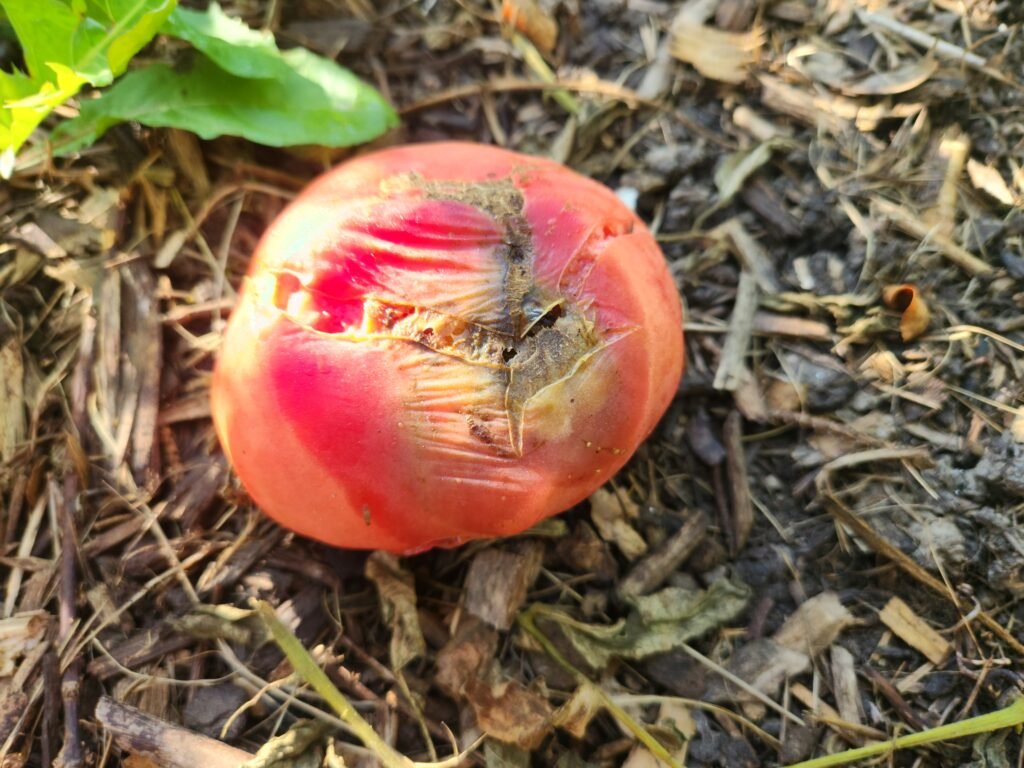
Blossom end rot is a issue with the bottom (blossom) end of the tomato. It can either be a sunken in section like in the picture above or it could keep the nature shape of the tomato but end up turning grey or black.
What Causes Blossom End Rot?
A lot of people thing blossom end rot is another fungal disease affecting tomatoes. In fact, blossom end rot is caused by a lack of calcium in the tomato.
This could be cause by low calcium levels in the soil but most of the time it is caused by improper watering. Either infrequent watering or a long drought can cause blossom end rot to occur.
In my personal opinion and experience, I believe blossom end rot is more likely to occur in elongated tomato varieties, like the very common Roma tomato variety. We’ve had multiple plants that were all watered and fertilized the same, but one variety called “Big Mama” (which is an elongated tomato) always seems to get blossom end rot.
How To Prevent Blossom End Rot?
Like I said above, blossom end rot is caused by a lack of calcium and most of the time it is an inconsistent watering schedule that is the main culprit.
The best way to prevent blossom end rot is the follow a watering schedule and use mulch to cover the soil to prevent any prolonged dry spells.
Can You Eat A Tomato With Blossom End Rot?
The simple answer is, yes. The rotted section of the tomato can be cut off and the rest of the tomato can be eaten but the flavour might not be the same as a healthy fruit.
What Is Anthracnose Of Tomatoes?
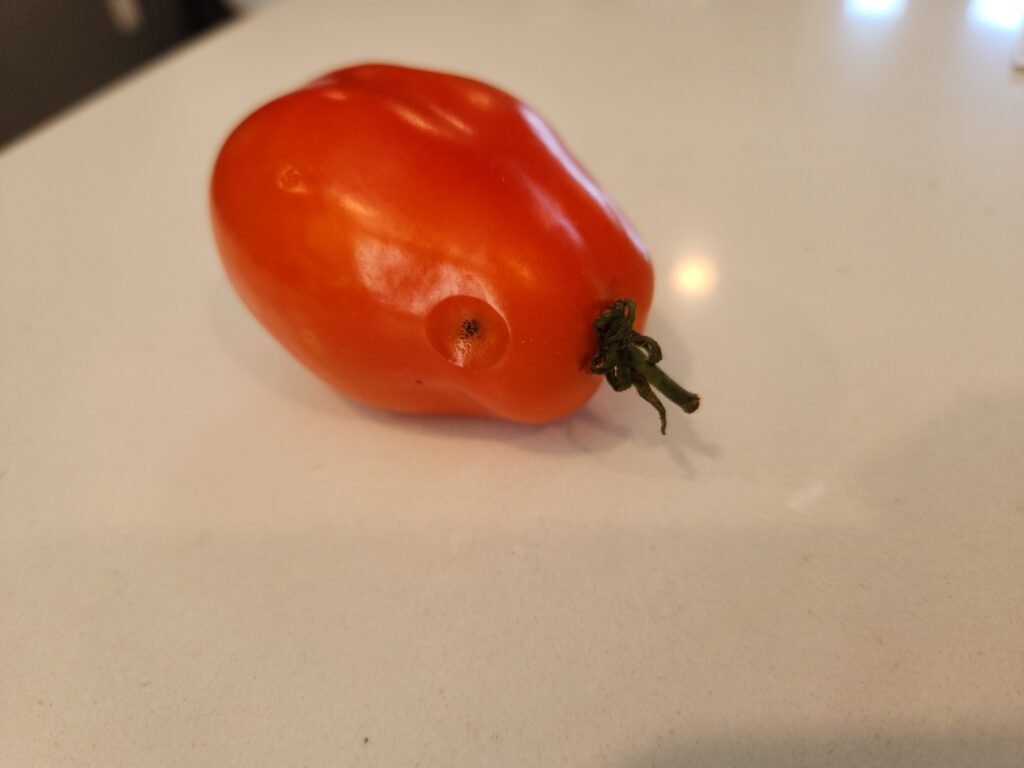
Anthracnose is a slightly less common issue for tomatoes but when you get it, it is hard to get rid of. This disease starts out as small depressions in the tomato skin on ripe and ripening tomatoes.
It then quickly becomes larger and develops a black spot in the middle, which grows as the depression does.
How To Prevent Anthracnose?
Anthracnose lives on the ground mainly in dead leaf litter. The best way to prevent Anthracnose is by crop rotation.
Another way to help prevent Anthracnose from affecting your tomatoes is by keeping your plants staked and off the ground. Anthracnose can be spread by rainfall that splashes off the soil and up onto your plants.
Can You Eat A Tomato Affected By Anthracnose?
A tomato affected by anthracnose can still be eaten as long as the spots are still small and easily removed. Cut around the lesion and remove a good chunk of the flesh and the rest of the tomato can be eaten.
Helpful Articles to Help You Grow Tomatoes Better:
- How To Grow Tomatoes From Seed To Harvest.
- A Simple Way To Save Tomato Seeds
- Tomatoes: A Weed or Invasive Species?
- When and How to Transplant Tomato Seedlings
- The 3 Best Companion Plants For Tomatoes
How To Prevent Tomato Diseases Long-Term
- Rotate crops yearly
- Avoid overhead watering
- Space plants properly
- Remove debris at the end of the season
- Keep plants pruned and supported
What To Do With Infected Plants
- Remove infected leaves immediately
- Do not compost diseased material
- Dispose of heavily infected plants
This helps prevent diseases from returning the next season.
Frequently Asked Questions About Tomato Diseases
If the issue is spreading and not improving with basic fixes, it’s likely disease-related.
Most cannot be cured, but they can be managed and slowed down.
Yes, removing infected leaves helps prevent spread.
Final Thoughts
Tomato diseases are part of gardening, but they don’t have to ruin your harvest.
With early detection and good garden practices, you can minimize damage and keep your plants producing throughout the season.
We hope you enjoyed this guide. If you did make sure you check out the other growing guides, seed saving guides, recipes, and join our mailing list for seasonal updates and homestead hacks. We are growing our website with more articles all the time, and we invite you to grow with us. If you have any questions about tomato issues or want to share your expertise, feel free to leave a comment below. Thanks for growing with us!
 How to Grow Radishes From Seed to Harvest (Fast 3–4 Week Guide)
 Mulching Garden Beds: Best Practices & Common Mistakes
 Your Garden is Under Attack! How to Fight Back Against Early-Season Pests and Deadly Plant Diseases To Protect Your Garden from Day One
 How to Grow Black Beans: A Complete Guide to Growing This Protein-Packed Staple Crop