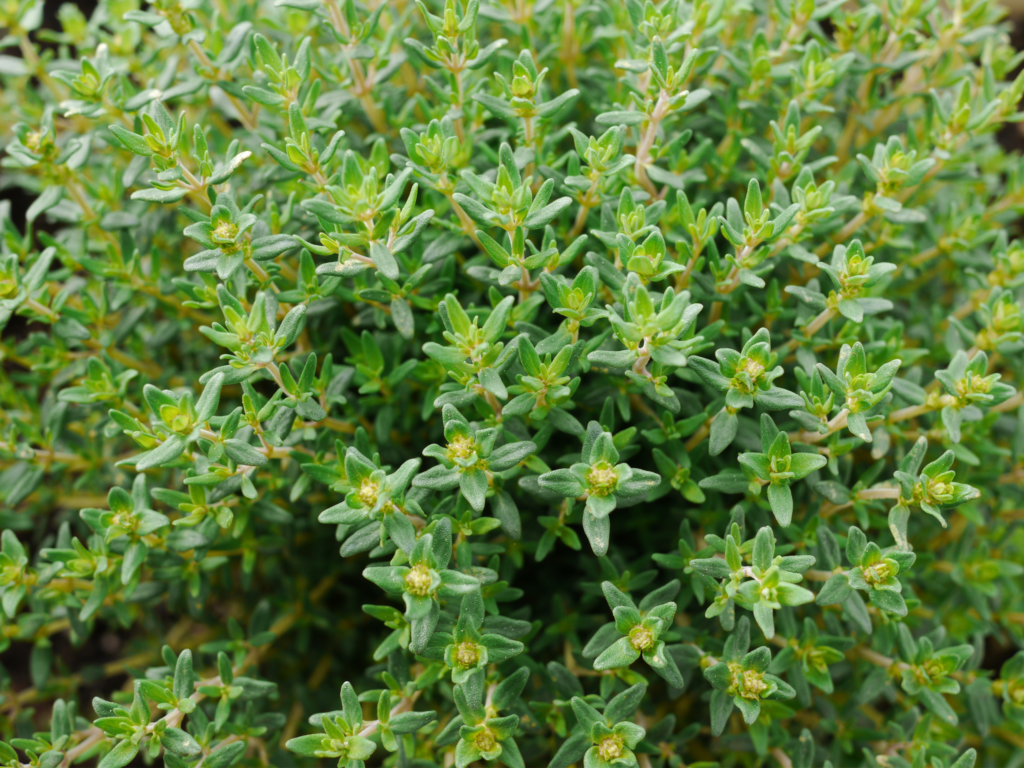
How to grow thyme is one of the most asked questions we get, because thyme those herbs that quietly earns its place in the garden year after year. It doesn’t ask for much, it comes back reliably, and it pulls its weight in the kitchen and beyond. Whether you’re growing thyme for cooking, drying, or homemade remedies, it’s a hardy little plant that fits perfectly into a home garden or homestead.
If you’ve ever wondered how to grow thyme successfully — without babying it or overthinking things — this guide will walk you through everything you need to know. From choosing the right spot to harvesting and preserving it, this is the same simple, practical approach we use in our own garden.
This post contains affiliate links. If you use these links to buy something we may earn a commission. Thanks.
What Is Thyme? A Quick Plant Overview
Thyme is a low-growing, woody perennial herb that originated in the Mediterranean. That origin story tells you a lot about what it likes: sunshine, good drainage, and a little neglect.
This herb is a hardy perennial in many zones, depending on the variety, it can be hardy up to Zone 2 with lots of winter protection. But Common Thyme (thymus vulgaris) is hardy up to Zone 5.
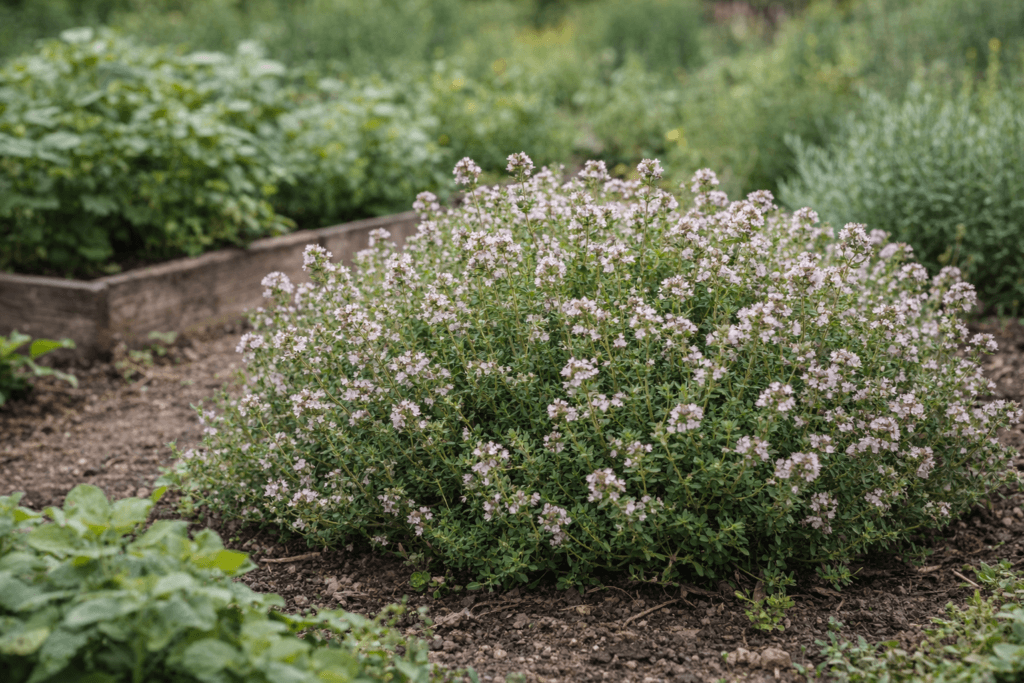
Once established, thyme forms a dense mat of small aromatic leaves and sends up tiny flowers that pollinators absolutely love. It’s commonly used fresh or dried in cooking, but thyme has also been used traditionally for medicinal purposes, especially in teas and home remedies.
One of thyme’s biggest strengths is that it’s forgiving. It doesn’t need rich soil, frequent watering, or constant attention — which makes it a great herb for beginner gardeners and busy homesteaders alike.
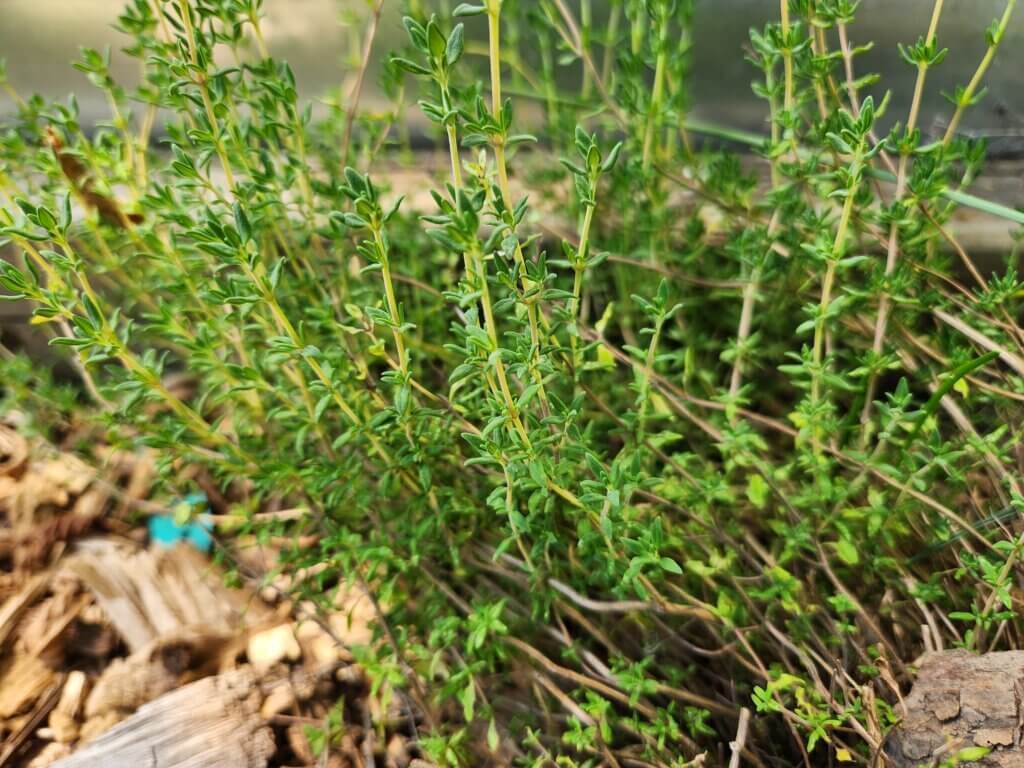
Where to Plant Thyme (Sun, Soil, and Spacing)
Choosing the right location is one of the most important parts of how to grow thyme successfully, especially in cooler or wetter climates. If there’s one thing thyme really cares about, it’s where it’s planted. Get this part right, and the rest is easy.
Sunlight Requirements
Thyme thrives in full sun, ideally getting at least 6–8 hours of direct sunlight per day. It will tolerate a bit of partial shade, but too little sun leads to leggy growth and weaker flavor. Want to learn more about leggy seedlings?
In cooler climates, more sun is always better. If your plant is in raised beds or containers, placing the thyme where it gets morning and afternoon sun helps it stay compact and healthy. Personally for us in Zone 5 we have it in a morning sun east facing spot and it does fairly well.
Soil Needs
Good drainage is non-negotiable when growing thyme.
Thyme prefers:
- Light, well-draining soil
- Sandy or loamy conditions
- Soil that dries out slightly between waterings
Heavy, wet soil is the fastest way to lose a thyme plant. If your soil tends to hold water, consider growing thyme in raised beds, containers, or amending your soil with sand or compost to improve drainage.
Spacing Thyme Plants
Give thyme room to breathe. Crowded plants trap moisture and increase the risk of rot.
- Space plants about 12–18 inches apart
- Containers should have drainage holes and enough room for roots to spread
- Good airflow helps prevent disease and keeps plants productive
How Do You Plant Thyme? (Seeds, Cuttings, or Transplants)
This is one of the most common questions gardeners ask — how do you plant thyme — and the answer depends on how patient you’re feeling.
How to Grow Thyme from Seed
Thyme can be grown from seed, but it’s slow to get going. Start seeds indoors 6–10 weeks before your last frost and be use to use a seed-starting mix. Thyme seeds need light to germinate so keep them at surface level, do not bury deeply. Germination take awhile, commonly 14-28 days.
If you’re not sure when that falls in your area, our Zone 5b planting schedule explains when to start seeds and transplant crops throughout the growing season.
Growing Thyme From Cuttings
If you want faster results, cuttings are the way to go. Take 3–4 inch cuttings from healthy, non-woody stems, remove the lower seeds. Place the cutting in moist soil or water until roots form at the bottom of the stem. You can transplant the cutting once roots are well established.
Planting Store-Bought Thyme
Nursery transplants are the quickest way to get thyme growing in your garden.
- Harden off plants before planting outdoors
- Plant at the same depth as the original container
- Water lightly after planting, then allow soil to dry slightly between waterings
Watering and Feeding Thyme Plants
Thyme is happiest when it’s slightly ignored.
How Often to Water Thyme
Once established, thyme is drought-tolerant.
- Water deeply but infrequently
- Let soil dry out between waterings
- Containers may need more frequent watering, but never soggy soil
Signs of overwatering include yellowing leaves and drooping stems.
Fertilizing Thyme
Thyme doesn’t need much fertilizer — if any. Too much fertilizer leads to lush growth with weak flavor, avoid high-nitrogen. Use a balanced 20-20-20.
Because thyme likes being ignored, a leaner soil equals stronger aroma and better tasting thyme.
How to Care for Thyme as It Grows
Once you understand the basics, how to grow thyme is mostly about knowing when to step back and let the plant do its thing. Thyme is low maintenance, but a little care goes a long way.
Pruning and Trimming
Regular trimming keeps thyme compact and productive.
- Trim lightly throughout the growing season
- Never cut more than one-third of the plant at a time
- Focus on soft, green growth rather than woody stems
Preventing Woody Growth
Over time, thyme can become woody at the base.
- Prune regularly to encourage fresh growth
- Avoid cutting into old woody stems
- Replace plants every few years if they become too woody
Seasonal Care
- Spring: Clean up dead growth and lightly prune
- Summer: Harvest regularly and water sparingly
- Fall: Stop heavy pruning and prepare for winter
How to Harvest Thyme for Best Flavor and Strength
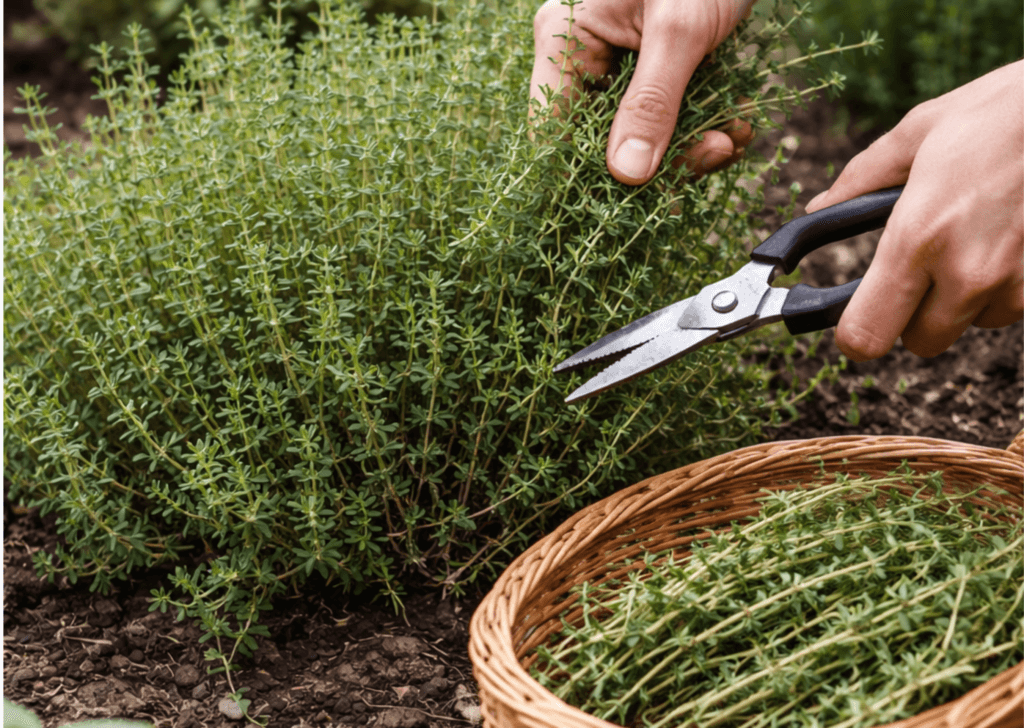
HYou can harvest small amounts of thyme throughout the growing season without harming the plant. We usually harvest in the morning after the dew has dried, and thyme is especially flavorful just before it flowers.
Regular harvesting can also encourage bushier growth, but you don’t want to cut the plant too heavily late in the season, especially as winter approaches.
For the full process, including when to harvest, how much to cut, and how we preserve it for winter, read our guide on how to harvest and dry thyme.
Drying and Storing Thyme (Fresh Thyme to Dried)
Thyme is one of our favorite herbs to dry because it keeps its flavor so well. Once completely dry, we strip the leaves from the stems and store them in airtight jars away from heat and light.
If you’re preserving your harvest, our thyme harvesting and drying guide walks through the entire process, including air drying and using a dehydrator.
Ways We Use Our Thyme
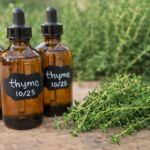
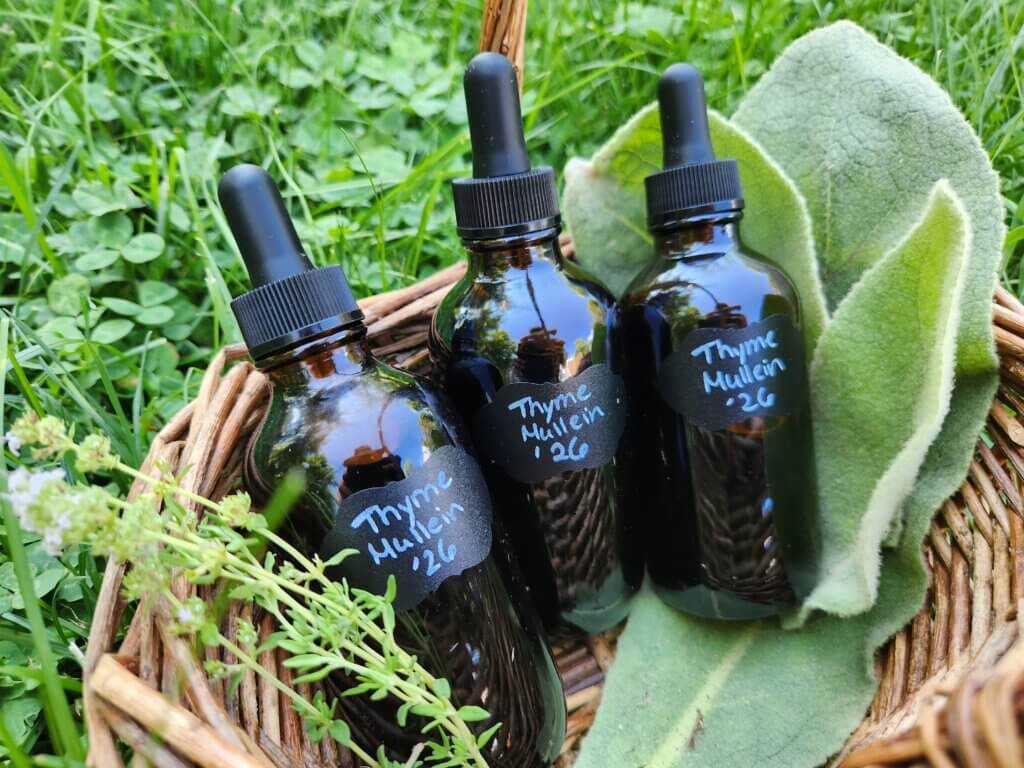
We grow thyme for more than just cooking. It’s also one of the herbs we preserve for our homemade herbal preparations. One combination I love to make is a thyme and mullein tincture, which brings together two herbs traditionally used during cold and cough season.
If I don’t want a tincture, I will use thyme as a hot-infusion (tea), because of thyme’s medicinal compounds.
Another awesome way to utilize fresh thyme is in my favourite Fire Cider recipe.
Is Thyme a Perennial? Overwintering Thyme Plants
Yes, thyme is a perennial in many growing zones.
- Cold-hardy in zones 5–9
- Mulch lightly in colder climates
- Container-grown thyme may need protection or to be moved to a sheltered location
If you grow thyme in a cold climate like we do, you don’t need to cut it all back at the end of the season. Here’s how we protect perennial herbs from frost and prepare them for winter.
Companion Planting With Thyme
Thyme works well with many garden plants! Some good companions include:
- Tomatoes
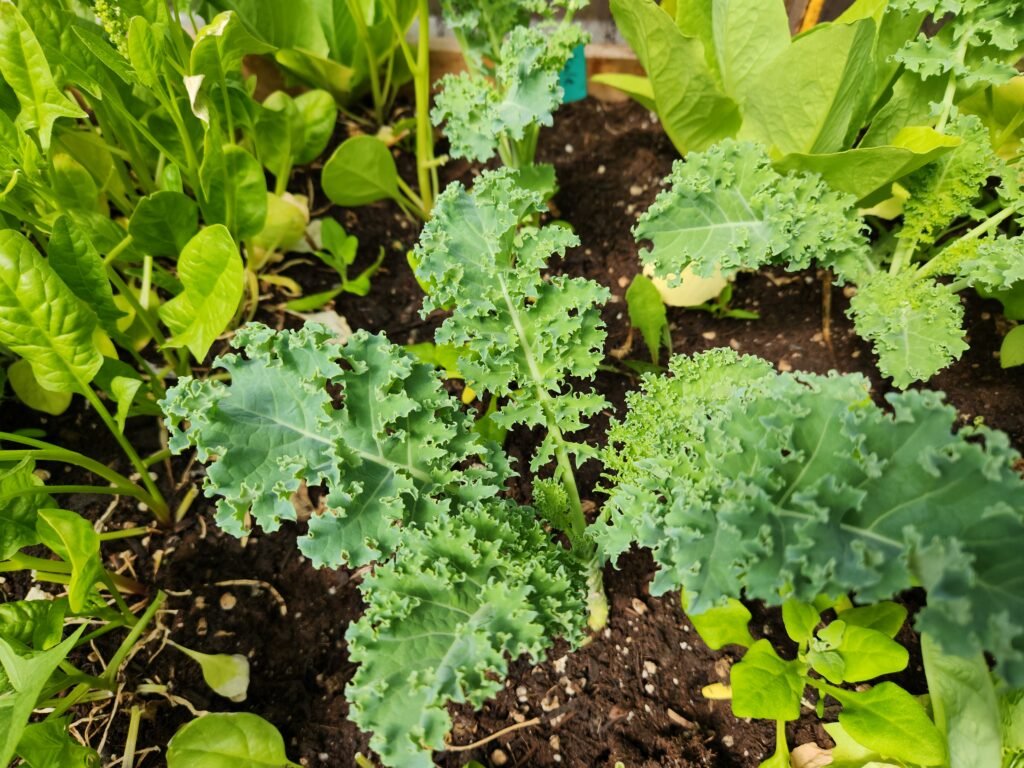
- Cabbage family crops (Broccoli, Cauliflower, Kale, etc).
- Strawberries
- Other Mediterranean herbs (Oregano, Sage, Mint).
Thyme helps repel pests and attracts beneficial insects, making it a valuable addition to mixed garden beds.
FAQ About Thyme
Yes it is – in many growing zones too! It’s cold-hardy so zones 5-9.
Regular cuttings/pruning will prevent the base from becoming too woody.
You don’t have to, but it’s recommended so when you use it for culinary or medicinal purposes, it’s easier to use.
Final Thoughts on Growing Thyme
Thyme is one of those herbs that proves its worth season after season. It’s easy to grow, hard to kill, and endlessly useful — whether you’re harvesting it fresh, drying it for later, or using it in home remedies.
Once you understand how to grow thyme and how to cultivate thyme properly, it becomes a long-term staple in the garden.
If you’re growing herbs at home, you can explore all of our hands-on advice in our Herb Growing Guides, based on what actually works here on our homestead.
We are growing our website with more articles all the time, and we invite you to grow with us. If you have any questions about thyme or would like to share some of your knowledge with us please leave a comment below. Happy Gardening!