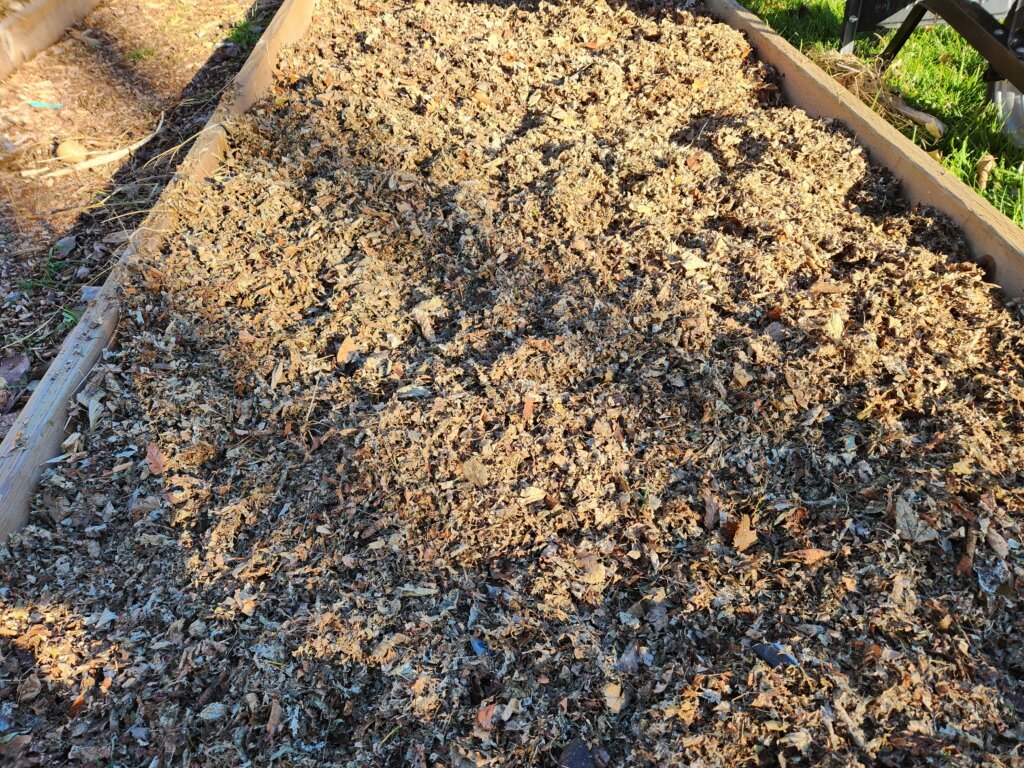
Every fall, our yard fills up with fallen leaves. Instead of bagging them up or getting rid of them, I turn them into mulch for our vegetable garden using my lawn mower.
I’ve been using leaves as garden mulch for years. They’re completely free, help protect the soil, and return organic matter and nutrients to the garden as they break down. You can use leaves whole or shredded, and I’ve found that both work well. However, I prefer shredding mine with a lawn mower before spreading them over our raised garden beds.
Why Use Fallen Leaves as Garden Mulch?
Since I have to clean up the fallen leaves from our yard every autumn anyway, I might as well put them to good use in the garden.
Fallen leaves also provide several benefits for the garden:
- They improve the soil. As leaves decompose, they add organic matter and gradually release nutrients back into the soil.
- They protect bare soil. A layer of leaves helps reduce erosion and protects the soil from exposure to the elements.
- They help retain moisture. Mulch reduces evaporation and helps keep moisture in the soil.
- They suppress weeds. A layer of leaf mulch can help prevent weed seeds from germinating and becoming established.
I especially like using leaves around my garlic. Every fall, I make sure our garlic patch gets covered with a layer of mulch to help protect it through the winter.
Fallen leaves are just one of the materials you can use to mulch your garden. If you’re looking for more options, our guide to mulching garden beds covers different types of mulch, when to apply them, and common mistakes to avoid.
How to Make Leaf Mulch With a Lawn Mower
Making leaf mulch is straightforward, and you don’t need any specialized mulching equipment.
I use both my riding lawn mower and push mower because it’s convenient for our yard, but you can also gather the leaves with a rake before shredding them.
Step 1: Gather the Fallen Leaves Into Piles
I start by using my riding lawn mower to gather the fallen leaves into large piles throughout the yard.
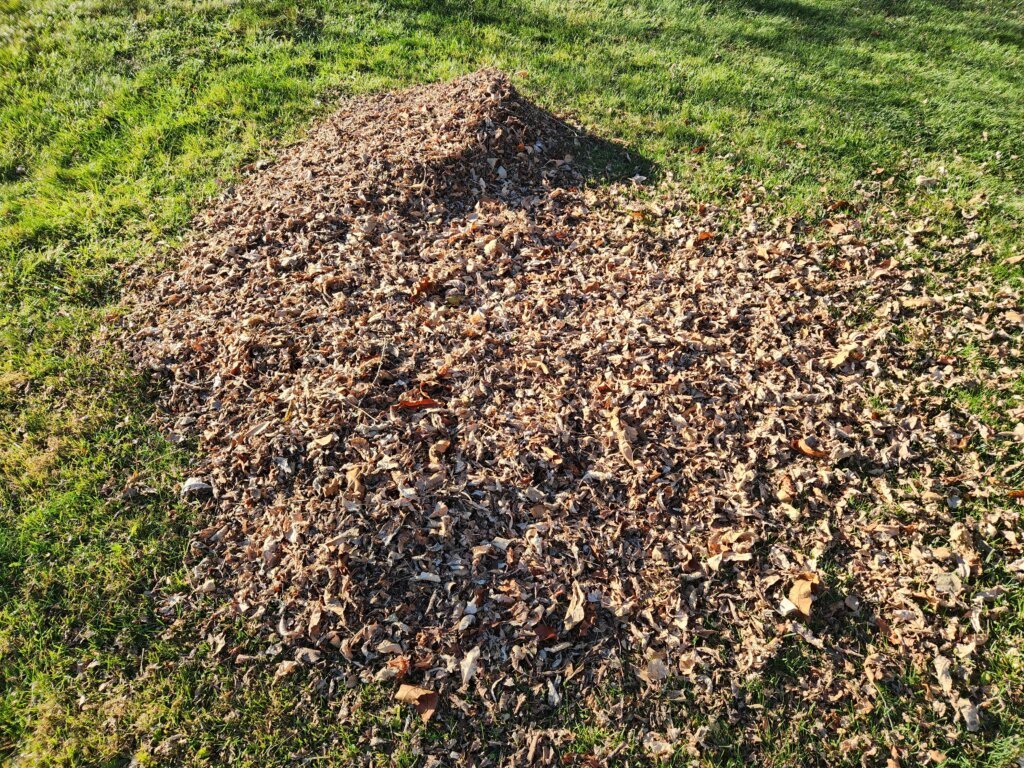
This makes them easier to mulch because I can work through concentrated piles instead of chasing individual leaves all over the lawn.
If you don’t have a riding mower, you can simply use a rake to gather the leaves into piles.
Step 2: Shred the Leaves With a Push Mower
Before mowing, check the leaf piles for sticks, rocks, or other debris that could damage the mower or be thrown by the blades. Avoid mowing through large piles of wet leaves, which can clog the mower.
Once I’ve gathered the leaves, I use my push lawn mower to shred them.
For this step, I remove the collection bag so the shredded leaves are discharged back onto the lawn.
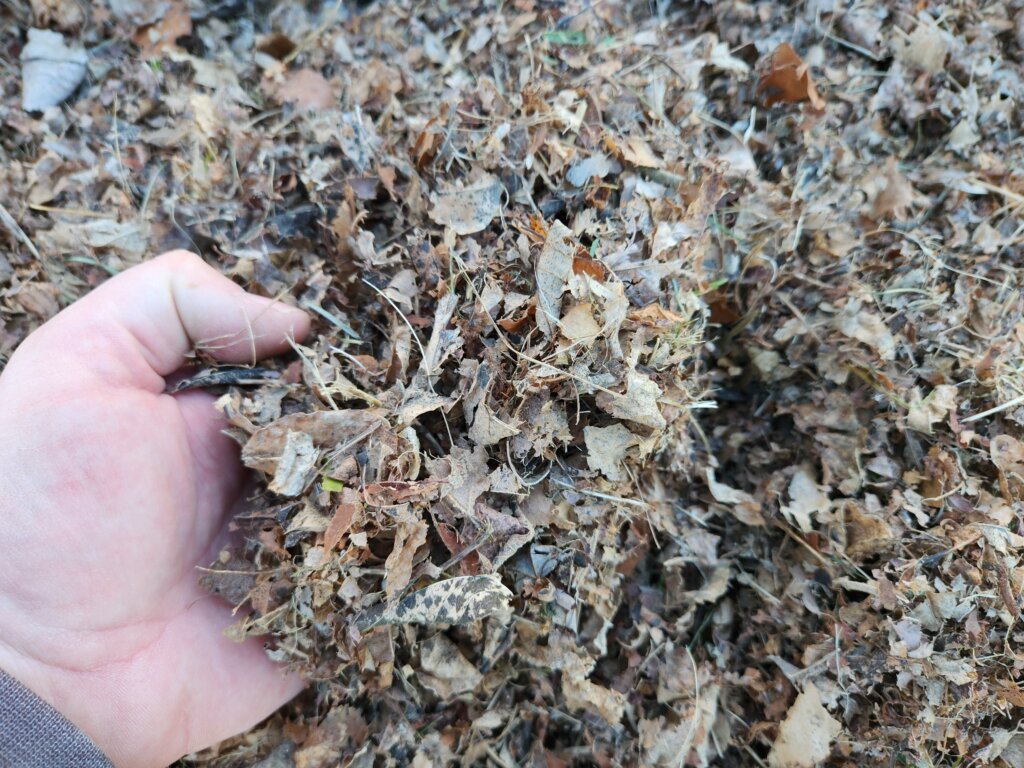
I run the mower over the leaf piles, cutting the leaves into smaller pieces.
The goal isn’t to turn them into a fine powder. I just want to break the large leaves into smaller pieces so they’ll decompose more quickly in the garden.
Step 3: Collect the Shredded Leaves
After shredding the leaves, I reattach the collection bag to my push mower.
I then use the mower almost like a vacuum cleaner, running it over the shredded leaves to collect them in the bag.
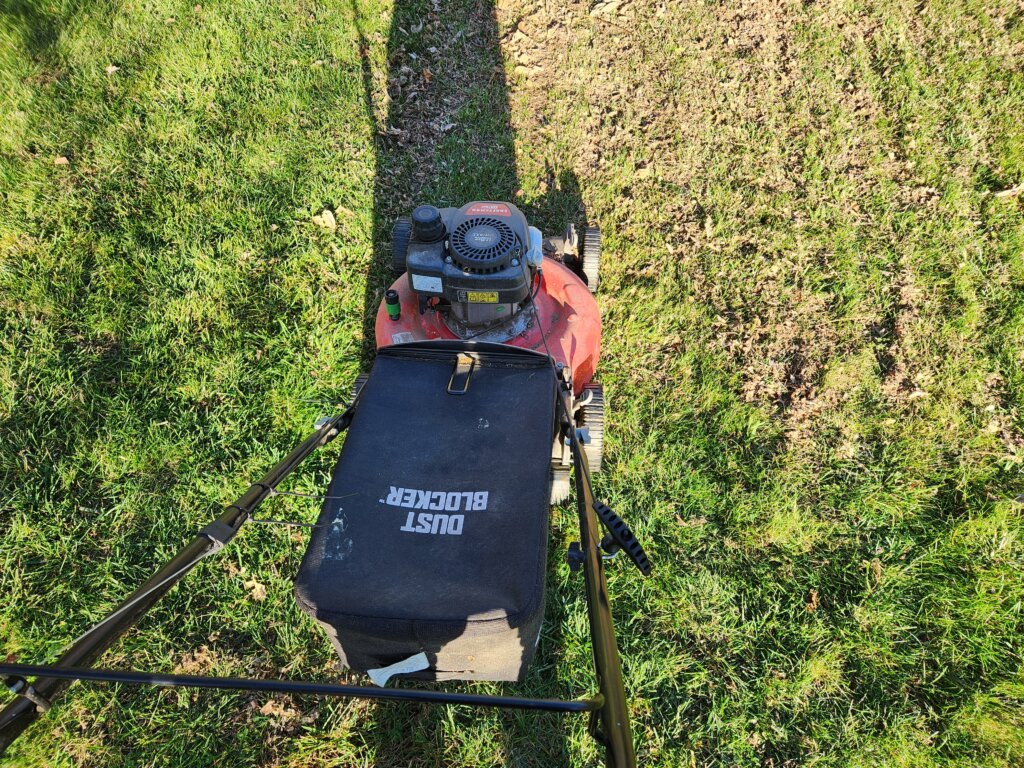
This makes collecting the mulch much easier than trying to rake up all those small pieces by hand.
Step 4: Spread the Mulch Over the Garden Beds
Once the collection bag is full, I take it over to the vegetable garden and empty the shredded leaves directly onto the beds.
I spread the leaves evenly across the soil, creating a layer approximately 2–3 inches thick.
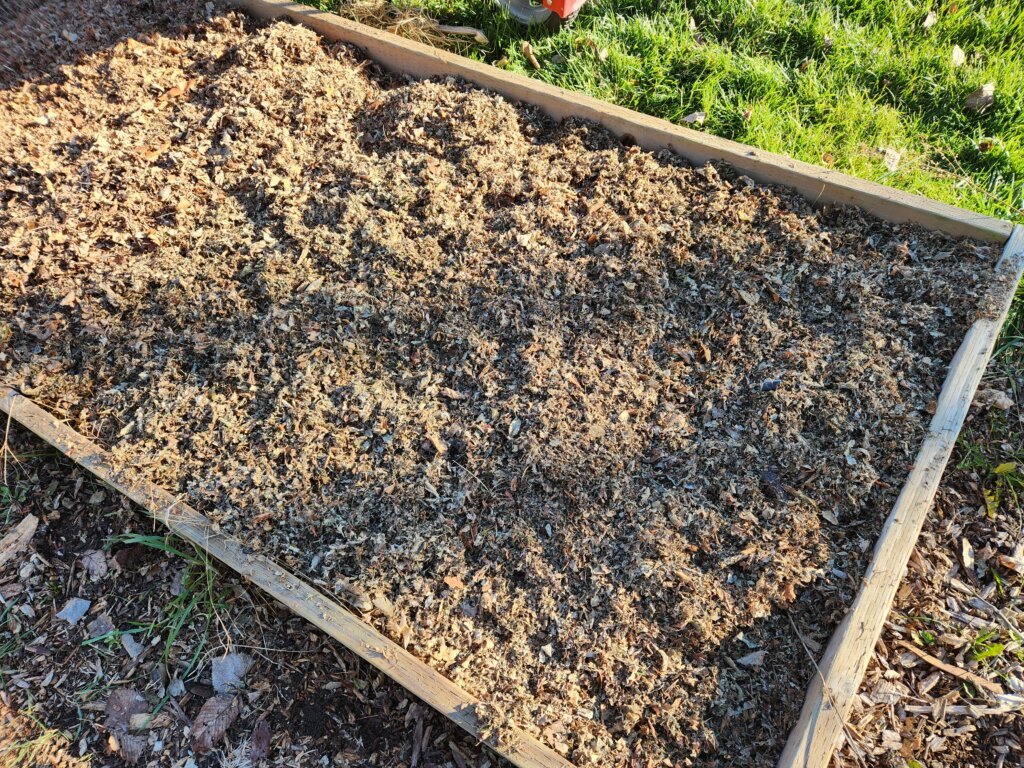
I always make sure to cover our garlic patch first, since I want it protected through the winter. The remaining leaves are spread over whichever raised beds need mulch.
Step 5: Repeat Until the Yard Is Clean
I continue gathering, shredding, collecting, and spreading the leaves until I’ve cleaned up the entire yard.
By the time I’m finished, the lawn is clear of leaves and several garden beds are covered with free mulch.
It’s a simple way to accomplish two fall chores at once.
Is It Better to Mulch Leaves or Leave Them Whole?
You don’t have to shred leaves before using them as garden mulch. I’ve used both whole and shredded leaves, and either method works.
However, I’ve found a few advantages to shredding them.
They break down faster. Shredding increases the surface area of the leaves, allowing microorganisms to decompose them more quickly. This is the biggest reason I prefer shredded leaves.
They’re less likely to blow away. Whole leaves are lightweight and can easily blow around in strong winds. Shredded leaves settle closer together, forming a more compact layer that tends to stay in place.
They’re easier to spread evenly. The smaller pieces make it easier to create a consistent layer of mulch across the garden beds.
The Downside of Shredding Leaves
There is one disadvantage I’ve noticed with shredded leaves: you don’t get nearly as much coverage.
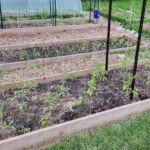
When I leave the leaves whole, I can usually cover five or six of our 4 × 12-foot raised garden beds.
But when I shred those same leaves, I can typically only cover two or three beds.
That’s because shredding reduces the volume of the leaves considerably. Instead of having a loose pile of whole leaves with lots of air spaces, I end up with smaller pieces that settle much closer together.
Although I get less coverage, I still prefer shredding because of how well the leaves break down over winter.
What Happens to Leaf Mulch Over Winter?
One of the things I like most about using shredded leaves is seeing how much they’ve broken down by spring. I leave the mulch on the garden beds throughout the winter, allowing the leaves to decompose naturally.
Of course, how quickly leaves decompose depends on the weather, the type of leaves, and how finely they’re shredded. Whole leaves will also break down over time, but they generally take longer, especially if they form thick, matted layers.
When spring arrives, I lightly mix the top couple of inches of soil as I prepare the beds for planting. By that point, the shredded leaves have usually broken down so well that I can hardly tell they were there.
Once the ground thaws, there are a few other jobs I do to get the garden ready for planting. You can read more about them in our guide to preparing garden beds for spring.
Final Thoughts
Making leaf mulch has become part of my regular fall garden cleanup routine.
Instead of getting rid of the fallen leaves, I use them to cover our raised garden beds and garlic patch for winter.
Although shredding the leaves means I can’t cover as many beds, I find the faster decomposition and reduced chance of the leaves blowing away worth the extra work.
If you have fallen leaves to clean up every autumn, consider putting them to work in your vegetable garden instead of throwing them away.