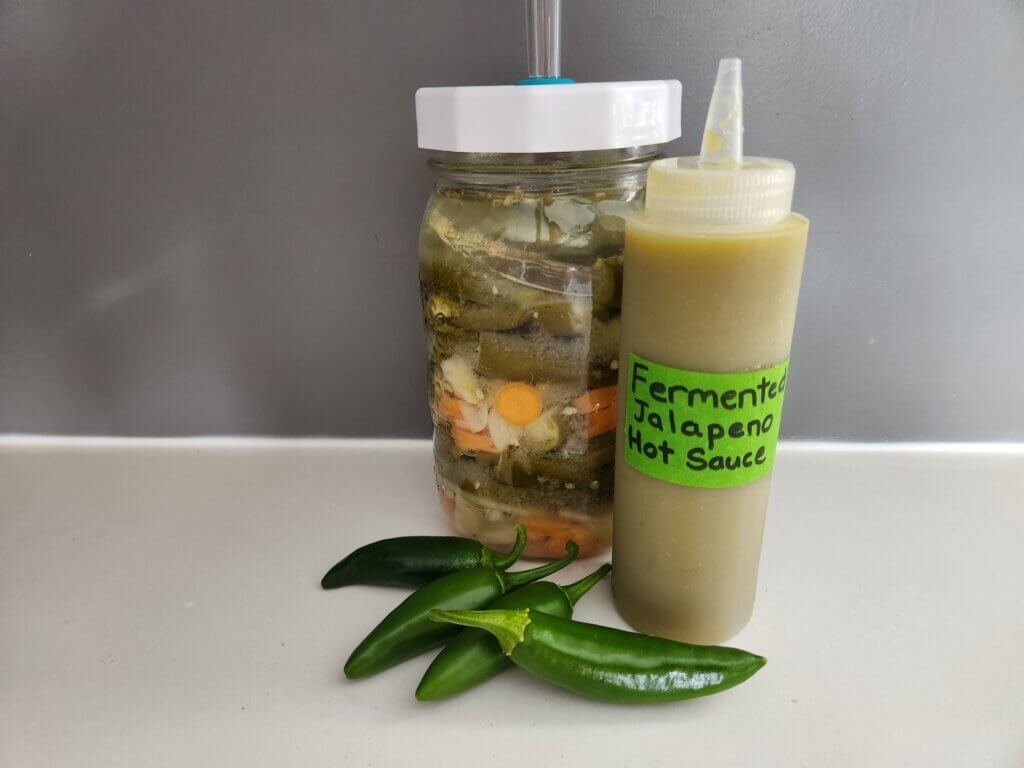
Every year we grow more jalapeños than we know what to do with. After pickling them, making cowboy candy and saving seeds for next year’s garden, fermenting them has become another way for us to preserve the harvest.
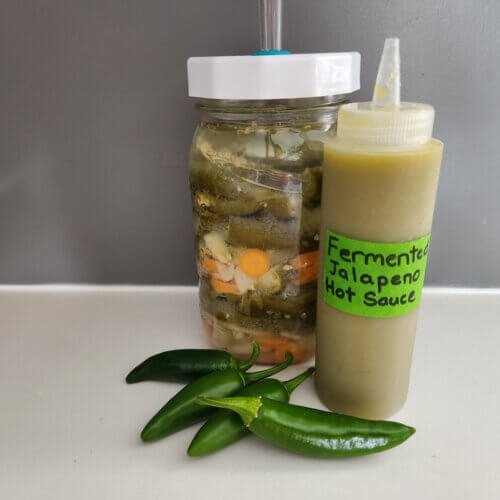
This time, instead of making our usual cayenne hot sauce, we made fermented jalapeño hot sauce with fresh green jalapeños, garlic, onion and carrots. The result was a tangy green hot sauce with considerably less heat than our cayenne version.
This post may contain affiliate links. If you use these links to buy something we may earn a commission. Thanks.
What Does Fermented Jalapeño Hot Sauce Taste Like?
If you’ve never had fermented food before it’s hard to explain the flavour. It has an earthy, tangy, almost sour taste combined with the delicious flavour and heat that jalapeños normally bring.
It’s considerably milder than our cayenne hot sauce. I left all the seeds and core of the jalapeños intact when we fermented to make it spicier. We remove those with our cayenne peppers.
We especially like using fermented hot sauces in soups during the colder months. This lines up perfectly with the time of year our garden produces enough peppers to make the hot sauce in the late summer and early fall.
Ingredients for Fermented Jalapeño Hot Sauce
If you grow a garden like we do, you’ll probably have all these ingredients on hand at the same time as your jalapeños are ready. We grow our peppers from seed each year, and our guide to growing peppers in Zone 5 walks through the entire process from seed starting to harvest. Below are the ingredients I used to ferment in a 1 L (1quart) wide-mouth mason jar.
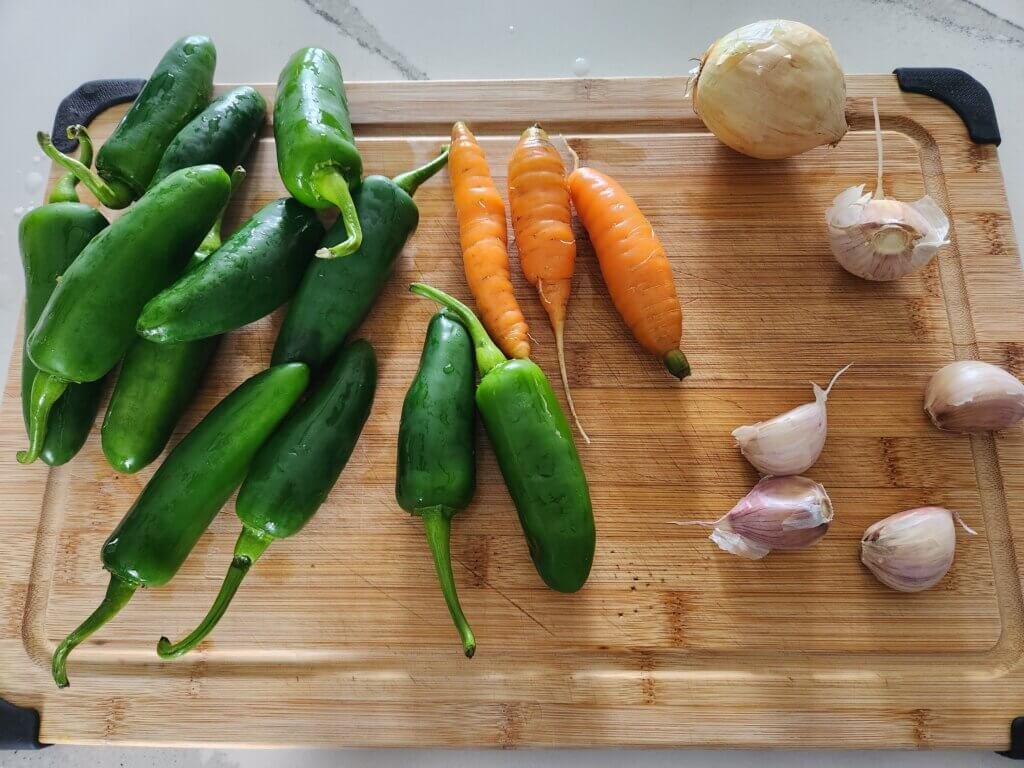
- 1 lb fresh green jalapeños
- 1/2 medium yellow onion sliced
- 1 medium carrot thinly sliced
- 4–8 garlic cloves sliced
- 700 g water
- 21 g pickling salt
How to Make Fermented Jalapeño Hot Sauce
Step 1: Make a 3% Salt Brine
We use a 3% salt brine for everything we ferment, including our fermented pickles. To make enough for a 1L jar, mix 700g of water with 21g of pickling salt. You’ll have extra brine, but that’s fine.
Step 2: Prepare the Jalapeños and Other Ingredients
Peel and thinly slice the carrots, onion, and garlic. The thin slices help to soften the vegetables while they ferment.
Using fresh green jalapeños, remove the stem and cut in half. Remove the seeds and pith for a milder hot sauce or leave them in for more spice.
Step 3: Pack the Fermentation Jar
Layer the ingredients starting with the carrots, onion, and garlic. I like to do a bottom layer of these 3, then a layer of jalapeños, more carrots, onion, and garlic, then top it off with the rest of the jalapeños.
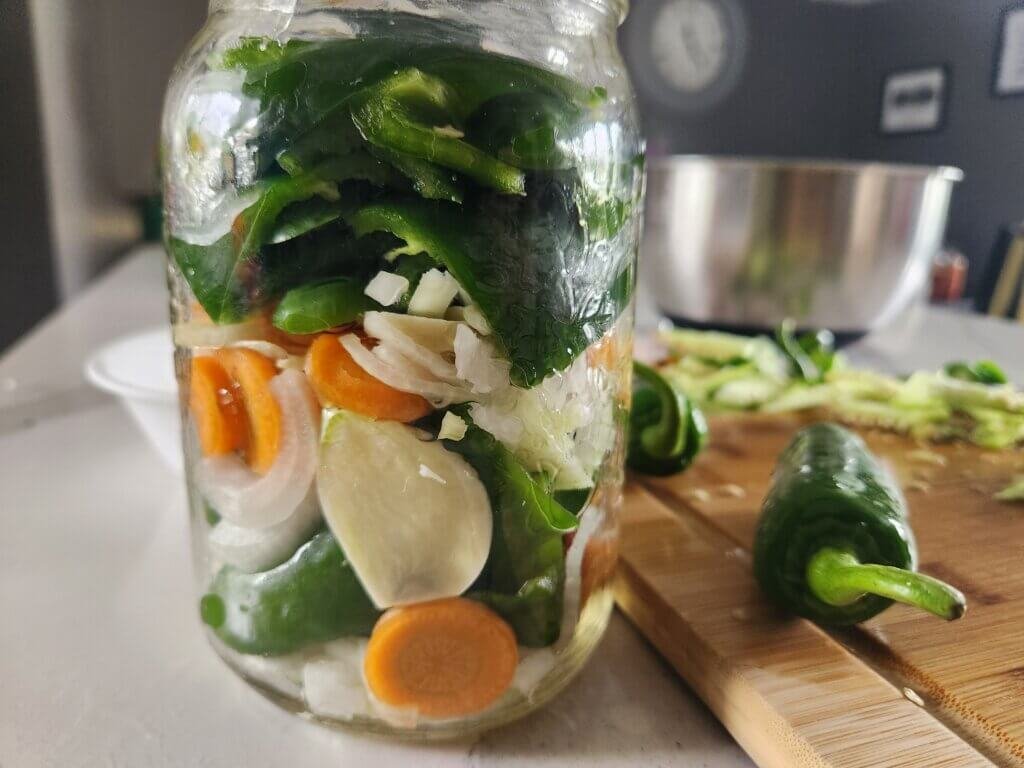
I do this to help keep the ingredients submerged beneath the brine while they ferment. The jalapeños on top form a relatively flat layer for the fermentation weight to sit on.
Pour the brine over the vegetable mixture with the fermentation weight already inside the jar. Fill the brine until there is about 1 inch of headspace. This leaves room for the airlocks to work.
Step 4: Ferment the Jalapeños
Attach the fermentation airlock and place the jar in a dark location to ferment. I fermented this batch for 14 days. During fermentation, keep the vegetables completely submerged beneath the brine.
You should begin to notice signs of fermentation, such as bubbles, cloudy brine and a gradual change in the colour of the jalapeños.
Why Do Jalapeños Change Colour When Fermented?
As the jalapeños ferment, don’t be surprised when they lose their bright green colour. Mine gradually changed from a vibrant green to a duller olive green as fermentation progressed.
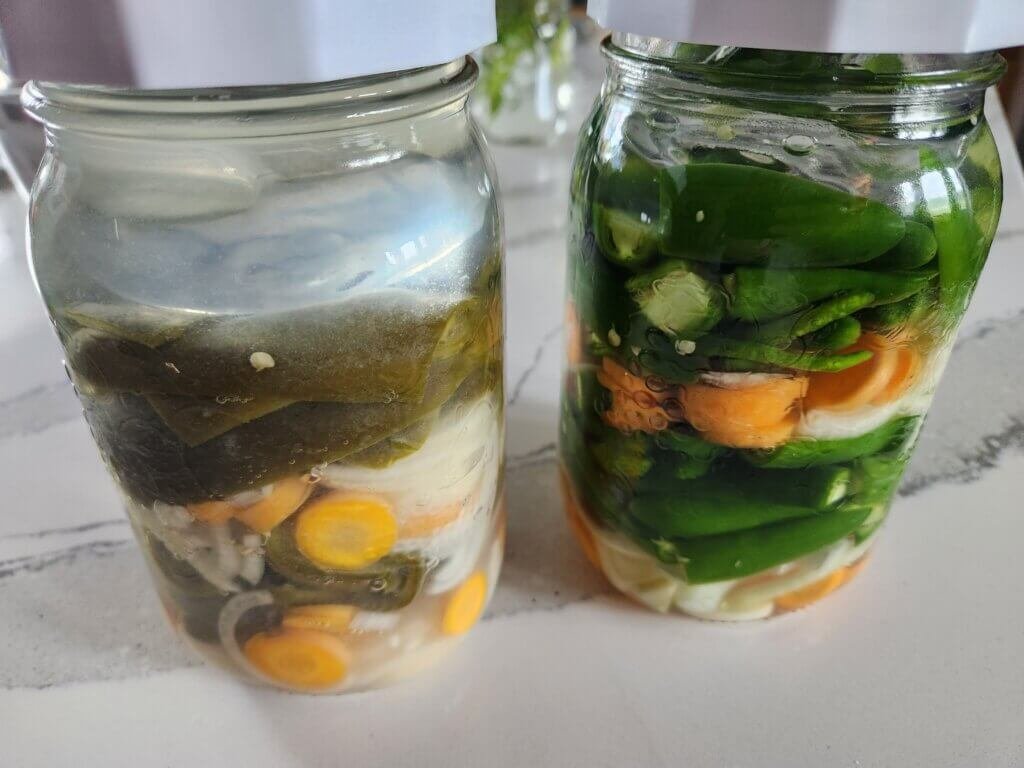
The jar on the left had been fermenting for about a week, while the jar on the right had just been packed. You can really see how much the colour of the jalapeños changes during fermentation.
We fermented our peppers for 14 days, which we’ve found to be the sweet spot for the flavour we want in this hot sauce.
Step 5: Strain and Blend the Hot Sauce
After your jalapeño hot sauce has fermented for 14 days it’s time to strain and blend the contents of your jar.
Gently remove the fermentation airlock and the weight on top of the peppers. Using a fine mesh strainer, strain the brine into a large bowl (you’ll need to save this) while catching the vegetables in the strainer.
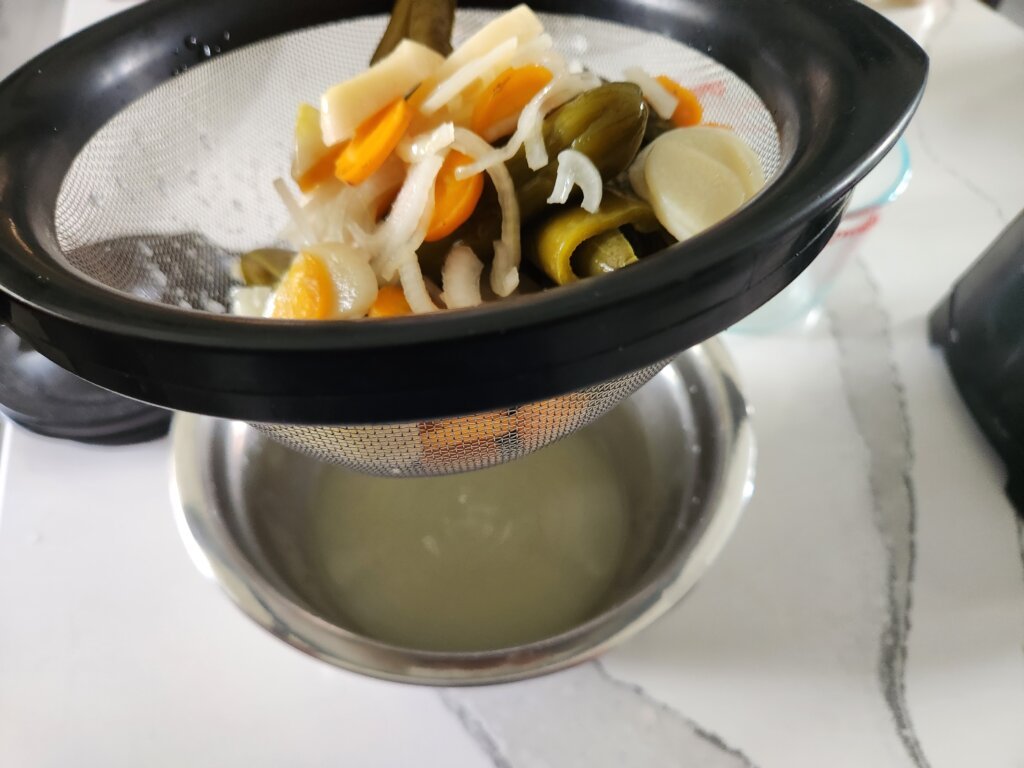
Put your fermented vegetables into a blender and add about 1/2 cup of the brine to help it blend. If it’s not blending, add another 1/4 cup of brine at a time until it blends.
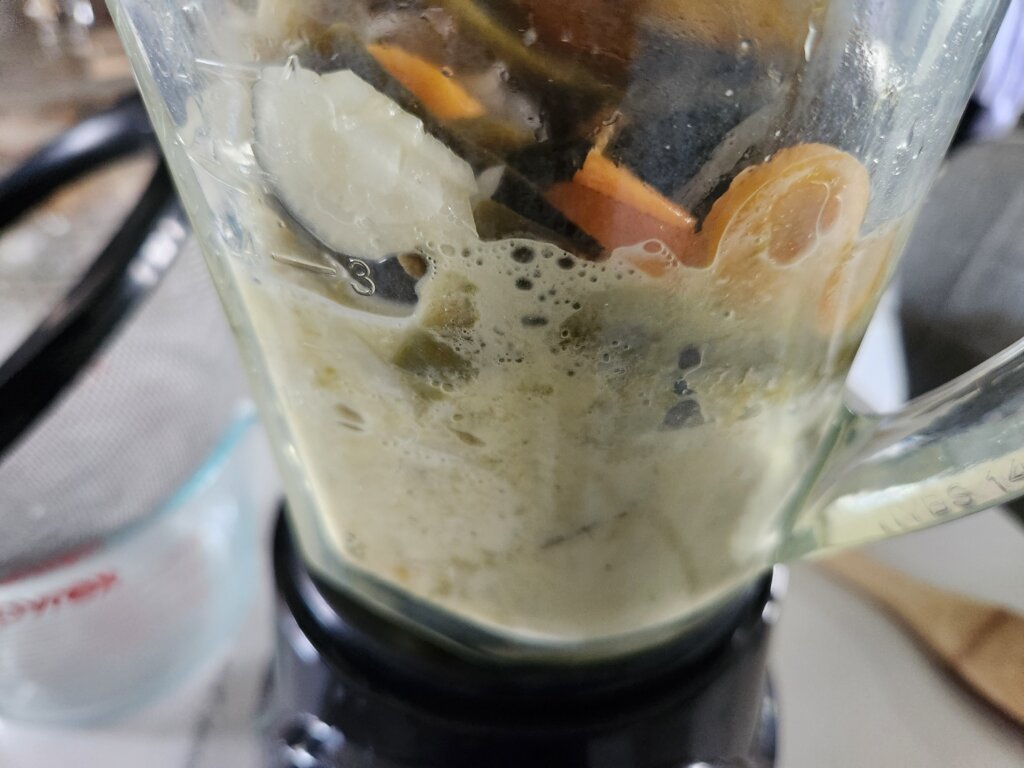
Blend for 3–5 minutes until you have a very smooth hot pepper sauce slurry.
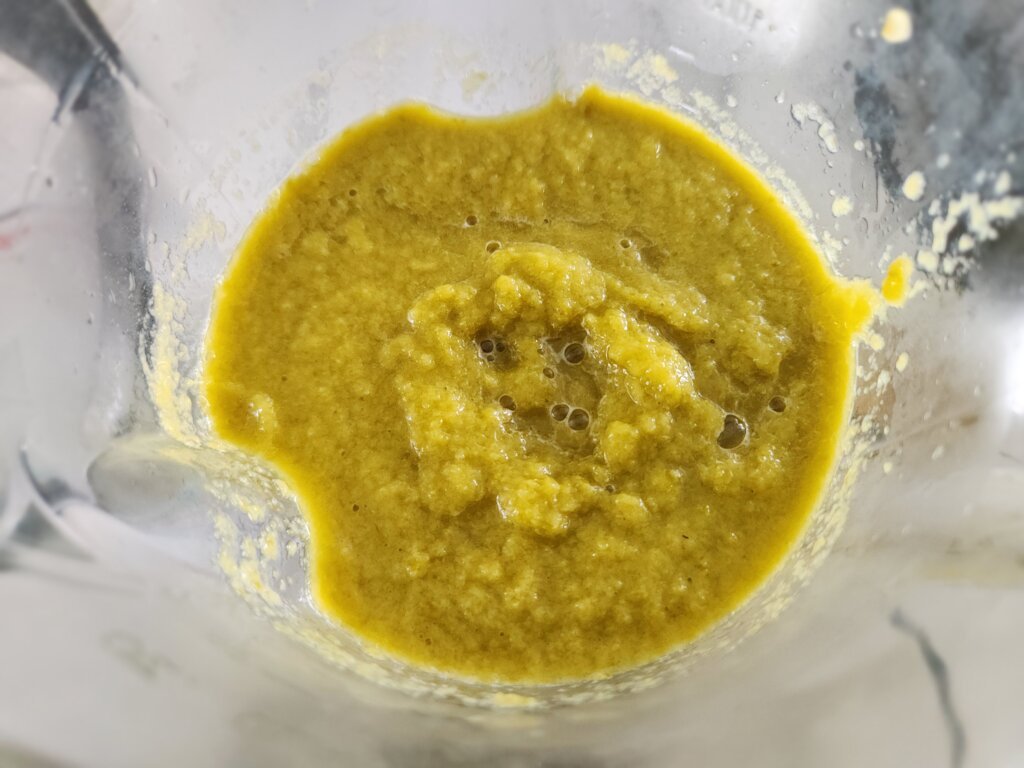
Step 6: Bottle the Jalapeño Hot Sauce
Once you’re done blending it’s time to strain the finished slurry and bottle your fermented jalapeño hot sauce. Get another clean bowl, or a large measuring cup like I used, and your fine mesh strainer. Pour your hot sauce into the strainer and using a spatula gently press the slurry down to remove the liquid into the bowl. This is your hot sauce.
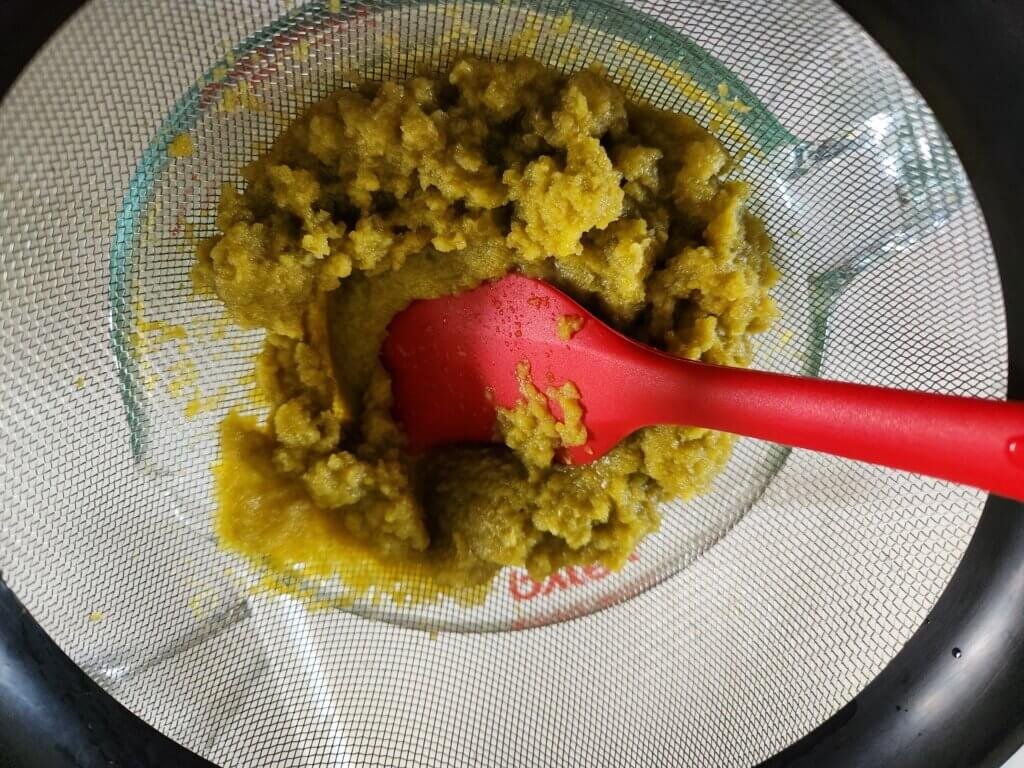
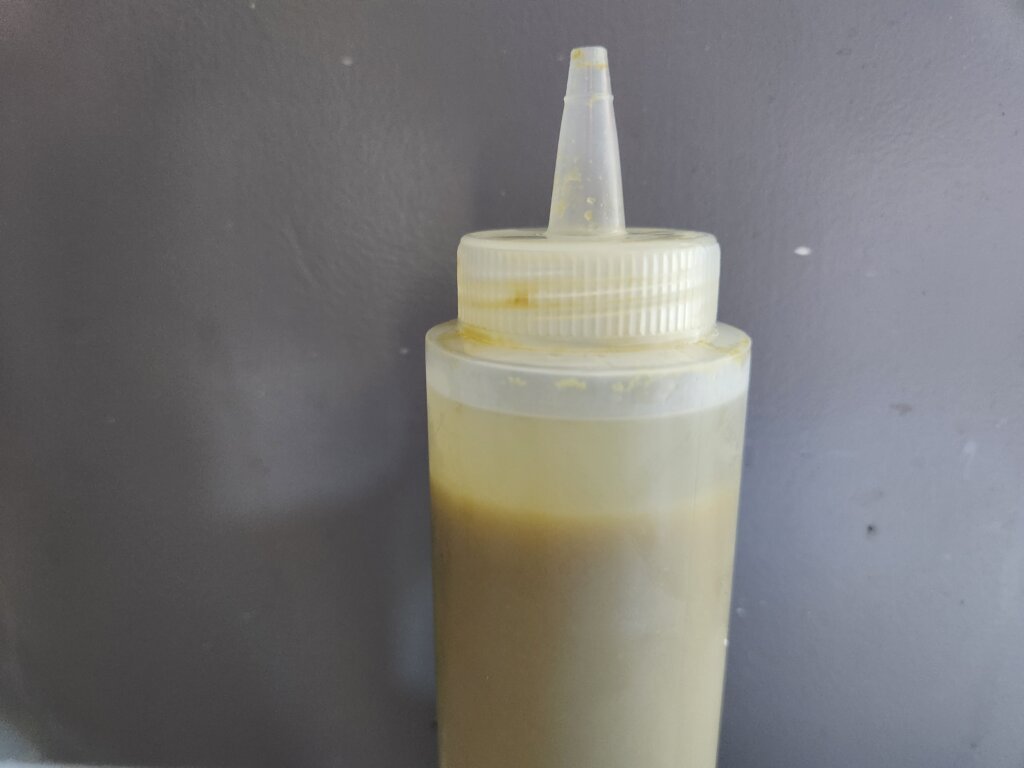
The finished sauce is fairly thin and will still have a little bit of pulp that made it through the strainer.
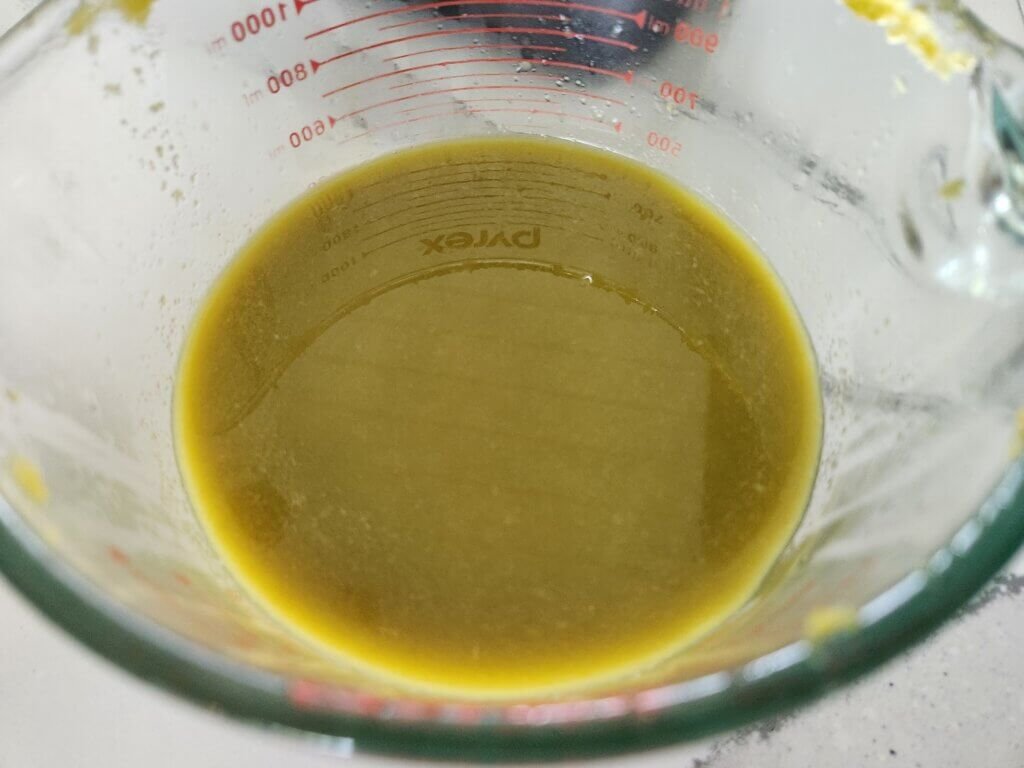
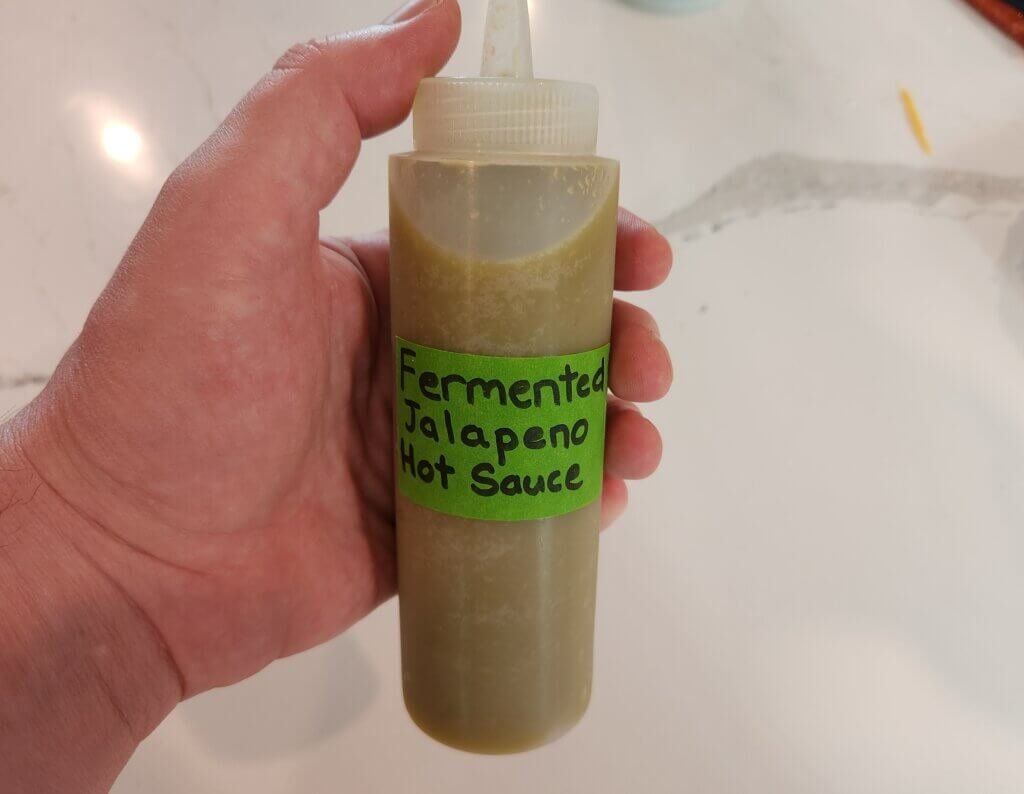
Pour the sauce into a glass or plastic bottle for storage. We use these squeeze bottles.
What to Do With the Leftover Jalapeño Pulp
After straining the fermented jalapeño hot sauce, you’ll be left with about 1 cup of pepper pulp.
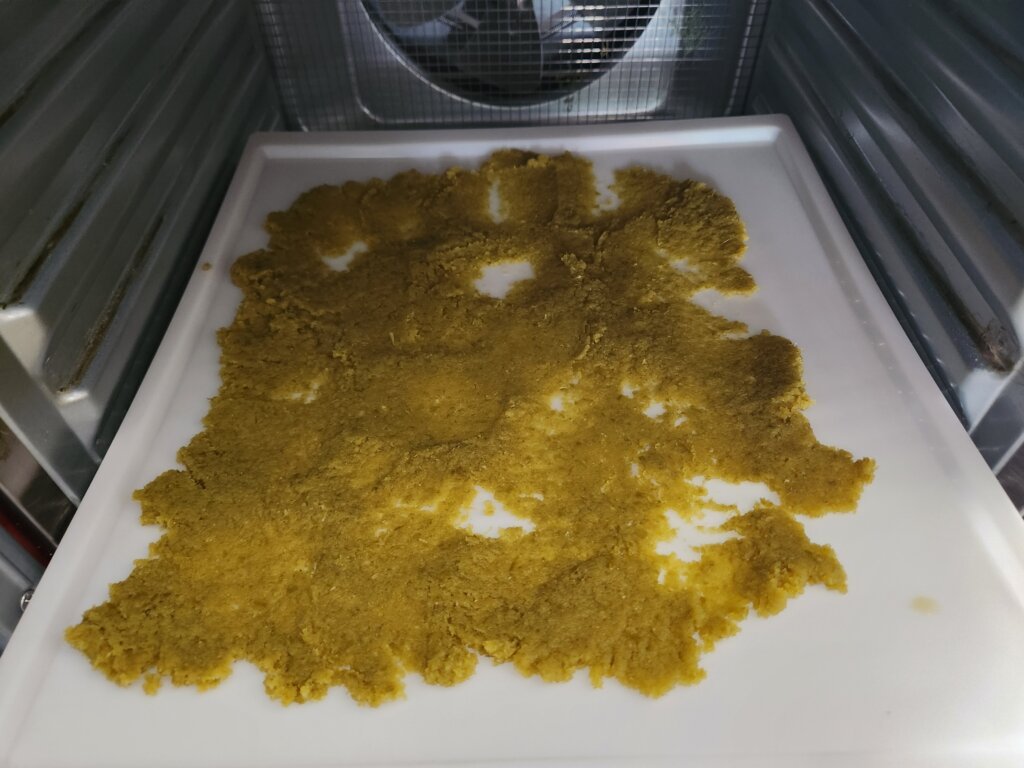
We tried dehydrating the leftover pulp to turn it into jalapeño seasoning. It tasted really good, but because the fermented pulp holds so much moisture, we couldn’t get ours completely dry enough to safely store as a powder. In the end, we decided to throw it out rather than risk storing it with moisture still in it.
For now, I don’t recommend trying to turn the leftover pulp into a shelf-stable powder unless you can get it completely dry.
If you try this and it works for you, please let us know in the comments how you did it and how it turned out.
How Spicy Is Fermented Jalapeño Hot Sauce?
Fermented Jalapeño hot sauce can range anywhere from mild to slightly spicy. Removing the seeds and pith will make the finished sauce milder. If you want more heat, leave them intact like we did.
We like spicy so we left all the seeds and pith in our hot sauce and it came out quite spicy. Not as hot as our Fermented Cayenne Pepper Hot Sauce, but still quite spicy. The best part is that it’s customizable to your preferences.
Jalapeños can be a wild card sometimes too. With our homegrown peppers, some of our jalapeños are very spicy and some are very mild. Fermenting 1 pound together helps to mitigate the variance in the flavour.
How to Store Fermented Jalapeño Hot Sauce
Store your finished fermented jalapeño hot sauce in the refrigerator. Refrigeration considerably slows fermentation, but a newly bottled sauce may still produce some gas. We use squeeze bottles with a small dispensing opening rather than completely sealing the sauce in an airtight bottle while it is still actively producing gas.
If using a tightly sealed bottle, check it periodically for pressure after bottling.
Ways to Use Fermented Jalapeño Hot Sauce
We put this sh!t on everything. Hot dogs, hamburgers, pasta dishes, eggs, you name it. Fermented hot sauce goes well with just about everything.
Our favourite way to use our fermented hot sauces is in soups over the winter. It adds heat, acidity and that tangy fermented flavour that works especially well in hearty soups.
Fermented Jalapeño Hot Sauce
Equipment
- 1L wide-mouth mason jar
- Fermentation airlock
- fermentation weight
- Blender
- Fine Mesh Strainer
- Large mixing bowl or measuring cup
- Clean bottle for finished sauce
Ingredients
- 1 lb fresh green jalapeños
- 1/2 medium yellow onion sliced
- 1 medium carrot thinly sliced
- 4–8 garlic cloves sliced
For the brine
- 700 g water
- 21 g pickling salt
Instructions
- Make the brine. Combine 700 g water with 21 g pickling salt and stir until the salt dissolves. This makes a 3% salt brine.
- Prepare the vegetables. Peel and thinly slice the carrot, onion and garlic. Remove the stems from the jalapeños and cut the peppers in half. Leave the seeds and pith intact for more heat, or remove them for a milder sauce.
- Pack the jar. Layer the carrot, onion, garlic and jalapeños tightly in a 1 L wide-mouth mason jar.
- Add the brine. Place a fermentation weight over the vegetables and pour in enough brine to completely submerge them, leaving about 1 inch of headspace.
- Ferment. Attach a fermentation airlock and leave the jar in a dark place for 14 days.
- Strain. Remove the airlock and fermentation weight. Pour the contents through a fine-mesh strainer, reserving the brine.
- Blend. Transfer the fermented vegetables to a blender and add about 1/2 cup of the reserved brine. Blend for 3–5 minutes until very smooth. If needed, add another 1/4 cup of brine at a time until it blends easily.
- Strain the sauce. Press the blended mixture through a fine-mesh strainer to separate the hot sauce from the remaining pulp.
- Bottle. Pour the strained hot sauce into a clean glass or plastic bottle and store it in the refrigerator. Shake well before using, as natural separation can occur.
Notes
For less heat: Remove the seeds and pith before fermenting.
The jalapeños will lose their bright green colour during fermentation. That’s expected.
The finished sauce is intentionally fairly thin. For a thicker sauce, strain out less of the blended pulp.
Some separation during storage is normal. Shake before using.
Fermented Jalapeño Hot Sauce FAQ
Within the first few days you may notice small bubbles forming in the brine or rising through the jar. The brine may also become cloudy and the jalapeños will gradually lose their bright green colour. These are normal changes during fermentation.
Cloudy brine is common during lacto-fermentation and isn’t necessarily a sign that something has gone wrong. As the jalapeños ferment, the previously clear brine can become noticeably cloudy.
Yes. Keep the jalapeños and other vegetables submerged beneath the brine during fermentation. This is why I use a fermentation weight on top of the vegetables when packing the jar.
Yes. I ferment mine for 14 days because I like the flavour at that point, but fermentation time varies with temperature. You can ferment longer for a stronger fermented flavour, provided the ferment is progressing normally and the vegetables remain submerged beneath the brine.
Yes. Fully ripened red jalapeños can also be fermented for hot sauce. They’ll change the colour and flavour of the finished sauce, but the same basic process can be used.
If you see fuzzy mold growing on the peppers or surface of the ferment, I would discard the batch rather than try to save it. Keeping all of the vegetables submerged beneath the brine helps reduce the chance of unwanted surface growth.
Yes. I intentionally strain mine into a fairly thin hot sauce. If you’d prefer a thicker sauce, you can leave more of the blended pepper pulp in the finished sauce rather than pressing and straining as much of it out.
Some separation is normal with homemade fermented hot sauce, especially since this recipe doesn’t contain a commercial stabilizer. The solids can settle while the thinner liquid rises toward the top of the bottle.
Give the bottle a good shake before using it and it should mix back together.