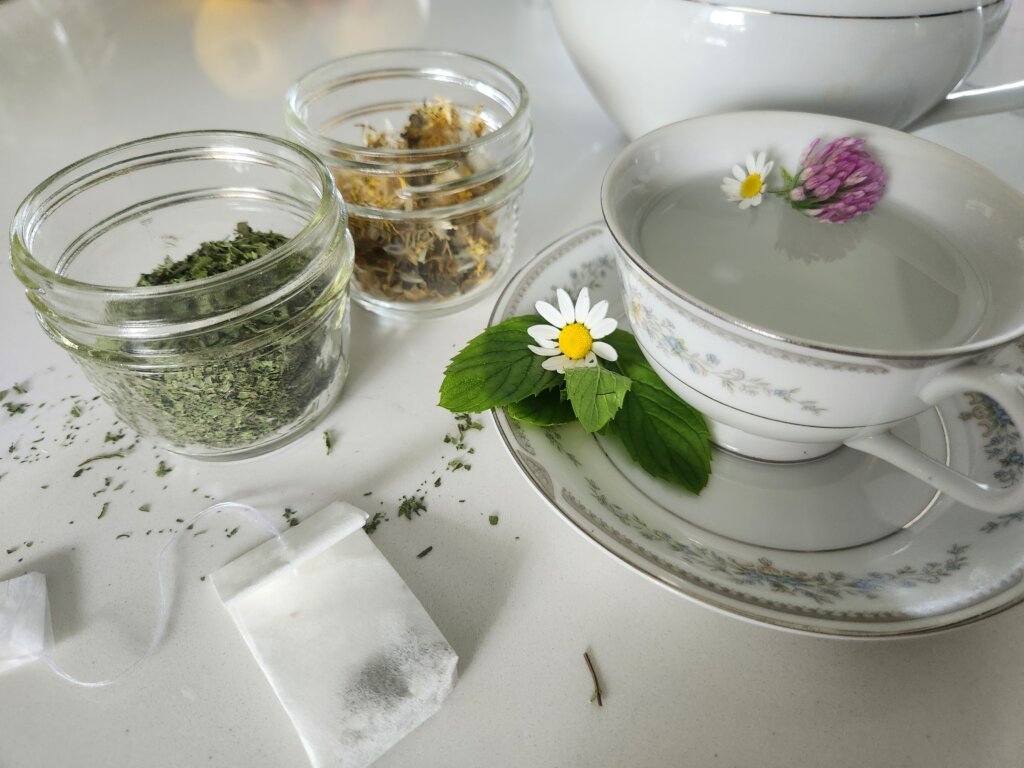
Every night I make myself a tea. Sometimes it’s a store-bought green tea, but most of the time it’s one of my homemade herbal tea blends.
The herbs I choose nightly depend on my mood. If I’m tired I’ll make a restful tea or if I’ve noticed my brain being a little foggy (children – IYKYK), I’ll make a brain power blend, etc.
I rarely drink tea for the taste because I view tea as a hot infusion of medicinal herbs. I’m not drinking a vibe, I’m drinking what my body needs. I’ll outline my 6 homemade herbal tea blends that you can enjoy at home too.
This post may contain affiliate links. If you use these links to buy something we may earn a commission. Thanks.
How I Choose Herbs for My Herbal Tea Blends
At the end of the night when I’m making a tea, I think about how I’m feeling. I go inwards and notice how my body is feeling.
Let’s say I notice my throat has been sore. I’ll reach for thyme, mullein, honey, goldenrod, garlic to help support my immune system.
If I’ve had too much coffee or have some stress. I’ll reach for chamomile, lemon balm and lavender.
It all comes down to my body in that moment and how I can best support it using medicinal herbal blends.
I Choose Herbs for Purpose, Not Taste
The other important thing to note about my tea blends – they are no chosen for taste. They don’t taste bad, but like I said, I’m not drinking the tea for a vibe.
Let’s take my garlic tincture for instance, I add it to my tea but my husband refuses. He doesn’t like the taste of garlic in his tea and that’s totally fair. I don’t mind it because I know that garlic is probably the best immune support on earth.
Tea, Tinctures or Both?
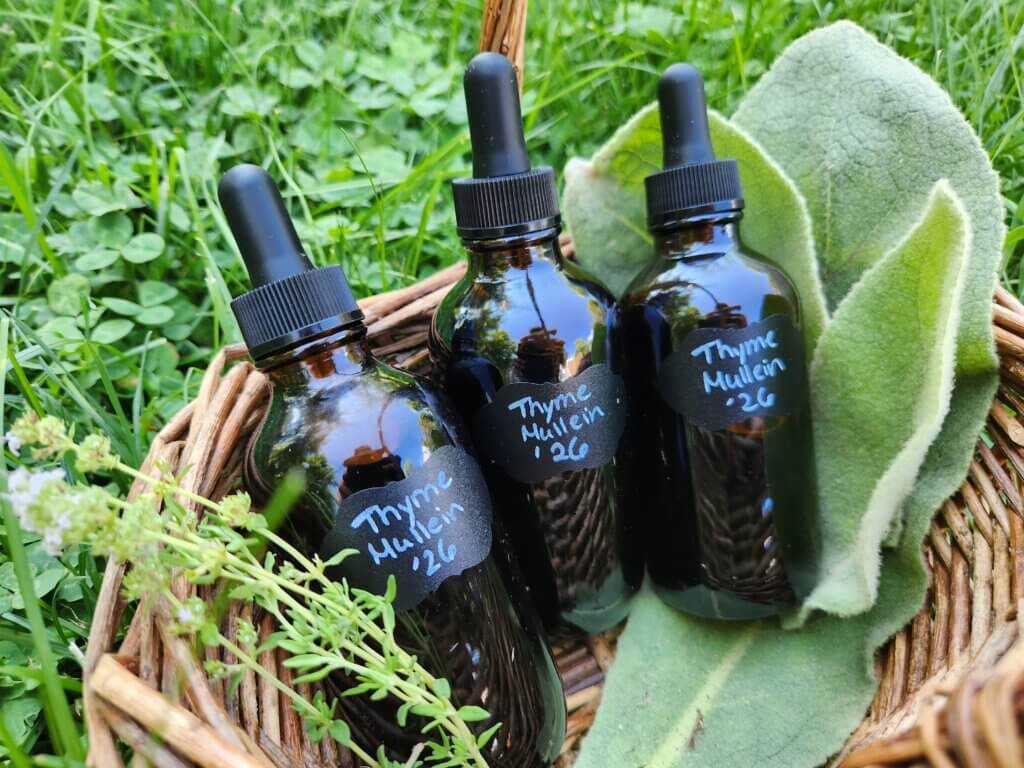
My biggest addition to my night herbal teas are the homemade tinctures I make. Depending on what I’m trying to support with the hot infusion of herbs, I’ll look into my tincture pantry and decide if there’s something else I can add to support it – and there usually is.
While this article is about specific tea blends, I will always include the tinctures I add to it because it’s vital to the way I drink my tea.
Herbs I Keep In My Herbal Pantry
Besides using herbs for cooking, many of the same herbs I grow and preserve end up in our homemade teas. These are herbs I keep in my pantry regularly, either dried from the garden or preserved so they’re ready when I want to put together a tea blend.
- Garlic: Garlic may sound like an odd addition to a tea list, but I keep it on hand for both food and traditional herbal preparations. I use garlic tincture with my Cold Fighting blend and also include garlic in my Brain Power combination.
- Chamomile: Probably one of the herbs I reach for most often for a good tea base. Chamomile is traditionally used as a calming herb, and I use it in my Restful and Digestive blends.
- Rosemary: Rosemary isn’t just a culinary herb in our house. It’s traditionally associated with memory and concentration, which is why I use it in my Brain Power blend. I also pair it with basil in my Headache Relief blend.
- Thyme: I grow and dry thyme every year, and it’s one of the first herbs I reach for during cold season. Thyme has a long history of traditional use for coughs and respiratory complaints, and I use it as the base of my Cold Fighting blend.
- Mullein: Mullein is a plant I keep specifically for cold season. It’s traditionally used for respiratory support, and I use either mullein tea or tincture alongside thyme when making my Cold Fighting blend.
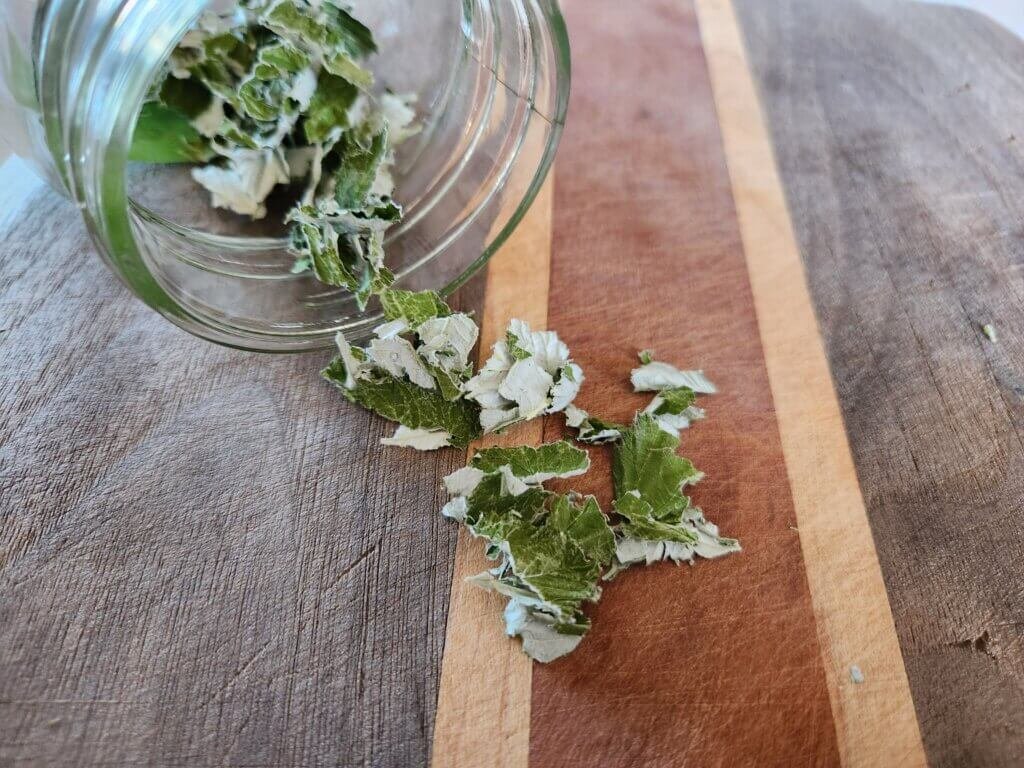
- Red Raspberry Leaf: Red raspberry leaf is traditionally used in women’s herbal preparations. It’s the base of my Reproductive Realign blend, where I combine it with oregano and chamomile.
- Oregano: Most people think of oregano strictly as a cooking herb, but it also has a long history of traditional herbal use. I keep plenty of dried oregano because I use it for both cooking and tea, including in my Reproductive Realign blend.
- Basil: Basil is another pantry staple that does double duty. Along with using it constantly in the kitchen, I pair basil with rosemary when making my Headache Relief tea.
- Lemon Balm: This is one of my favourite herbs to pair with chamomile. Lemon balm is traditionally used for relaxation, and I use the two together when I want a simple evening tea.
- Dandelion: I use both dandelion flowers and dandelion root depending on what I’m making. Dandelion has a long history of traditional use for digestion, which is why you’ll find it in my Digestive blend.
- Goldenrod: Goldenrod is another plant I preserve for my home herbal pantry. I primarily use it as a tincture rather than as the main ingredient in a tea.
My Homemade Herbal Tea Blends
Disclaimer About My Herbal Tea Blend Names
I created fun names for my herbal tea blends because that’s how I think about them when I’m constructing them.
These names are not promises about what they will do for someone. Depending on the herb there may be some evidence about it’s benefits (e.g. thyme), and more anecdotal evidence (e.g. oregano). This is not medicinal advice, always ask your medical practitioner before trying new herbs.
Reproductive Realign Blend
Red raspberry leaf + oregano + chamomile
If I’m feeling like I want to support my reproductive system, I’ll make a red raspberry leaf tea with oregano and chamomile. Red raspberry leaf has a long history of traditional use for women’s reproductive health, particularly around menstruation. Oregano has also been traditionally used for menstrual discomfort, while chamomile is best known for its calming properties.
I like to drink this blend during my menstrual cycle, or at other times of the month when I feel like giving this area of my body a little extra support.
Learn more about the benefits of red raspberry leaf tea
Headache Relief Blend
Basil + rosemary + oregano
My go-to headache relief blend. I wrote an entire article dedicated to this combination and also created a tincture for a more concentrated combination of these potent herbs.
Summed up – basil and rosemary both have pain relieving properties and if combined in a tea, it can relieve pain temporarily.
If I feel a headache coming on, I’ll reach for this headache relief tea blend first. I’ll drink the steeped tea throughout the day because if I stop after the first cup, it usually comes back.
If my headache still hasn’t dissipated after my first cup of tea – then I might reach for something stronger. But 95% of the time, this does the trick.
Learn more details on my natural headache remedy of basil and rosemary tea
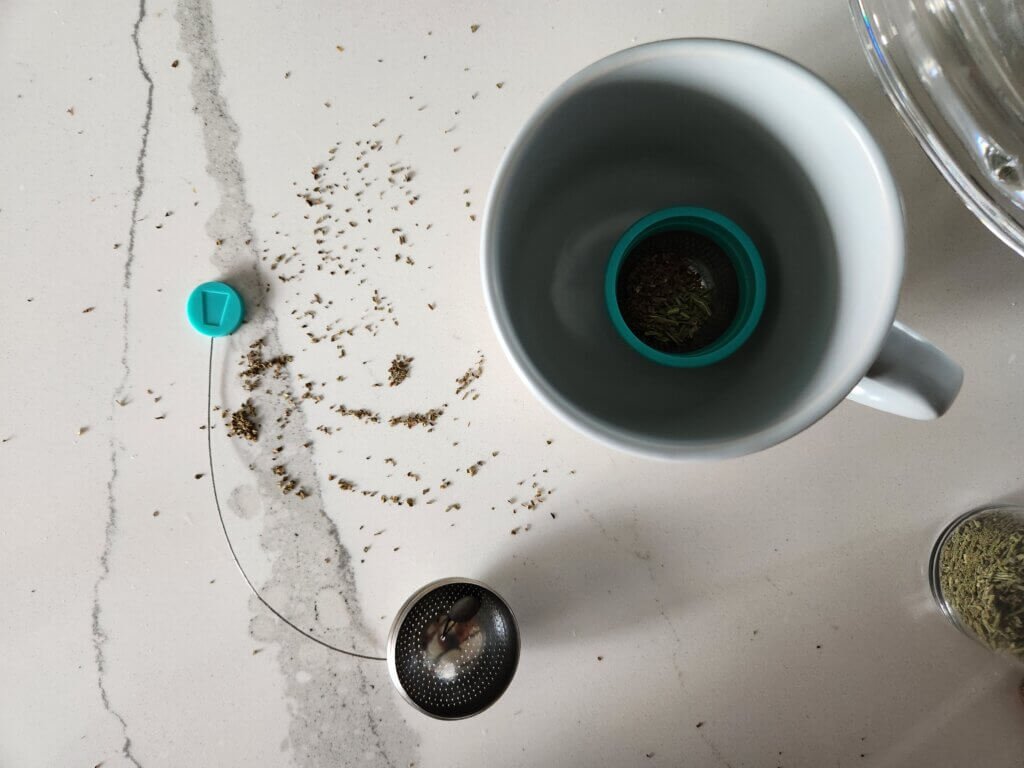
Cold Fighting Blend
Thyme + mullein + garlic tincture + goldenrod tincture + honey
When I’m sick, I always make this multiple times a day. Does it work? Well, it can’t make it worse!
Thyme and mullein are both known as expectorants and have plenty of compounds that help fight off bacteria.
- Medicinal Benefits of Thyme: Traditional Thyme Herbal Uses
- What Is Mullein – The Tall Fuzzy Green Plant
Now also add in some tinctures like a goldenrod tincture and my favourite garlic tincture (by the way, garlic has SO many awesome benefits – you got to read about them), combined with locally sourced raw honey for soothing your throat and that, is a combination to help you feel better fast.
I’ve written so many different articles on these major immune-boosting plants. Sorry for all the links, but you should truly learn about them if you haven’t already.
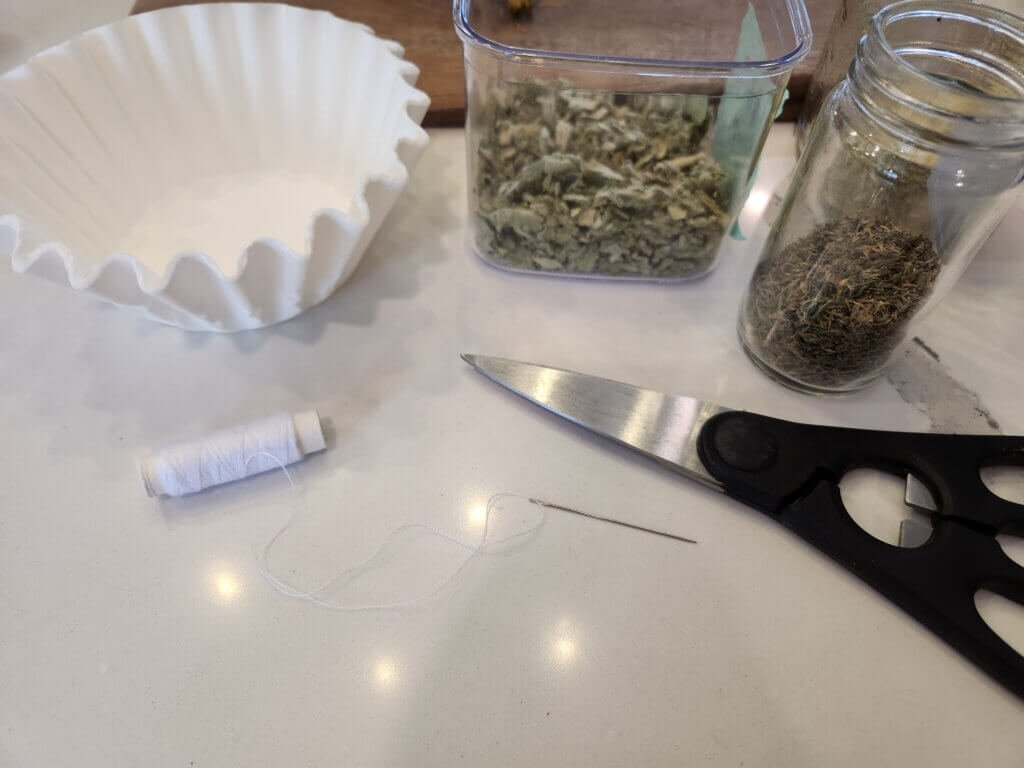
Brain Power Blend
Rosemary + sage + garlic + goldenrod + honey
When I want to give my brain a little extra support, I reach for rosemary and sage. Both herbs have a long history of traditional use for memory, mental clarity and cognitive support. I combine the two as the base of my Brain Power blend.
Then add some of my homemade garlic tincture, traditionally used to support circulation and overall cardiovascular health, along with my ‘to make whole’ goldenrod tincture.
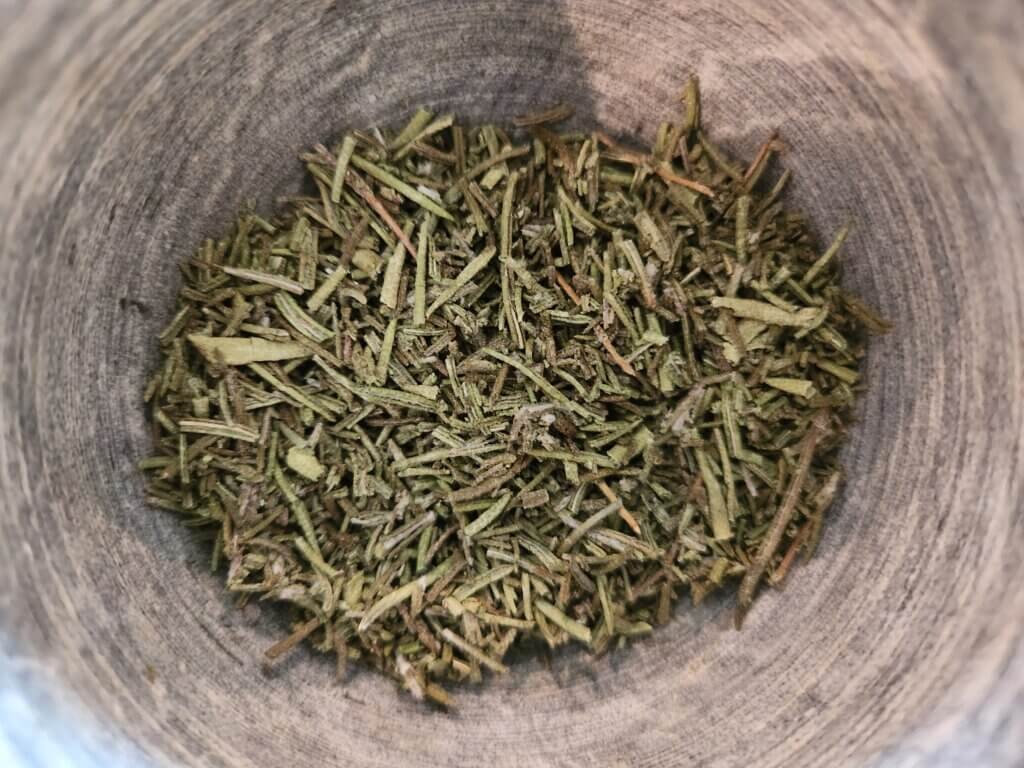
Restful Blend
Chamomile + lemon balm + lavender + honey
For those days you’re feeling a little too wired – this restful blend helps your body stop rushing and start relaxing. Lavender is a well known sleep aid and therefore helps your nervous system relax. Chamomile also has calming effects and they have been well documented. Lemon balm is another herb that helps ease anxiety.
Combined, these herbs are a beautiful, calming presence at the end of a fried nerves day. Or, you can just make a tea of it before bed to help your body wind down.
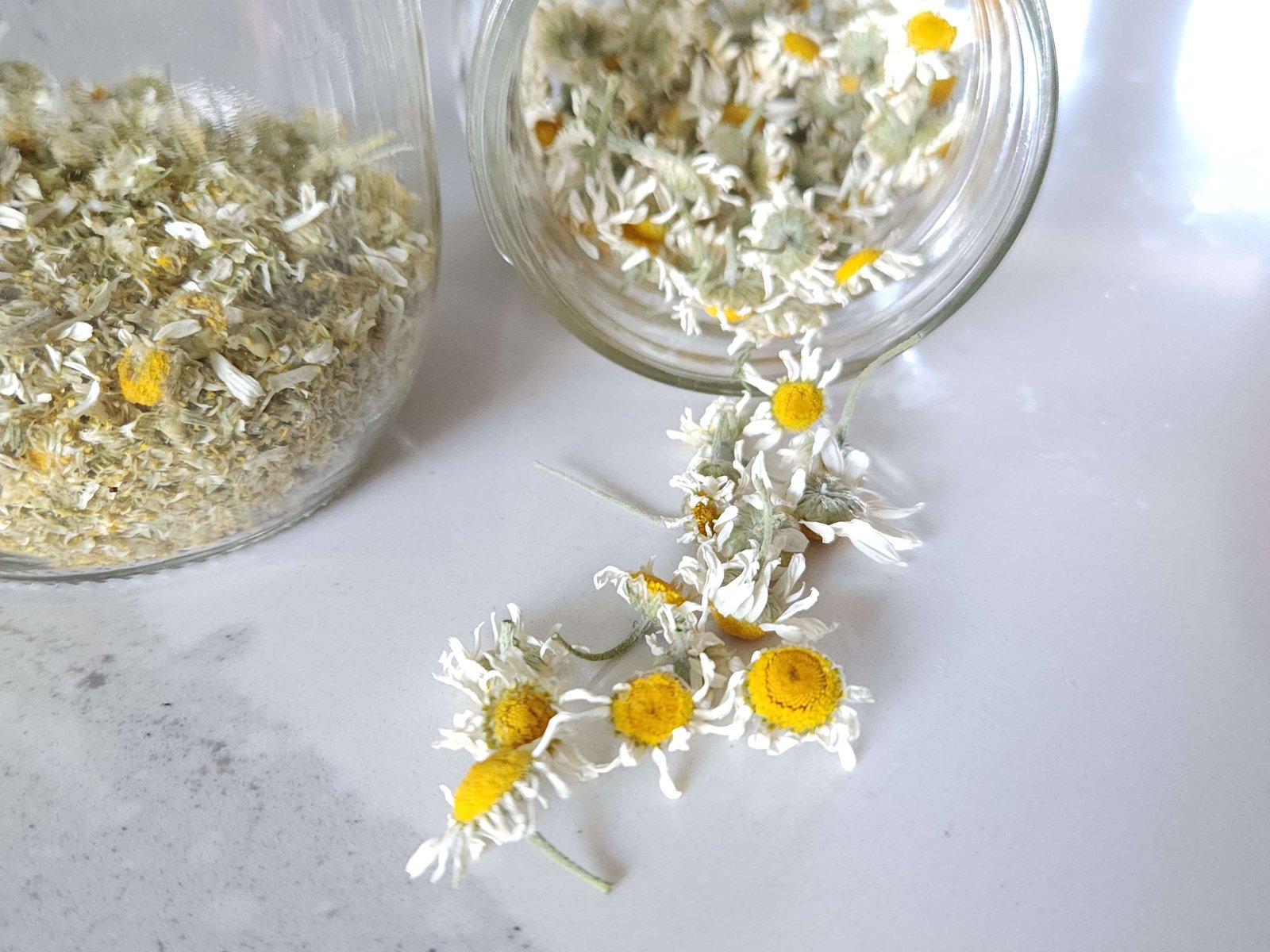
Digestive Blend
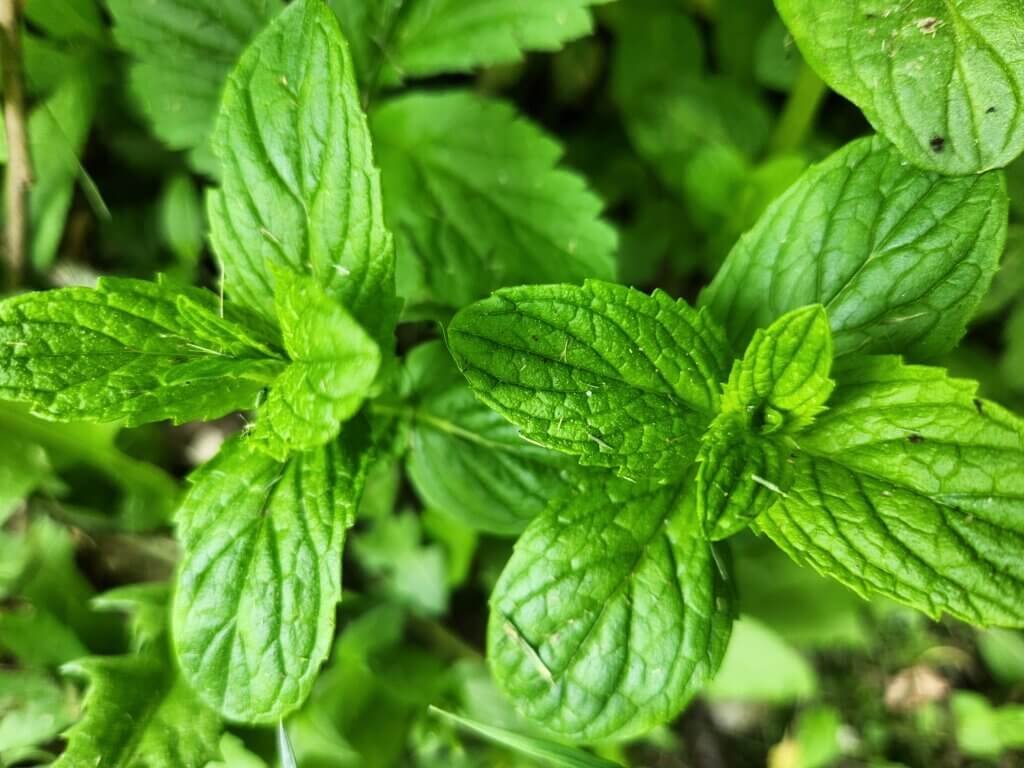
Dandelion + chamomile + mint + ginger + honey
Feeling sluggish, like that heavy dinner didn’t go well, or maybe you haven’t moved your body enough and your digestion is just feeling, off. That happens to me more often than I’d care to admit. But then in the evening I reach for some digestive support.
Dandelion flowers and dandelion roots both support digestion. I will add the flowers in my tea and then add the dandelion root tincture as an easy ‘detox’ addition.
Mint has been traditionally used to help add digestion as well, and everyone knows ginger has a plethora of digestive benefits. But I also like to add chamomile, because it’s floral and calming effects.
How I Make a Basic Herbal Tea Blend
Once I decide which herbal tea I’m making. I’ll head to my pantry and see how to best construct it. Sometimes I have already made up some combinations and put them in my homemade tea bags.
Most of the time, I get a coffee filter add all my herbs one-by-one, then add it to a loose left tea infuser, and place that into my fun mug of choice. The amount of each herb varies depending on my mood – but a good rule of thumb is bout 1/2 tsp of each herb.
At this point I’ll go into my tincture pantry and choose from the dozens of tinctures I have to best support my needs that night. I’ll add a full dropper to my cup and add some raw local honey.
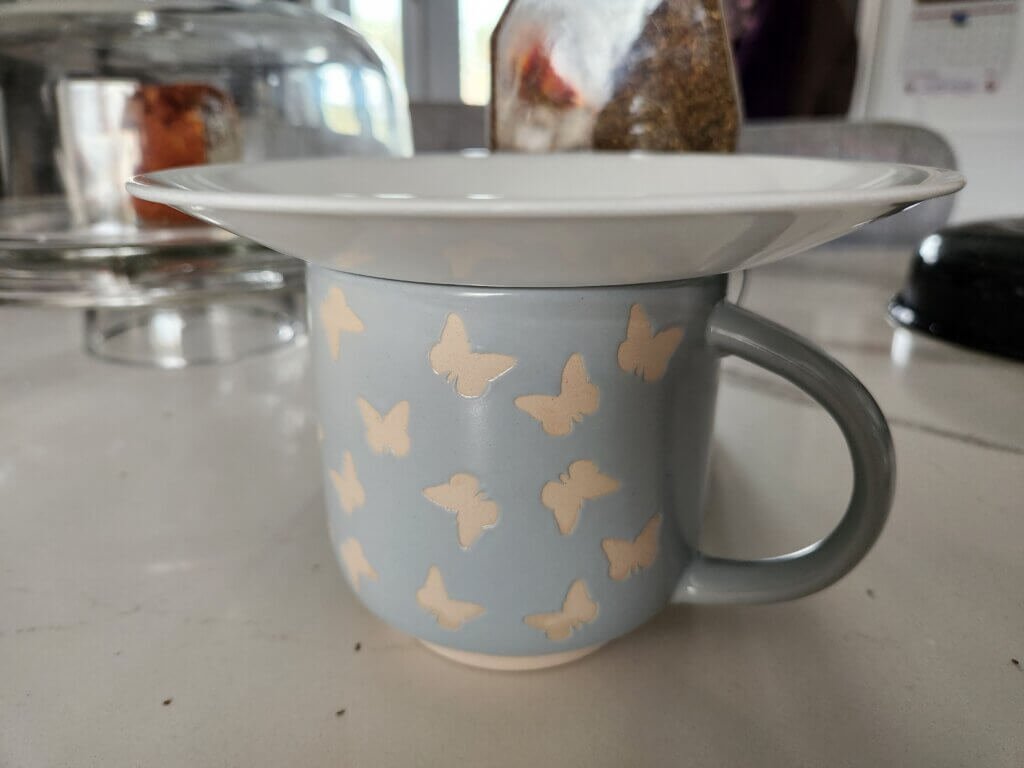
Once the water is boiled I’ll add to to my mug, mix around my spoon to melt the honey and then using a plate, cover the lid of the tea to steep it.
Leave the tea to steep for a minimum of 7 minutes – the longer the better. Once the time is up, you can either remove your tea ball or keep it in. I go back and forth depending on my mood that night. The longer the tea ball stays in, the stronger the flavour will become, especially as the water dissipates.
Growing, Harvesting and Drying Herbs for Tea
When growing an herb garden, it’s important to grow what you’ll actually use.
Most of the herbs I grow are culinary herbs, but now that I know about their medicinal benefits – it’s just as important to grow them for my medicinal pantry as it is for my kitchen.
Each plant has different growing, harvesting and drying conditions. But the basics are usually the same:
- harvest after the morning dew has dissipated but before mid-day during the hottest time of the day
- harvest healthy herb stems
- do not harvest stems that have flowered – their energy is in the flower now, not the leaves anymore
- always harvest above a set of nodes to allow for more growth
- don’t harvest more than a third of the plant at a time
Find an assortment of harvesting and drying herbs articles in our Harvesting and Preserving hub.
Turning Homemade Herbal Tea Blends Into Gifts
Now that you have ideas on new herbal tea blends – share them with others!
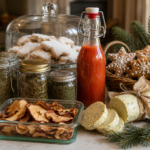
Tea is a beautiful homemade gift idea, creating your favourite tea combinations and placing them in tiny jars with labels in a basket as a gift set makes a personalized homemade gift anytime of the year.
If you’re interested in more homemade food gift ideas, check out our article: Homemade Food Gifts: Easy Christmas Gifts From Our Garden & Kitchen
Final Thoughts: Build Your Own Herbal Cupboard
I truly love my medicinal herbal tea time at night. Lately I’ve been making my cuppa when I put my children to bed and sit in the dark for upwards of 60 minutes. But creating blends that are catered specifically to your needs in the moment is powerful knowledge that will serve you and others around you well.
If you’re on a medicinal herbal journey at home, you can explore all of our hands-on advice in our Natural Remedy Guides, based on what actually works here on our homestead.
We are growing our website with more articles all the time, and we invite you to grow with us. If you have any questions about homemade herbal tea blends or would like to share some of your knowledge with us please leave a comment below. Happy Gardening!