Dandelions are one of the most under-utilized medicinal plants. For decades they’ve received nothing but the term ‘weed’, and intense ratification on lawns. But over the last few years, people are coming back to dandelions and their medicinal benefits.
Dandelion root in particular has been used for generations in herbal remedies, most often as a tincture. It’s simple to make, stores well, and is one of the easiest ways to preserve dandelion for year-round use.
In this guide, I’ll show you exactly how to make a dandelion root tincture at home using either fresh or dried roots, plus what to expect along the way.
This post contains affiliate links. If you use these links to buy something we may earn a commission. Thanks.
How to Make Dandelion Root Tincture (Quick Answer)
To make a dandelion root tincture, fill a jar with chopped dandelion root, cover it with alcohol (like vodka), seal it, and let it steep for 4–6 weeks before straining and storing in a dark bottle.
What is a Dandelion Root Tincture?
A tincture is simply a concentrated herbal extract made by soaking plant material in alcohol.
The alcohol pulls out beneficial compounds from the root and preserves them, giving you something that lasts much longer than fresh preparations like tea.
I wrote an entire article primer on What is a Tincture.
Dandelion root is commonly used in tinctures for its traditional role in supporting digestion and liver function.
Dandelion flowers are also commonly used in herbal preparations, especially teas.
If you want a deeper breakdown of why the root is used, check out my Dandelion Root Benefits article here.
When to Harvest Dandelion Root (Time Sensitive)
If you’re harvesting your own roots, timing matters more than people realize.
- Early spring: before the plant flowers
- Late fall: after the leaves die back
This is when the plant’s energy is stored in the root.
In Zone 5, we usually see:
- Spring Harvest in Zone 5: early to mid-April
- Fall Harvest in Zone 5: October
Real Garden Timing (Zone 5 Experience)
Around here, I actually harvest dandelion root in early May, right at the end of April.
At that point, the plants are easy to spot, but many haven’t fully flowered yet. That makes it a lot easier than trying to guess where they are in early spring before anything has come up and the plants and grass are still dead.
Ideally, you harvest before the plant puts energy into flowering, but in a real garden, there’s a bit of a window. Early May has worked well for us, especially when the leaves are up but the flowers haven’t fully taken over.
If you’re aiming for maximum potency, earlier in spring or late fall is often recommended. But if you’re working with what’s growing in front of you, early May is still a great time to harvest.
For more zone 5 specific growing guide read our Zone 5 Gardening Guides: What to Grow and When (Complete Hub)
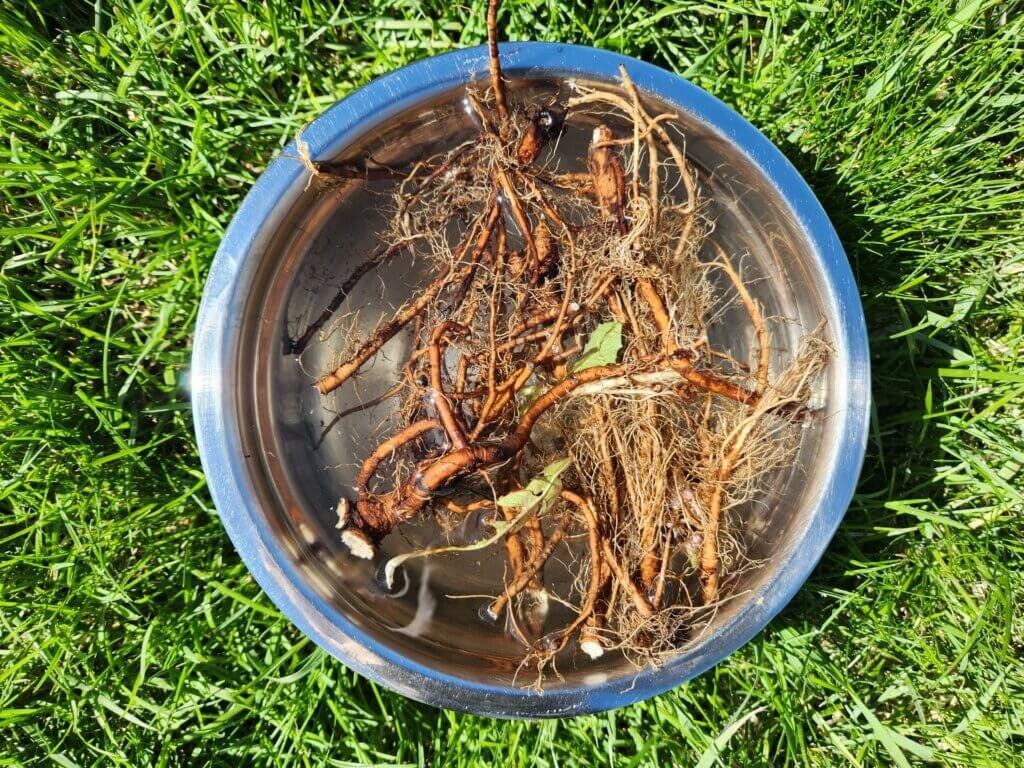
How to Harvest and Prepare the Root
- Dig deep, dandelion roots are long
- Shake off excess soil
- Rinse thoroughly under cold water
- (I like to use a scrubbing brush to get the dirt in the cracks of the roots, like with carrots)
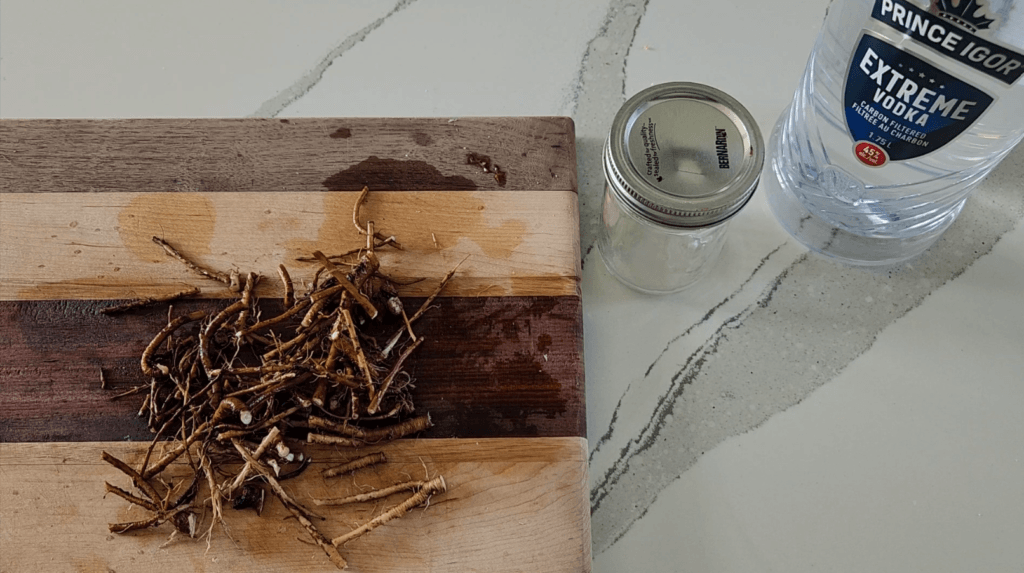
- Chop into small pieces (this increases surface area)
You can use the root either fresh or dried. I use fresh because it’s less steps!
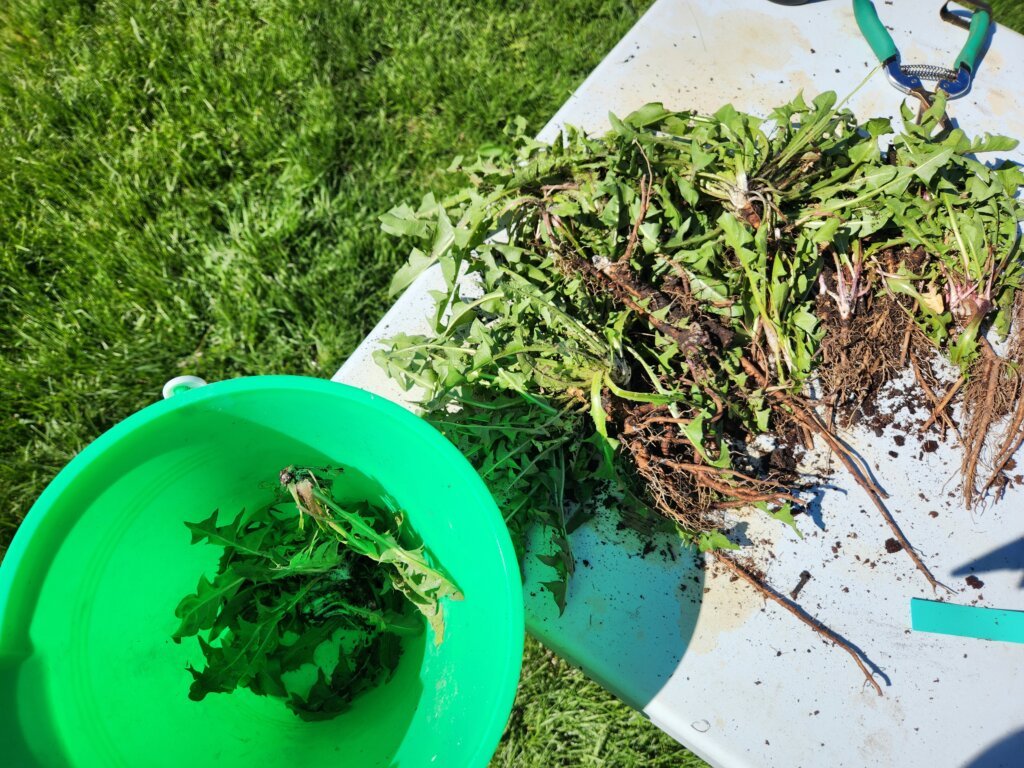
Fresh vs Dried Root – Which Should You Use?
It truly doesn’t matter as much for tinctures which you use. There’s a slight difference in how much of the plant material you should be adding if you have a fresh vs dried material. Here’s some other information for you to help you decide for your tincture.
Fresh Root
- higher water content
- use stronger alcohol (40–50% / 80–100 proof vodka works well)
- easier if you’re harvesting right away
Dried Root
- more concentrated
- use less of the root while making the tincture (only half to 1/3 of the container instead of filling it)
- slightly more predictable results
If you’re still deciding whether dandelion root is worth harvesting, read about the traditional Benefits and Uses of Dandelion Root.
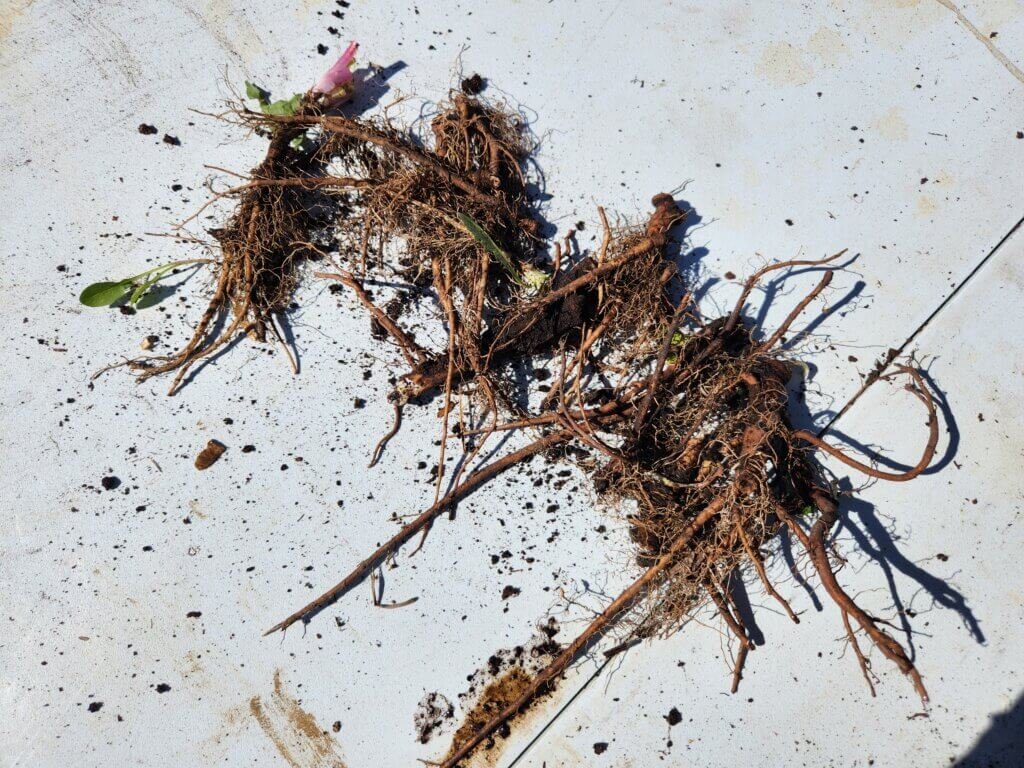
What You Need To Make The Tincture
- Dandelion root (fresh or dried)
- Vodka or similar alcohol (40-50%)
- Glass jar with lid (parchment paper to cover the lid from the alcohol: this prevents rust) – I like to use a mason jar
- Knife + cutting board
- For tincture straining 4-6 weeks later: cheesecloth or Fine Mesh Strainer
- For tincture completion 4-6 weeks later: Amber dropper bottles (for storage)
How To Make Dandelion Root Tincture (Step-by-Step)
1. Harvest & Wash The Root
Before starting your tincture, you need to follow the steps above and harvest the dandelion root at the optimal time of year.
Then, wash off all the dirt from the roots, use a scrubbing brush if needed.
2. Fill Your Jar
Add chopped dandelion root to your jar:
If using fresh roots – fill about 3/4 of the way full.
If using dried roots – fill 1/2 or less of the way full.
3. Add Alcohol
Pour alcohol (vodka) over the root until:
- everything is fully covered
- about 1–2 inches above the plant material for fresh
- the container is full to the top for dried
4. Seal and Shake
- Place parchment paper between the mouth of the jar and the lid. This prevents any rust from forming on the lids.
- Seal the mason jar tightly
- Give it a good shake
4. Let It Steep
Store in a cool, dark place for 4 to 6 weeks
Shake the jar every few days if you remember. If you forget, it’s fine.
5. Strain the Tincture
After steeping:
- strain through cheesecloth, a fine sieve or coffee filter
- press the root to extract all liquid
6. Bottle and Store
Transfer to:
Store in a cool, dark place. Properly made tinctures can last years.
How to Use Dandelion Root Tincture
The most common ways to use this tincture is by adding a full dropper into water or tea. You can directly drop it onto your tongue, but the flavour is strong and slightly unpleasant. That’s the case with most tinctures.
It may be taking 1-3 times per day depending on it’s use. Always start small and see how your body responds overtime.
I’ll be adding it to my teas and in my Fire Cider daily wellness shots in the fall too!
Who Should Avoid Dandelion Root
- people with ragweed allergies
- those on certain medications
- pregnant or breastfeeding (consult first)
When in doubt, check with a qualified professional.
Dandelion Articles
- Dandelions – The Miracle Weed You Should Be Thanking
- Dandelion Root Benefits (Why It’s Been Used for Generations)
- Benefits of Dandelion Flower Tea + Simple Homemade Tea Recipe
Continue Exploring Herbal Remedies
- What is a Tincture? How to Make It
- Goldenrod Benefits, Uses & How to Make Goldenrod Tea
- Garlic Tinctures 101: How to Make Them, Benefits, and Safe Dosage
- What Is Mullein – The Tall Fuzzy Green Plant
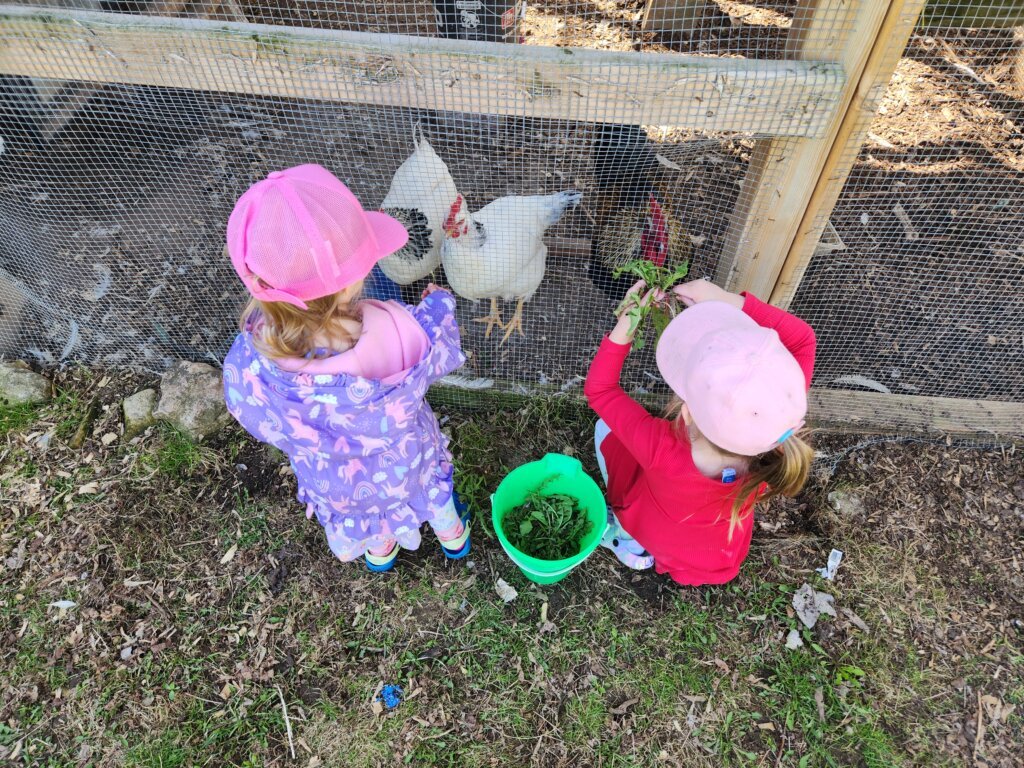
Final Notes on Dandelion Root Tinctures
Once you make your first tincture, you’ll realize how simple this process really is.
Dandelion root is one of the easiest herbs to start with, especially if it’s already growing right outside your door.
Dandelion root is only part of the story. Learn more about the many uses of dandelions.
And once you have it on hand, it becomes something you can use year-round instead of just during the growing season.
If you’re interested in growing your medicinal herbal knowledge, check out our Natural Remedies Page, filled with tips, remedies and medicinal benefit information.
We are growing our website with more articles all the time, and we invite you to grow with us. If you have any questions on Dandelion Root Tincture or would like to share some of your own tips with us please leave a comment below. Happy Gardening!