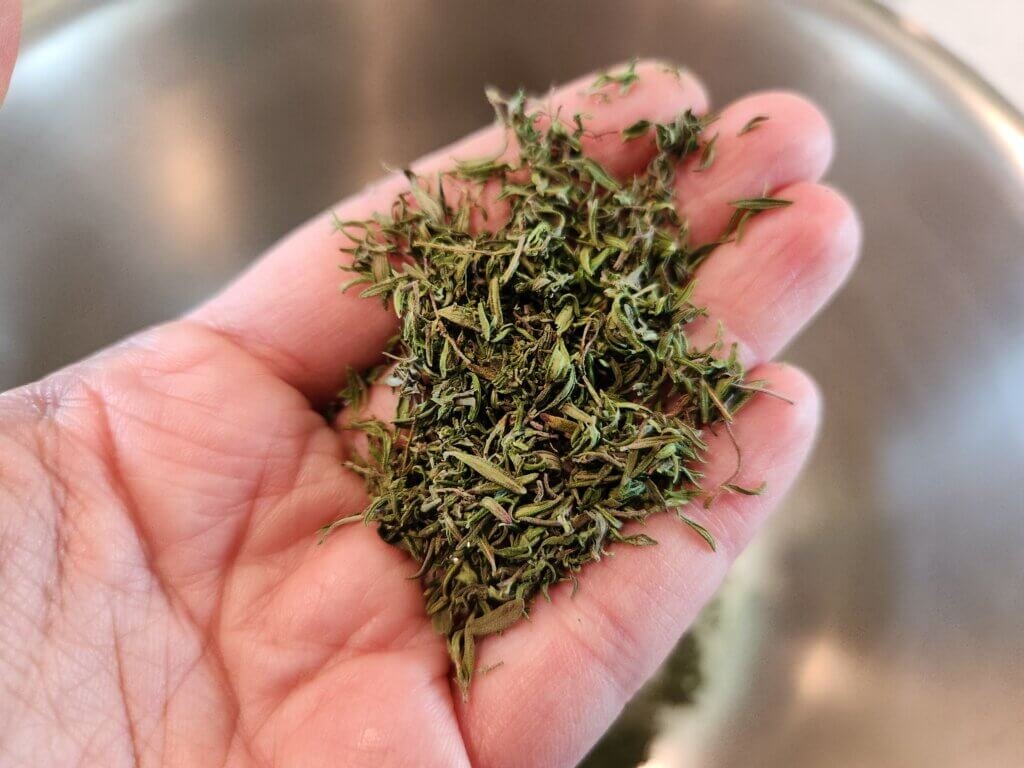
Thyme is an amazing herb, it’s a perennial and easy to grow in zone 5, it’s a powerhouse medicinal plant and, it grows from May – October in Zone 5.
How to harvest and dry thyme is a bit unique compared to other herbs like dill or mint. Thyme’s tiny little leaves on woody stems make the process a bit more complicated than it should be.
In this article, I’ll dive into how to harvest thyme properly and most importantly, how to dry thyme so you can reap the benefits of growing your own herbs.
This post may contain affiliate links. If you use these links to buy something we may earn a commission. Thanks.
Quick Answer: How to Dry Thyme & How to Harvest Thyme
The best time to harvest thyme is just before the plant flowers when the essential oils are at their strongest. Cut healthy stems in the morning after the dew has dried, then place them in a dehydrator until the leaves become crisp and crumble easily. Once fully dry, remove the leaves from the stems and store them in an airtight container.
Why We Dry Thyme Every Year
Thyme is one of my favourite herbs – particularly for it’s medicinal benefits. I use it in teas and tinctures almost all year long. So harvesting and drying thyme is something I do multiple times a year, every year to ensure I have enough stocked up.
Outside of medicinal uses, thyme is also an important herb in home cooking. We use it in soups, roasts, potatoes, stews and much more.
So, it’s versatile in cooking, and full of beneficial compounds that help us — why wouldn’t you grow thyme and harvest it yearly?
When To Harvest Thyme
Like all herbs, there’s a correct time to harvest. Harvest too late and you loose medicinal benefits, or harvest too much you could kill the entire plant.
Harvest Before Flowering For The Best Flavor
The goal of a plant is to flower. The flower produces fruit or seeds and that ensures the plants continuation.
Once a flower forms, the plant’s energy goes into producing the seeds for it’s next generation. Ergo, lessening the energy and compounds in the plants leaves.
The best time to harvest thyme is before the herb flowers. It still has most of it’s energy in the leaves and the highest concentration of medicinal compounds.
Harvest In The Morning
The time of day matters when harvesting anything. Always harvest before the afternoon heat – this time of day plants get droopy and hot. Not ideal for food.
Never harvest any plant that is still wet from morning dew or watering. Wait until the plant is dry in the morning – around 9:30 AM or so.
Harvest the best quality leaves. Ones that are vibrant green. Not sprigs that are diseased or half eaten by bugs, etc.
You also don’t need to harvest all of your thyme before frost. It’s one of our hardier perennial herbs, so we leave plenty of growth going into winter. Read how we protect perennial herbs from frost in our Zone 5 garden.
How To Harvest Thyme
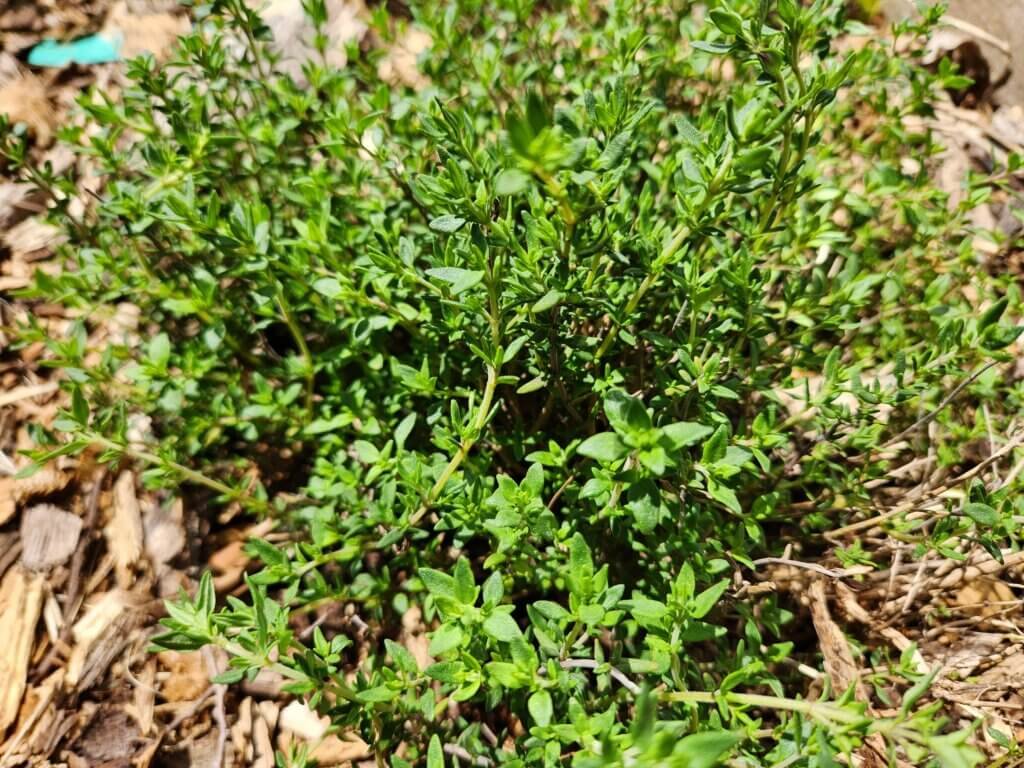
Harvesting thyme is a fairly easy thing to do – but there are a few things to keep in mind, especially pertaining to the woody stems.
Step 1: Choose Healthy Stems
Thyme grows with woody stems at the base and core of the plant. That’s what we see when it overwinters in zone 5.
When harvesting, choose the new green growth stems as much as possible. You can cut off a bit from the lower woody growth areas to get more sprigs, but I would stay away from doing it consistently.
Always avoiding harvesting damaged or unhealthy stems.
Step 2: Cut The Stems
Using cleaned garden pruners, grab the sprigs you wish to harvest and cut down on the sprig stem as low as possible then pull the removed stem away.
Remember to not harvest more than 1/3rd of the plant. This allows it to continue to grow for more harvests throughout the season.
Should You Wash Thyme Before Drying?
I always wash everything before drying. Some people don’t wash because it can cause excess moisture and therefore increases the drying time. I feel that’s a bit of an over exaggeration.
Wash your herbs, then I use either a salad spinner to get the excess moisture out and/or use a tea towel to pat dry.
How To Dry Thyme In A Dehydrator
Thyme can be dried in numerous ways – our preferred method is with a dehydrator. I’ve tried hanging them upside down in bundles, but I don’t like it because it’s too inconsistent, and bugs will gather in the drying stems if left for too long.
The other method is air drying on a rack. This is my back-up method because it works and you can move it outside into the sun then back inside and adjust at your will.
Step 1: Arrange The Stems In A Single Layer
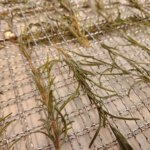
Place the thyme sprigs into the dehydrator keeping the herbs in a single layer and careful not to overlap or overcrowd. Airflow and space matter to help it dry more efficiently.
Step 2: Set The Dehydrator To A Low Temperature
The best way to dry them is low and slow. The lower and slower, the more flavour and aroma is preserved in the plant.
Bake at 95-105℉ – we’ve found 105℉ works best for thyme (and most herbs) at 24 hours.
Step 3: Dry Until The Leaves Become Crisp
If it’s your first time using the dehydrator, start at 24 hours. Sometimes depending on your spacing and the herbs moisture, you might need to add more time.
Do a test by taking out one sprig, and tightly pinching the tiny herb leaves between your fingers. Does it feel dry? Does it feel brittle? Are you confident it’s dry?
If you’re not confident, always error on the side of caution and dry it a little longer.
How To Tell When Thyme Is Fully Dry
The easiest way to tell if thyme is fully dry is by the crumble/brittle test. Pinch and roll the leaves between your fingers and if they easily fall apart, snap and break instead of bend and there’s no soft spots remaining – it’s dry.
It’s important for your herbs to be 101% dry when storing. If herbs contain any moisture, they will mold in the container, affecting your entire herb batch.
To be really extra safe, you could add a silica gel pack into your dried herbs to keep moisture out.
The Most Frustrating Part Of Drying Thyme
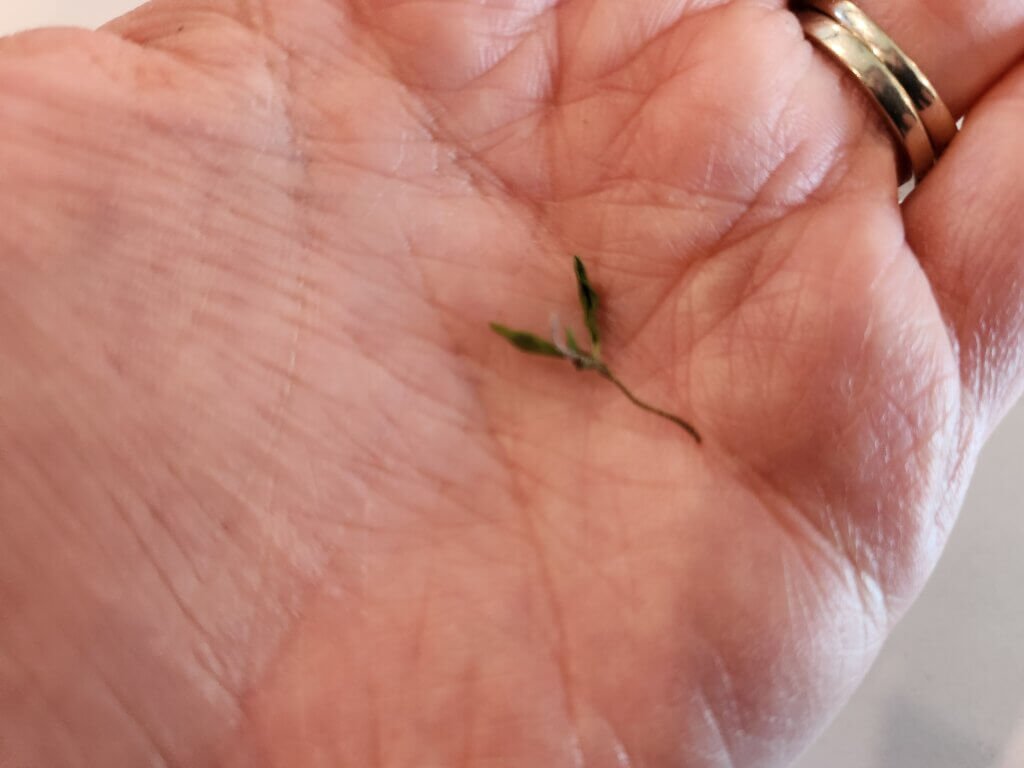
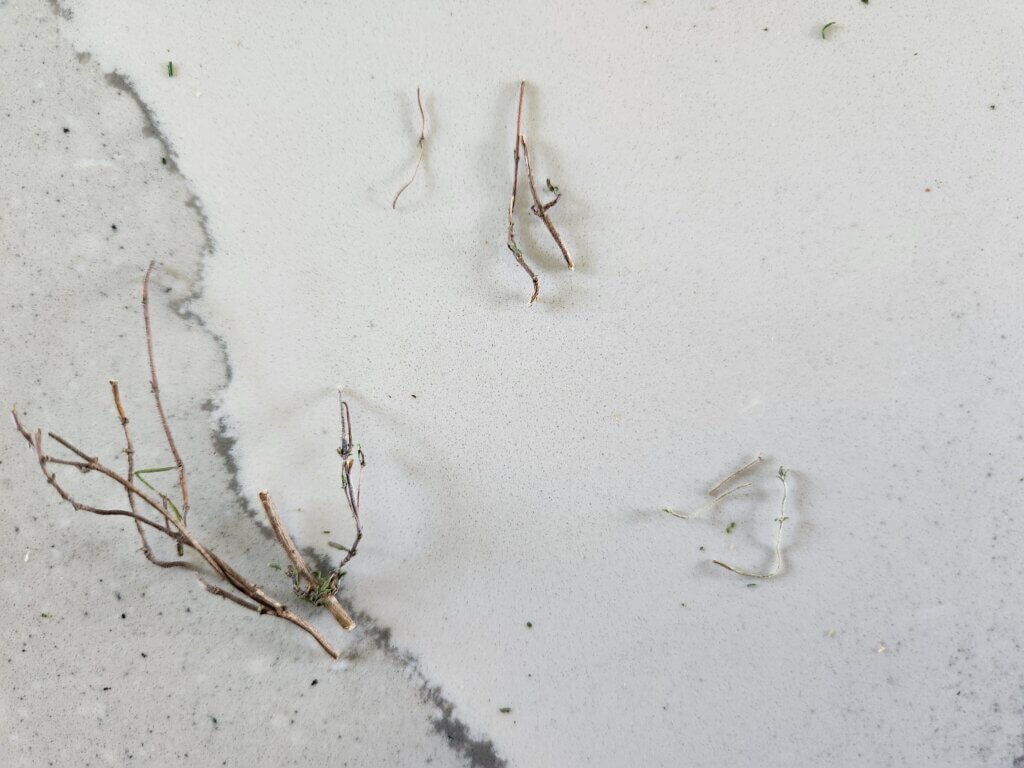
Thyme has little tiny leaves on a woody stem. When the stem and leaves are dried and you want to harvest, more often then not – the now brittle stem will break off too. These woody stems end up in the dried herb leaves.
Some stems are larger and noticeable enough to pluck out of the bowl. Others are so tiny and fine that you might not notice them in your food most of the time. But sometimes you will.
It’s cumbersome and frustrating to carefully remove the leaves off each sprig. Then you have to go fishing through the bowl of leaves to find these tiny to medium sized stems.
The Solution
Besides inspecting by hand and taking your time to prevent breakage (which will inevitably happen).
Dry thyme in small batches. It’s much easier to go through 1/2 cup of dried thyme looking for stems than it is to go through 3 cups of dried thyme leaves.
At the end of the day, drying thyme is tedious. There’s no way around it. But having your own home grown herbs is worth it for me.
How To Remove Thyme Leaves From Dried Stems
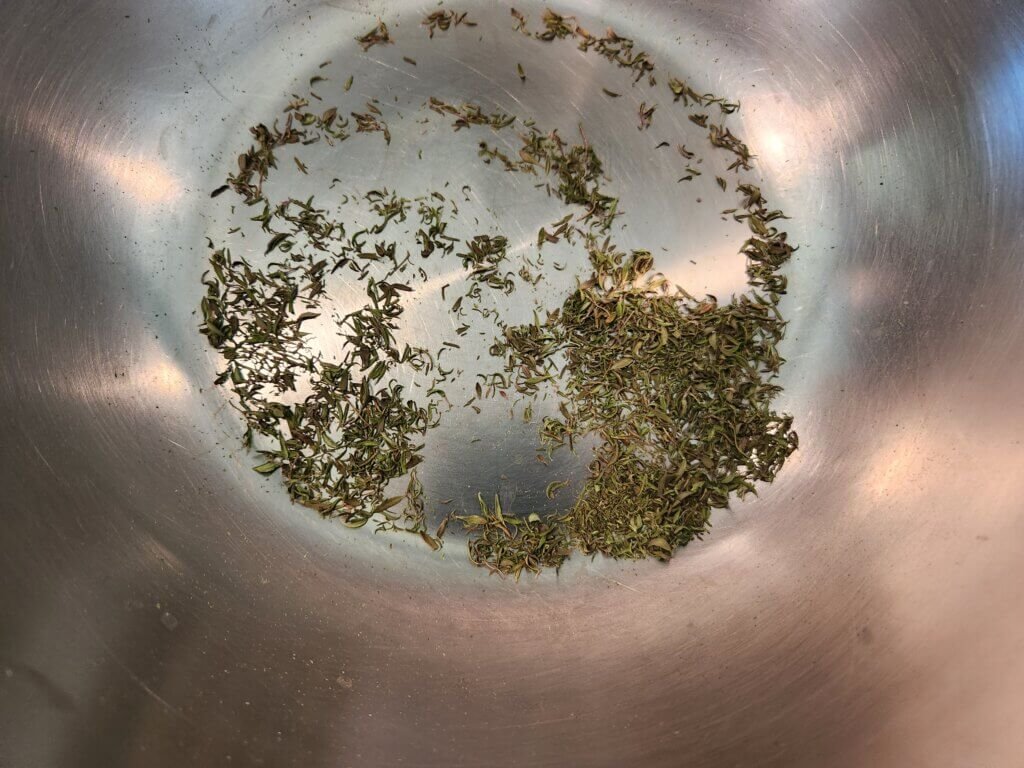
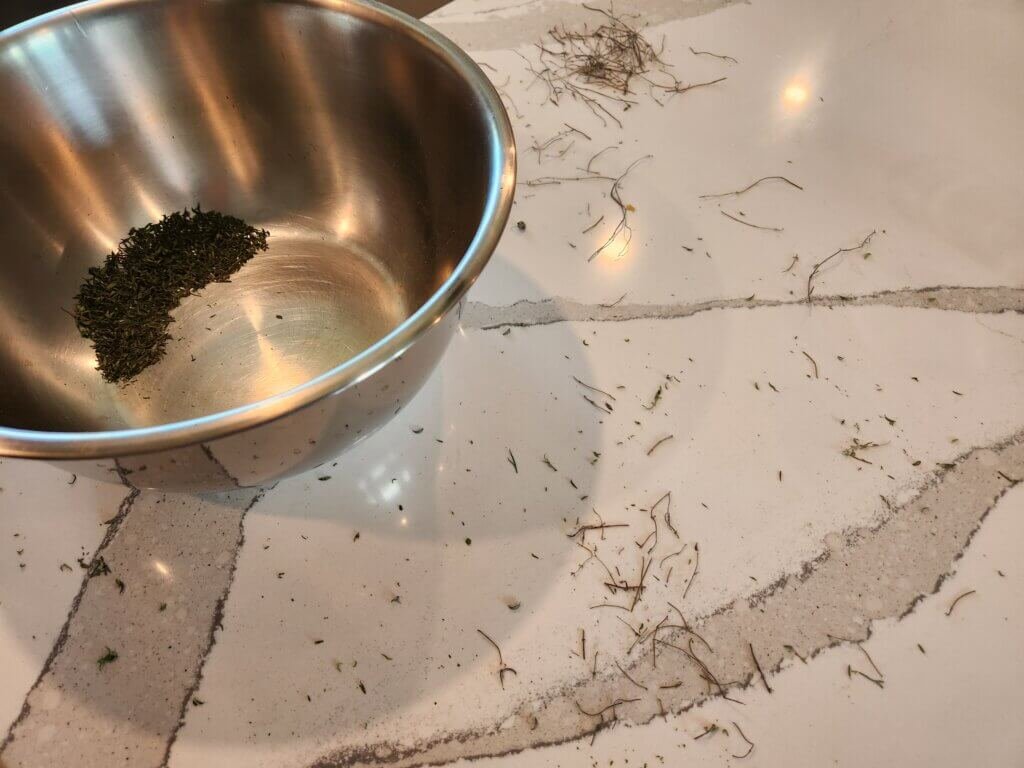
The technique for removing thyme leaves is to hold the top of the sprig and gently pull downward on the stem to remove the leaves. Work over a large bowl to catch the fallen leaves.
Sift through the bowl as you go to remove the excess woody stems.
How To Store Dried Thyme
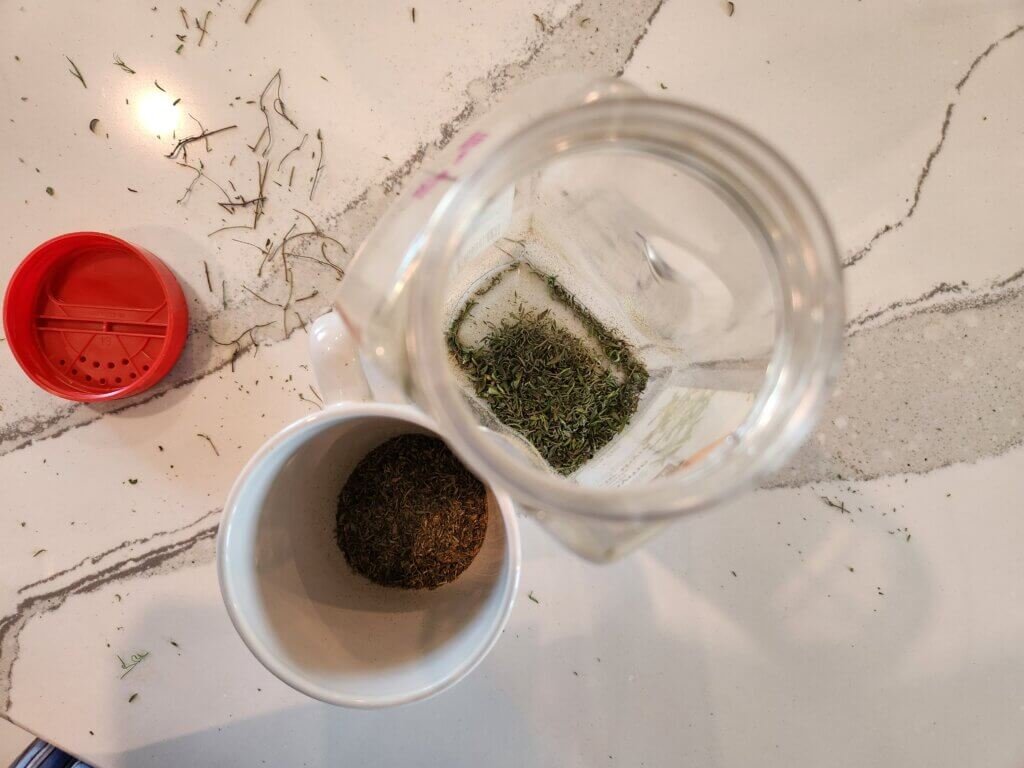
Always add to an airtight container, ideally glass. Keep in a cool dark cupboard and label with the date.
When you have your new thyme ready to add to your previous batch, it’s important to take the old stuff out first and add the new stuff to the bottom. Following the first-in-first-out system (shout out to all my grocery businesses people!).
Learn how to make a Thyme & Mullein Tincture for cold and flu season!
How Long Does Dried Thyme Last?
Dried thyme lasts a very long time. However, just like all herbs, the flavour degrades overtime. Freshly dried thyme will taste different than dried thyme from a few years ago.
Common Mistakes When Drying Thyme
- Harvesting After Heavy Rain: Cutting the plant when wet can cause diseases to take root and ruin the plant.
- Overcrowding The Dehydrator: Overcrowding will lead to some pieces not coming out completely dry – which can cause mold when stored.
- Storing Before Completely Dry: If you store before it’s completely dried mold will form due to the trapping of moisture.
- Leaving Too Many Stem Pieces In The Final Product: It just means you will eat woody stems in your food – it’s not enjoyable.
Frequently Asked Questions about Drying Thyme
Yes – this is the only way to do this because the leaves are so small.
You can – just once it flowers the aroma and the medicinal value lessens.
The ratio is fairly close. Fresh thyme is tiny to begin with, so when it’s dried it doesn’t really change in size.
Related Articles on Herbs
- How to Grow Thyme (Complete Growing Guide)
- Medicinal Benefits of Thyme: Traditional Thyme Herbal Uses
- How to Make A Thyme and Mullein Tincture
- How to Harvest Oregano So It Keeps Growing
- How to Harvest Red Clover Flower (and Dry It Properly at Home)
Final Thoughts
Thyme is a great medicinal and culinary herb to have on hand. I always recommend it to all my gardening friends. Having fresh herbs on hand with high medicinal value will never be something you regret.
If you’re on a gardening preserving journey at home, you can explore all of our hands-on advice in our Harvesting & Preserving, based on what actually works here on our homestead.
We are growing our website with more articles all the time, and we invite you to grow with us. If you have any questions about how to harvest thyme or how to dry thyme, or would like to share some of your knowledge with us please leave a comment below. Happy Gardening!